

Gray-bellied Cuckoo vs Cuculo
Cacomantis passerinus contro Cuculus canorus
Fai un quiz con Gray-bellied Cuckoo e Cuculo
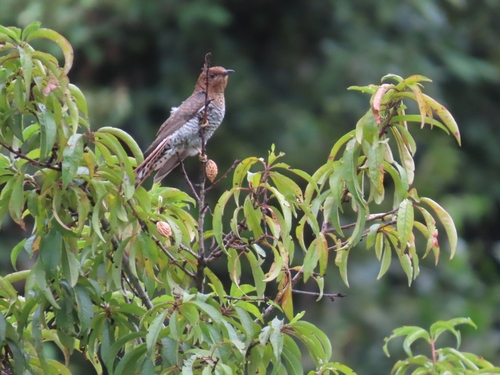 Gray-bellied Cuckoo
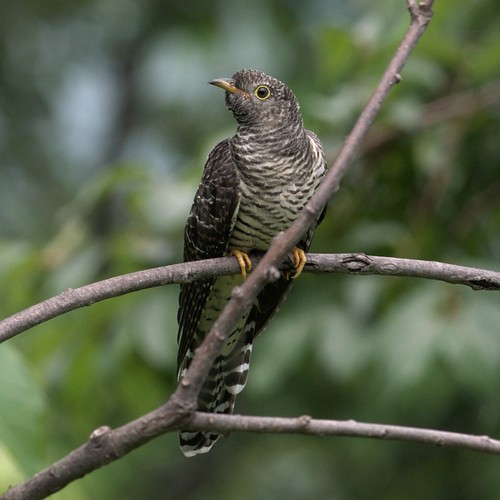 Cuculo
In breve
Il segno di campo più affidabile per separare il Gray-bellied Cuckoo dal Cuculo è la dimensione: il Cuculo è molto più grande e massiccio, con un'apertura alare e una massa corporea quasi doppia rispetto al Gray-bellied. Per gli uccelli in piumaggio giovanile o femminile, concentrati sulle barre delle ali superiori e delle parti inferiori: i Cuculi giovanili mostrano una distintiva macchia bianca sulla nuca e ampie frange di piume crema sulle ali superiori, caratteristiche mai presenti nel Gray-bellied. I Gray-bellied Cuckoo adulti sono compatti, per lo più grigi con una pancia inferiore bianca e una piccola macchia bianca sulle ali, mentre i Cuculi adulti hanno un petto grigio nettamente demarcato e parti inferiori pesantemente barrate. Entrambi possono mostrare morfologie rufous, ma il modello e l'estensione delle barre differiscono. Anche la voce e il jizz aiutano: il Cuculo emette il classico richiamo 'cuck-oo' e spesso si posiziona con le ali abbassate, mentre il Gray-bellied ha un persistente 'pee-pip-pee-pee' e una postura più eretta.
Consigli di identificazione
- La dimensione è il controllo più veloce: Se l'uccello è grande, con la coda lunga e il corpo pesante (più simile a un piccione o a un piccolo rapace), è un Cuculo. Se è notevolmente più piccolo e più compatto, è un Gray-bellied.
- Il Cuculo giovanile mostra una macchia bianca sulla nuca e ampie frange di piume biancastre sulle copritrici delle ali superiori e sulle primarie—mai presenti nel Gray-bellied di qualsiasi età.
- Il Cuculo giovanile e morfologia rufous hanno parti superiori e coda pesantemente barrate, con bordi di piume crema-bianca; i giovanili Gray-bellied sono grigi opachi, privi di forti barre e della macchia bianca sulla nuca.
- Il Cuculo maschio adulto ha una gola e un petto grigio nettamente definiti con una transizione improvvisa a parti inferiori pesantemente barrate. L'adulto Gray-bellied è per lo più grigio con una pancia inferiore bianca e una coda inferiore, e una piccola macchia bianca sulle ali.
- La femmina Gray-bellied (morfologia rufous) è marrone rossiccio sopra con barre scure e una coda non barrata; la femmina Cuculo (morfologia rufous) è anch'essa marrone rossiccio ma con barre scure più strette e regolari e una coda barrata.
- In volo, il Cuculo appare con ali lunghe e simili a un falco, con battiti regolari delle ali e una lunga coda barrata. Il Gray-bellied è più corto nelle ali, compatto e mostra una piccola macchia bianca sulle ali.
- Il Cuculo spesso si posiziona con le ali abbassate e la coda sollevata o oscillante, specialmente quando canta. Il Gray-bellied tende a posarsi in modo più eretto e muove la coda verso il basso quando chiama.
- La voce è diagnostica: il Cuculo emette un chiaro 'cuck-oo' (maschio) o un richiamo gorgogliante (femmina); il Gray-bellied emette un persistente 'pee-pip-pee-pee.'
- Le barre delle parti inferiori del Cuculo sono sempre nette ed estese; quelle del Gray-bellied sono meno evidenti, e la pancia è spesso bianca uniforme.
- Se vedi una macchia bianca sull'ala, controlla la dimensione: su un piccolo uccello è Gray-bellied; su un grande uccello, non è diagnostico.
- Può verificarsi sovrapposizione degli habitat, ma il Cuculo è un migrante o visitatore invernale in gran parte dell'Asia, mentre il Gray-bellied è più probabile che sia residente.
- Se l'uccello si associa a warbler in giardini o cespugli nel sud dell'Asia, è più probabile che sia Gray-bellied; in brughiera aperta o boschi temperati, specialmente in Europa, ci si aspetta il Cuculo.
- Entrambe le specie possono mostrare morfologie rufous, ma il modello di barre e coda (barrato nel Cuculo, non barrato nella femmina Gray-bellied) aiuta.
- Se l'uccello chiama persistentemente da un posatoio basso con la coda abbassata, sospetta Gray-bellied. Se chiama da un posatoio aperto con le ali abbassate, sospetta Cuculo.
- Considera sempre la stagione e la posizione: il Cuculo è assente dalla maggior parte del sud dell'Asia al di fuori della migrazione e dell'inverno; il Gray-bellied è diffuso tutto l'anno in gran parte dell'Asia.
Taglia
Il Cuculo è sostanzialmente più grande, misurando 32–34 cm di lunghezza con un'apertura alare di 55–60 cm e una massa corporea di circa 111,5 g [wikidata]. Il Gray-bellied Cuckoo è molto più piccolo, con una lunghezza di circa 23 cm (non sono disponibili dati sulla massa, ma è chiaramente più leggero). Sul campo, il Cuculo appare con ali lunghe e corpo pesante, mentre il Gray-bellied è compatto e visibilmente più snello. Questa differenza di dimensioni è spesso ovvia anche a distanza o in volo.
Piumaggio
- Giovanili: Il Cuculo giovanile è distintivo con una macchia bianca sulla nuca e ampie frange di piume biancastre sulle copritrici delle ali superiori e sulle primarie, oltre a parti superiori pesantemente barrate (specialmente nelle morfologie rufous). I giovanili Gray-bellied Cuckoo sono di un grigio più opaco, somigliando alla femmina, e mancano della macchia bianca sulla nuca e delle frange audaci delle ali superiori.
- Maschi adulti: Il Gray-bellied Cuckoo è principalmente grigio con una pancia inferiore bianca e una coda inferiore, e una piccola macchia bianca sulle ali. I maschi adulti del Cuculo sono grigio ardesia con una gola e un petto grigio nettamente definiti, in contrasto con parti inferiori pesantemente barrate. Le barre delle parti inferiori nel Cuculo sono più estese e nettamente definite rispetto al Gray-bellied.
- Femmine adulte: Entrambe le specie possono mostrare morfologie rufous. Nel Gray-bellied, alcune femmine sono marrone rossiccio scuro con barre e coda non barrata; le femmine del Cuculo con morfologia rufous hanno parti superiori marrone-rossiccio con barre scure strette, e il modello di barre è più regolare ed esteso. La coda del Cuculo è sempre barrata, mentre la coda della femmina Gray-bellied è non barrata.
- Viste in volo: Il Cuculo in volo mostra ali lunghe e appuntite e una lunga coda, con un jizz simile a un falco. Il Gray-bellied appare con ali più corte e più compatto, con una piccola macchia bianca sulle ali visibile a distanza ravvicinata.
Comportamento
Il Cuculo spesso si posiziona apertamente con le ali abbassate e la coda sollevata o oscillante, specialmente quando canta. Il suo volo è forte, diretto e ricorda un piccolo rapace, con battiti regolari delle ali. Il Gray-bellied Cuckoo tende ad adottare una postura più eretta quando è posato ed è generalmente più attivo e irrequieto. Spesso muove la coda verso il basso quando chiama. Entrambi sono parassiti della covata, ma i loro ospiti differiscono (non è un segno di campo).
Habitat
Entrambe le specie possono verificarsi in habitat aperti simili, ma il Cuculo è più probabile che si trovi in boschi temperati, brughiere e campi aperti durante la migrazione e la riproduzione in Europa e in Asia temperata. Il Gray-bellied Cuckoo si trova in una gamma più ampia di habitat asiatici, spesso in cespugli, giardini e bordi di boschi. È possibile una sovrapposizione nel sud dell'Asia, ma il Cuculo è un migrante di passaggio o visitatore invernale lì, mentre il Gray-bellied è residente o più comune.
Voce
I maschi del Cuculo emettono il classico richiamo a due note 'cuck-oo', ripetuto in serie, con un intervallo variabile e talvolta altri richiami man mano che la stagione avanza. Le femmine hanno un richiamo forte e gorgogliante. Il Gray-bellied Cuckoo è molto vocale, con un richiamo persistente e acuto 'pee-pip-pee-pee', spesso emesso con la coda abbassata. I richiami sono molto diversi e diagnostici se ascoltati bene.