

Greenish Elaenia vs Yellow-bellied Elaenia
Myiopagis viridicata versus Elaenia flavogaster
Play a quiz with Greenish Elaenia and Yellow-bellied Elaenia
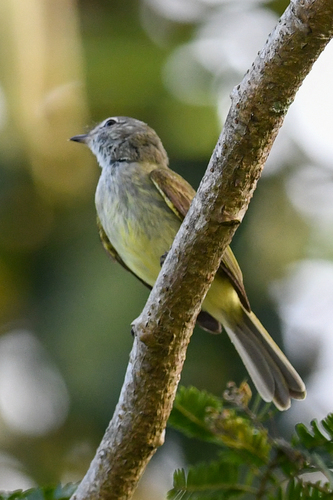 Greenish Elaenia
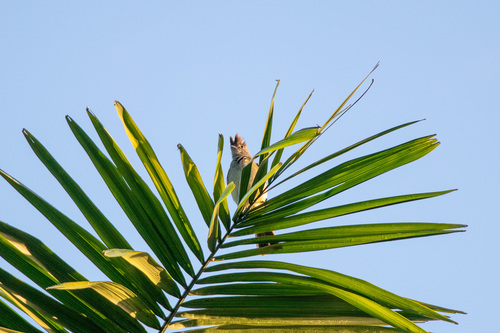 Yellow-bellied Elaenia
In short
Yellow-bellied Elaenia is noticeably larger and bulkier than Greenish Elaenia, with a bushier crest and a more robust appearance. The best field mark is the size and structure: Yellow-bellied is much heavier and longer, with a prominent, often raised crest, while Greenish is slimmer and smaller-headed. Both have olive upperparts and yellowish underparts, but Greenish Elaenia is more greenish above and has a brighter yellow crown stripe (usually hidden), whereas Yellow-bellied shows browner-olive tones and a white crown stripe. Wing and tail patterns are similar and not strongly diagnostic in the field. Both species overlap widely in range and habitat, so careful attention to size, structure, and subtle plumage details is essential.
Identification tips
- Size and bulk: Yellow-bellied Elaenia is much larger and heavier (21–29 g vs. 11–13 g) and longer (15–17 cm vs. 13–14 cm). If the bird looks notably chunky or robust, favor Yellow-bellied.
- Head shape and crest: Yellow-bellied has a bushy, prominent crest that is often raised, giving a large-headed look. Greenish has a smaller, less obvious crest and a more slender head profile.
- Crown stripe: Greenish shows a partially concealed bright yellow crown stripe (especially in males), while Yellow-bellied has a white crown stripe hidden in the crest. If the crown stripe is visible and yellow, it's Greenish; if white, it's Yellow-bellied.
- Face pattern: Look for a dark loral streak and a more contrasting whitish gray supercilium in Greenish. Yellow-bellied lacks the strong loral streak and has a paler, less contrasting face.
- Upperparts color: Greenish is more greenish-olive above, sometimes with a faint grayish crown tinge; Yellow-bellied is browner-olive, sometimes appearing duller or grayer depending on subspecies.
- Underparts: Both have pale yellow bellies, but Yellow-bellied's can be paler or even whitish in some forms, while Greenish is more consistently pale yellow.
- Wingbars and edging: Both show two pale wingbars and yellowish or yellowish-white edging to the flight feathers, but this is not a strong separator.
- Tail: Both have dusky tails slightly darker than the back; not a reliable field mark.
- Bill and legs: Both have dark bills with a paler base to the mandible and dark legs; not a strong separator.
- Behavior: Yellow-bellied is more likely to perch upright, raise its crest, and appear bold and conspicuous. Greenish is slimmer, more retiring, and less likely to show a raised crest.
- Habitat: Both occur in similar habitats, but Yellow-bellied is more tolerant of open and human-modified areas. If seen in a suburban park or garden, Yellow-bellied is more likely, but not exclusive.
- Sexes and ages: Both sexes are similar in both species. The yellow crown stripe of Greenish is more extensive in males but is usually hidden.
- Juvenile/immature plumage: No distinctive age-specific wing or flight patterns are described for either species; focus on structure and overall color.
- Voice: Not covered in the provided notes; do not rely on vocalizations for separation here.
- Pitfalls: Both can appear similar in poor light or at a distance. Focus on size, head/crest shape, and subtle face/crown pattern for best results.
Size
Yellow-bellied Elaenia is significantly larger: 15–17 cm in length and 21–29 g in mass, compared to Greenish Elaenia's 13–14 cm and 11–13 g. In the field, this translates to a bulkier, more robust bird with a larger head and heavier body for Yellow-bellied. Greenish Elaenia is distinctly smaller, slimmer, and more delicate overall. The difference is often apparent when both species are seen in the same area, but can be subtle if only one is present.
Plumage
- Adults of both species: Both have olive upperparts and yellowish underparts, but Greenish Elaenia is more greenish-olive above, with a faint grayish tinge to the crown and a partially concealed bright yellow crown stripe (more extensive in males). Yellow-bellied Elaenia is browner-olive above, with a bushy crest and a partially concealed white crown stripe. Both have pale throats and yellowish bellies, but Yellow-bellied's belly is often paler and can be whitish in some subspecies, while Greenish's is more consistently pale yellow.
- Face pattern: Greenish shows a dark loral streak, whitish gray supercilium, partial white eyering, and grizzled whitish ear coverts. Yellow-bellied has whitish lores, a faint whitish eyering, and a paler brownish olive face, lacking the strong loral streak of Greenish.
- Wings: Both have dusky wings with yellowish or yellowish-white edging and two wingbars, but these are not strongly different in the field. No distinctive juvenile/immature upperwing patterns are described for either species.
- Tail: Both have dusky tails slightly darker than the back; not a strong field mark.
- Sexes and ages: Both sexes look alike in both species. No strong age-specific field marks are described beyond the crown stripe being larger in male Greenish Elaenia.
Behaviour
Yellow-bellied Elaenia often appears more conspicuous and active, frequently raising its bushy crest and perching more upright, giving a larger-headed, more alert impression. Greenish Elaenia is more slender and less likely to raise its crown, often appearing more retiring and less robust. Both species forage in similar ways, sallying for insects and sometimes flicking wings or tails, but Yellow-bellied's larger size and bolder crest movements are helpful behavioral cues.
Habitat
Both species have very broad ranges and can be found in similar habitats across Mexico, Central America, and most of South America (excluding Chile). Both favor open or semi-open woodlands, forest edges, and secondary growth, and both avoid dense interior forest. Yellow-bellied Elaenia is especially tolerant of human-altered habitats, including suburban parks and gardens, and is often found in a wider range of lightly wooded or brushy areas. Greenish Elaenia is also widespread but may be somewhat less common in heavily altered landscapes. Habitat alone is not usually diagnostic where both occur.