

Green Sandpiper vs Wood Sandpiper
Tringa ochropus versus Tringa glareola
Play a quiz with Green Sandpiper and Wood Sandpiper
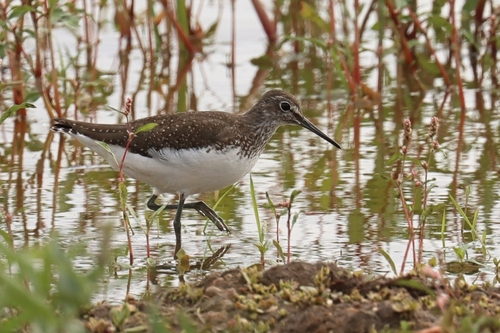 Green Sandpiper
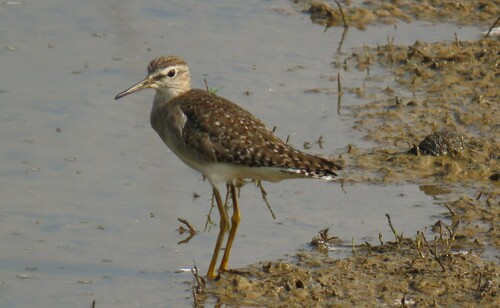 Wood Sandpiper
In short
The most reliable field mark to separate Green Sandpiper from Wood Sandpiper is the rump pattern in flight: Green Sandpiper shows a bold, brilliant white rump that stands out against otherwise dark wings, while Wood Sandpiper has only a small, less contrasting white rump patch. When perched, Green Sandpiper appears plumper with dark greenish legs and a short bill, whereas Wood Sandpiper is slimmer, longer-legged, and has yellowish legs. Both species can show white spotting on the back, but Green Sandpiper is darker overall, especially on the wings. Structure, leg color, and flight views are key, especially with immatures. Size difference is subtle but Green Sandpiper is heavier and bulkier.
Identification tips
- Rump in flight: Green Sandpiper always shows a large, bright white rump that stands out against dark wings—this is the single best separator in all ages and seasons. Wood Sandpiper has only a small, less contrasting white rump patch.
- Upperwing pattern: Both species have dark wings in flight, but Green Sandpiper's are darker and more uniform above and below, making the white rump even more striking. Wood Sandpiper's wings are paler and less contrasting.
- Leg color: Green Sandpiper has dark green legs, which can look almost black at a distance. Wood Sandpiper's legs are distinctly yellowish—this is often visible even at range.
- Structure: Green Sandpiper is plumper, with a shorter neck and bill, and a more compact shape. Wood Sandpiper is slimmer, longer-legged, and looks more elegant.
- Bill: Both have straight bills, but Wood Sandpiper's is finer and slightly shorter relative to head size. This is subtle and best used in combination with other marks.
- Back spotting: Green Sandpiper shows bold white spots on the back in breeding plumage, less so in winter and immatures. Wood Sandpiper's back is paler brown with smaller, more diffuse spotting.
- Breast pattern: Green Sandpiper has a greyish head and breast with a sharp contrast to white underparts. Wood Sandpiper's breast spots are smaller and less defined.
- Voice: Listen for a loud, three-note whistle from Green Sandpiper when flushed. Wood Sandpiper's call is softer and less distinctive.
- Behavior when flushed: Green Sandpiper tends to flush early, flying high and circling with loud calls. Wood Sandpiper is less wary and often stays put longer.
- Habitat context: Green Sandpiper is more likely in shaded, muddy pools or woodland edges; Wood Sandpiper prefers open marshes and flooded meadows, but both can overlap.
- Group size: Green Sandpiper is usually solitary or in pairs; Wood Sandpiper often in small flocks, especially on migration.
- Leg length: Wood Sandpiper's legs look longer, especially when wading or walking.
- Underwing: Both species have dark underwings, but Green Sandpiper's are especially dark, reinforcing the white rump contrast.
- Seasonal variation: White spotting on Green Sandpiper's back is most obvious in breeding adults; less so in winter and immatures, but rump mark is always reliable.
- Juvenile confusion: No unique juvenile upperwing marks described for either species—focus on rump, leg color, and structure for immatures.
Size
Green Sandpiper is slightly heavier (80.0g vs 67.5g) and appears plumper and more compact in the field. Wood Sandpiper is the smallest of the shanks but looks more delicate, longer-legged, and less chunky than Green Sandpiper. Bill length is similar, but Wood Sandpiper's bill is finer and slightly shorter in proportion to head size. These differences are subtle and may be hard to judge unless birds are side by side.
Plumage
The most diagnostic plumage difference, especially in flight, is the rump: Green Sandpiper of all ages shows a large, bright white rump that contrasts strongly with dark upper- and underwings. Wood Sandpiper, regardless of age, has only a small, less contrasting white rump patch. On the ground, Green Sandpiper is darker above (greenish-brown back and wings) with white spotting most obvious in breeding adults, less so in winter and immatures. Wood Sandpiper is paler above, with a light brown back and smaller, more diffuse spots on the breast and neck. Leg color is also a good clue: Green Sandpiper has dark green legs, Wood Sandpiper has yellowish legs. Both have white underparts, but Green Sandpiper's breast is greyer and more sharply demarcated. Juvenile and immature upperwing patterns are not described as distinctive for either species, so rely on rump and overall contrast in flight.
Behaviour
Both species forage in shallow water or mud, probing for invertebrates. Green Sandpiper often appears more solitary and is more likely to flush with a loud, three-note whistle, flying high and circling before landing. Wood Sandpiper is more likely to be seen in small groups and may seem more confiding. Both species bob their tails, but this is not a strong separator.
Habitat
Both species are freshwater waders, but Green Sandpiper is more often found at small, muddy pools, ditches, or shaded woodland edges, sometimes away from open wetlands. Wood Sandpiper prefers open freshwater wetlands, marshes, and flooded meadows, and is less likely in dense cover. Habitat overlap is common, so do not rely solely on location.
Voice
Green Sandpiper gives a distinctive, loud three-note whistle when flushed. Wood Sandpiper's call is not described here, but is generally softer and less piercing. If you hear a sharp, ringing three-note call as the bird takes off, Green Sandpiper is likely.