

Motmot

Green Sandpiper vs Solitary Sandpiper

Tringa ochropus versus Tringa solitaria

Play a quiz with Green Sandpiper and Solitary Sandpiper
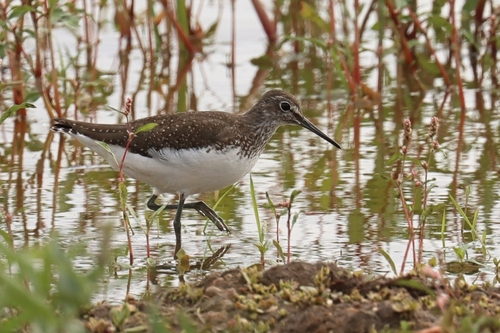
Green Sandpiper (Tringa ochropus) Green Sandpiper
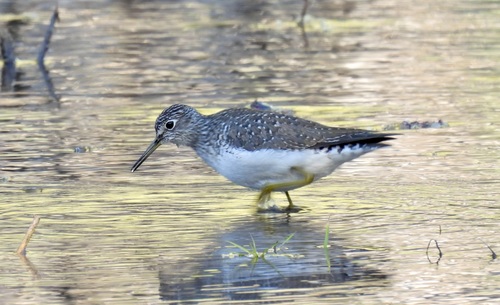
Solitary Sandpiper (Tringa solitaria) Solitary Sandpiper

Media

Loading…

In short

The most reliable way to separate Green Sandpiper from Solitary Sandpiper is by their rump and tail pattern in flight: Green Sandpiper flashes a brilliant white rump, while Solitary Sandpiper shows a dark rump and tail center. Both species are small, plump waders with dark greenish backs, greyish heads, and white underparts, and both have white spotting on the back that varies with age and season. Structure and perched appearance are very similar, so focus on rump color when the bird takes flight. Size is also a clue: Green Sandpiper is noticeably heavier and slightly larger, but this is subtle in the field. Calls are similar, so are not a reliable separator.

Identification tips

  1. Rump and tail pattern in flight is the single most reliable field mark: Green Sandpiper always shows a brilliant white rump, while Solitary Sandpiper has a dark rump and tail center. Watch for this as the bird takes off or flies past, regardless of age or season.
  2. Back spotting varies but is not diagnostic: Both species have white spots on the back, most prominent in breeding adults and less in winter and juveniles. Do not rely on spotting extent to separate them.
  3. Underparts and breast pattern similar: Both have white underparts with a greyish head and breast, so this is not a separator.
  4. Leg and bill color: Green Sandpiper has dark green legs and bill; leg color is not specified for Solitary Sandpiper here, so do not use this as a primary mark.
  5. Size and bulk: Green Sandpiper is heavier and slightly larger, with a more robust look, but this is subtle and unreliable unless both species are together.
  6. Wings in flight: Both show dark wings above and below; do not use wing color as a separator.
  7. Perched appearance: Both are plump, dumpy waders with similar posture and structure. Perched birds are very difficult to separate without seeing the rump.
  8. Voice: Both give a three-note whistle in flight; do not use call alone to separate them.
  9. Habitat and behavior: Both nest in trees and share similar foraging behavior; habitat is not a separator.
  10. Geographic context: Green Sandpiper is Old World (Europe/Asia), Solitary Sandpiper is New World (Americas); in regions of overlap (rare vagrants), rely on rump pattern.
  11. Sex and age: No sex-specific or age-specific marks beyond back spotting and rump pattern are described; rump color is reliable for all ages and both sexes.
  12. When in doubt: If you cannot see the rump in flight, identification is very challenging and should be left as uncertain.
  13. Common pitfalls: Do not rely on back spotting, wing color, or call to separate these species. Only the rump and tail pattern in flight is truly diagnostic.
  14. Summary tip: Always try to flush the bird or wait for it to fly to check the rump color—this is the only consistently reliable field mark between these two species.

Size

Green Sandpiper is distinctly heavier (average 80 g) than Solitary Sandpiper (average 48.6 g), and is described as slightly larger and broader-winged. However, both are small, dumpy waders, and this size difference is subtle unless birds are side by side. In hand or with experience, Green Sandpiper's greater bulk may be apparent, but structural proportions are otherwise very similar.

Plumage

The most diagnostic plumage difference is seen in flight, regardless of age: Green Sandpiper always shows a brilliant white rump, while Solitary Sandpiper has a dark rump and tail center. This contrast is reliable for all ages and seasons. Both species have dark greenish-brown backs and wings with small pale spots, most extensive in breeding adults and less so in winter or young birds. Underparts are white with a contrasting greyish head and breast in both species. Legs and bill are dark green in Green Sandpiper; leg color is not specified for Solitary Sandpiper in these notes. The white spotting on the back is variable in both, so is not a safe separator. Both show dark wings above and below in flight. No age-specific upperwing pattern differences are described beyond the rump and tail contrast.

Behaviour

Both species are described as plump, dumpy waders and share similar foraging and movement styles. Both are notable among shorebirds for nesting in trees. No behavioral differences are highlighted in these notes that would reliably separate them in the field.

Habitat

No habitat differences are described in these notes. Both species are mentioned as tree-nesting shorebirds, which is unusual for the group, but this is not a field separation mark between the two.

Voice

Both species give a characteristic three-note whistle in flight. The notes do not describe any differences in voice that would allow reliable separation.

Submit a better description

Use the same sections as the comparison. Your text is published immediately.

The most reliable way to separate Green Sandpiper from Solitary Sandpiper is by their rump and tail pattern in flight: Green Sandpiper flashes a brilliant white rump, while Solitary Sandpiper shows a dark rump and tail center. Both species are small, plump waders with dark greenish backs, greyish heads, and white underparts, and both have white spotting on the back that varies with age and season. Structure and perched appearance are very similar, so focus on rump color when the bird takes flight. Size is also a clue: Green Sandpiper is noticeably heavier and slightly larger, but this is subtle in the field. Calls are similar, so are not a reliable separator.

  1. Rump and tail pattern in flight is the single most reliable field mark: Green Sandpiper always shows a brilliant white rump, while Solitary Sandpiper has a dark rump and tail center. Watch for this as the bird takes off or flies past, regardless of age or season.
  2. Back spotting varies but is not diagnostic: Both species have white spots on the back, most prominent in breeding adults and less in winter and juveniles. Do not rely on spotting extent to separate them.
  3. Underparts and breast pattern similar: Both have white underparts with a greyish head and breast, so this is not a separator.
  4. Leg and bill color: Green Sandpiper has dark green legs and bill; leg color is not specified for Solitary Sandpiper here, so do not use this as a primary mark.
  5. Size and bulk: Green Sandpiper is heavier and slightly larger, with a more robust look, but this is subtle and unreliable unless both species are together.
  6. Wings in flight: Both show dark wings above and below; do not use wing color as a separator.
  7. Perched appearance: Both are plump, dumpy waders with similar posture and structure. Perched birds are very difficult to separate without seeing the rump.
  8. Voice: Both give a three-note whistle in flight; do not use call alone to separate them.
  9. Habitat and behavior: Both nest in trees and share similar foraging behavior; habitat is not a separator.
  10. Geographic context: Green Sandpiper is Old World (Europe/Asia), Solitary Sandpiper is New World (Americas); in regions of overlap (rare vagrants), rely on rump pattern.
  11. Sex and age: No sex-specific or age-specific marks beyond back spotting and rump pattern are described; rump color is reliable for all ages and both sexes.
  12. When in doubt: If you cannot see the rump in flight, identification is very challenging and should be left as uncertain.
  13. Common pitfalls: Do not rely on back spotting, wing color, or call to separate these species. Only the rump and tail pattern in flight is truly diagnostic.
  14. Summary tip: Always try to flush the bird or wait for it to fly to check the rump color—this is the only consistently reliable field mark between these two species.

Green Sandpiper is distinctly heavier (average 80 g) than Solitary Sandpiper (average 48.6 g), and is described as slightly larger and broader-winged. However, both are small, dumpy waders, and this size difference is subtle unless birds are side by side. In hand or with experience, Green Sandpiper's greater bulk may be apparent, but structural proportions are otherwise very similar.

The most diagnostic plumage difference is seen in flight, regardless of age: Green Sandpiper always shows a brilliant white rump, while Solitary Sandpiper has a dark rump and tail center. This contrast is reliable for all ages and seasons. Both species have dark greenish-brown backs and wings with small pale spots, most extensive in breeding adults and less so in winter or young birds. Underparts are white with a contrasting greyish head and breast in both species. Legs and bill are dark green in Green Sandpiper; leg color is not specified for Solitary Sandpiper in these notes. The white spotting on the back is variable in both, so is not a safe separator. Both show dark wings above and below in flight. No age-specific upperwing pattern differences are described beyond the rump and tail contrast.

Both species are described as plump, dumpy waders and share similar foraging and movement styles. Both are notable among shorebirds for nesting in trees. No behavioral differences are highlighted in these notes that would reliably separate them in the field.

No habitat differences are described in these notes. Both species are mentioned as tree-nesting shorebirds, which is unusual for the group, but this is not a field separation mark between the two.

Both species give a characteristic three-note whistle in flight. The notes do not describe any differences in voice that would allow reliable separation.

Discard your changes?

You have unsaved edits. If you leave now, those changes will be lost.

Green Sandpiper · Solitary Sandpiper · My Tricky Birds