

Piro piro culbianco vs Solitary Sandpiper
Tringa ochropus contro Tringa solitaria
Fai un quiz con Piro piro culbianco e Solitary Sandpiper
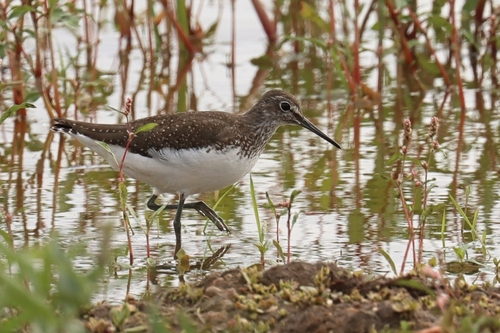 Piro piro culbianco
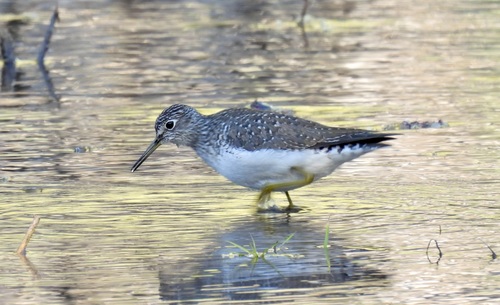 Solitary Sandpiper
In breve
Il modo più affidabile per separare il Piro piro culbianco dal Solitary Sandpiper è il loro modello di coda e di groppone in volo: il Piro piro culbianco mostra un groppone bianco brillante, mentre il Solitary Sandpiper mostra un groppone scuro e un centro della coda scuro. Entrambe le specie sono piccoli, grassocci trampolieri con schiene di un verde scuro, teste grigie e parti inferiori bianche, e entrambe hanno macchie bianche sulla schiena che variano con l'età e la stagione. La struttura e l'aspetto in posizione per i trampolieri sono molto simili, quindi concentrati sul colore del groppone quando l'uccello prende il volo. Anche la dimensione è un indizio: il Piro piro culbianco è visibilmente più pesante e leggermente più grande, ma questo è sottile sul campo. I richiami sono simili, quindi non sono un separatore affidabile.
Consigli di identificazione
- Il modello di groppone e coda in volo è il segno di campo più affidabile: Il Piro piro culbianco mostra sempre un groppone bianco brillante, mentre il Solitary Sandpiper ha un groppone scuro e un centro della coda scuro. Fai attenzione a questo quando l'uccello decolla o vola oltre, indipendentemente dall'età o dalla stagione.
- Le macchie sulla schiena variano ma non sono diagnostiche: Entrambe le specie hanno macchie bianche sulla schiena, più prominenti negli adulti in riproduzione e meno in inverno e nei giovani. Non fare affidamento sull'estensione delle macchie per separarli.
- Le parti inferiori e il modello del petto sono simili: Entrambi hanno parti inferiori bianche con una testa e un petto grigiastri, quindi questo non è un separatore.
- Colore delle gambe e del becco: Il Piro piro culbianco ha gambe e becco di un verde scuro; il colore delle gambe non è specificato per il Solitary Sandpiper qui, quindi non utilizzare questo come segno principale.
- Dimensione e robustezza: Il Piro piro culbianco è più pesante e leggermente più grande, con un aspetto più robusto, ma questo è sottile e inaffidabile a meno che entrambe le specie non siano insieme.
- Ali in volo: Entrambi mostrano ali scure sopra e sotto; non utilizzare il colore delle ali come separatore.
- Aspetto in posizione: Entrambi sono trampolieri grassocci e tozzi con postura e struttura simili. Gli uccelli in posizione sono molto difficili da separare senza vedere il groppone.
- Voce: Entrambi emettono un fischio a tre note in volo; non usare il richiamo da solo per separarli.
- Habitat e comportamento: Entrambi nidificano negli alberi e condividono comportamenti di foraggiamento simili; l'habitat non è un separatore.
- Contesto geografico: Il Piro piro culbianco è del Vecchio Mondo (Europa/Asia), il Solitary Sandpiper è del Nuovo Mondo (Americhe); nelle regioni di sovrapposizione (raramente vaganti), fare affidamento sul modello del groppone.
- Sesso e età: Non sono descritti segni specifici per sesso o età oltre alle macchie sulla schiena e al modello del groppone; il colore del groppone è affidabile per tutte le età e entrambi i sessi.
- Quando hai dei dubbi: Se non riesci a vedere il groppone in volo, l'identificazione è molto difficile e dovrebbe essere lasciata come incerta.
- Trappole comuni: Non fare affidamento sulle macchie sulla schiena, sul colore delle ali o sul richiamo per separare queste specie. Solo il modello di groppone e coda in volo è veramente diagnostico.
- Suggerimento riassuntivo: Cerca sempre di far decollare l'uccello o aspetta che voli per controllare il colore del groppone—questo è l'unico segno di campo costantemente affidabile tra queste due specie.
Taglia
Il Piro piro culbianco è decisamente più pesante (media 80 g) rispetto al Solitary Sandpiper (media 48.6 g), ed è descritto come leggermente più grande e con ali più larghe. Tuttavia, entrambi sono piccoli, tozzi trampolieri, e questa differenza di dimensione è sottile a meno che gli uccelli non siano affiancati. In mano o con esperienza, la maggiore robustezza del Piro piro culbianco può essere evidente, ma le proporzioni strutturali sono altrimenti molto simili.
Piumaggio
La differenza di piumaggio più diagnostica si osserva in volo, indipendentemente dall'età: il Piro piro culbianco mostra sempre un groppone bianco brillante, mentre il Solitary Sandpiper ha un groppone scuro e un centro della coda scuro. Questo contrasto è affidabile per tutte le età e stagioni. Entrambe le specie hanno schiene e ali di un verde scuro-bruno con piccole macchie chiare, più estese negli adulti in riproduzione e meno in inverno o nei giovani. Le parti inferiori sono bianche con una testa e un petto grigiastri in entrambe le specie. Le gambe e il becco sono di un verde scuro nel Piro piro culbianco; il colore delle gambe non è specificato per il Solitary Sandpiper in queste note. Le macchie bianche sulla schiena sono variabili in entrambe, quindi non sono un separatore sicuro. Entrambi mostrano ali scure sopra e sotto in volo. Non sono descritte differenze nel modello delle ali superiori specifiche per età oltre al contrasto del groppone e della coda.
Comportamento
Entrambe le specie sono descritte come trampolieri grassocci e tozzi e condividono stili di foraggiamento e movimento simili. Entrambi sono notevoli tra gli uccelli costieri per nidificare negli alberi. Non sono evidenziate differenze comportamentali in queste note che separerebbero affidabilmente sul campo.
Habitat
Non sono descritte differenze di habitat in queste note. Entrambe le specie sono menzionate come trampolieri che nidificano negli alberi, il che è insolito per il gruppo, ma questo non è un segno di separazione sul campo tra i due.
Voce
Entrambe le specie emettono un caratteristico fischio a tre note in volo. Le note non descrivono differenze nella voce che consentirebbero una separazione affidabile.
Piro piro culbianco · Solitary Sandpiper · I miei uccelli difficili