

Motmot

Greater Yellow-Finch vs Greenish Yellow-Finch

Sicalis auriventris versus Sicalis olivascens

Play a quiz with Greater Yellow-Finch and Greenish Yellow-Finch
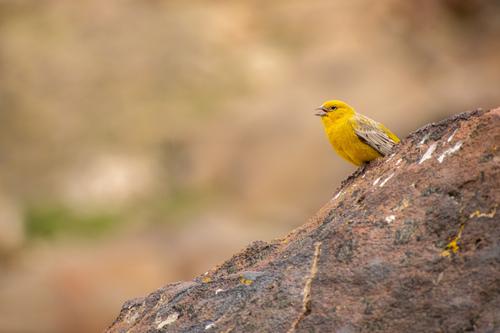
Greater Yellow-Finch (Sicalis auriventris) Greater Yellow-Finch
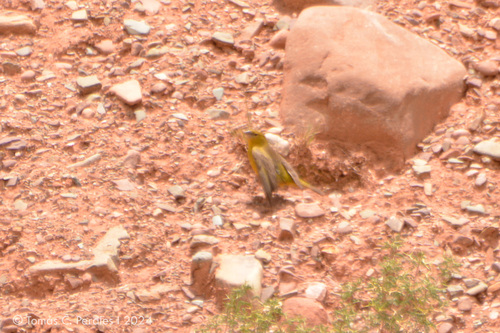
Greenish Yellow-Finch (Sicalis olivascens) Greenish Yellow-Finch

Media

Loading…

In short

The most reliable field mark between Greater Yellow-Finch and Greenish Yellow-Finch is size: Greater Yellow-Finch is more than twice as heavy as Greenish Yellow-Finch, making it noticeably bulkier in the field. Both species can overlap in high-altitude shrubland and degraded forests in Argentina and Chile, but Greenish Yellow-Finch is also found further north into Bolivia and Peru. In the absence of detailed plumage or wing pattern differences in the available notes, focus on overall bulk, especially when birds are seen side-by-side or with known reference species. Habitat overlap means size and structure are the most practical field clues.

Identification tips

  1. Size is the most reliable field mark: Greater Yellow-Finch is much larger and heavier (55g vs 22g). Use this to your advantage, especially when birds are together or with known species for scale.
  2. Bulk and structure: Greater Yellow-Finch appears stockier and more robust, while Greenish Yellow-Finch is noticeably more slender and delicate. Watch for this in both perched and flight views.
  3. Plumage similarity: Both species are yellow-finches with similar overall coloration. Do not rely on subtle plumage differences unless you have more detailed local knowledge or reference material.
  4. Range context: In Bolivia and Peru, only Greenish Yellow-Finch is expected. In Argentina and Chile, both species can occur, so size and structure become crucial.
  5. Habitat overlap: Both species use high-altitude shrubland and degraded forests. Habitat alone will not separate them in Argentina and Chile.
  6. Mixed flocks: If you see a group of Sicalis finches, scan for the largest, bulkiest individuals—these are likely Greater Yellow-Finch.
  7. No documented age-specific wing or flight pattern differences: If you are trying to separate immatures or birds in flight, return to size and jizz, as no unique juvenile or first-winter marks are described.
  8. No documented vocal differences: Do not rely on song or call for field separation based on the current sources.
  9. Sex and season: No sex- or season-specific differences are described in the available notes. Assume both sexes and all ages are similar in overall appearance.
  10. When in doubt, prioritize size: If you are unsure, remember that Greater Yellow-Finch should stand out as much larger and bulkier than Greenish Yellow-Finch in any direct comparison.

Size

Greater Yellow-Finch is substantially larger and heavier (55g vs 22g), making it appear much bulkier and more robust than Greenish Yellow-Finch. This difference is significant enough to be seen even at a distance or in mixed flocks. When perched, Greater Yellow-Finch should look stockier with a heavier build, while Greenish Yellow-Finch will seem more delicate and slender. Use this size difference as your primary field cue, especially in ambiguous light or at a distance. [wikidata]

Plumage

There are no detailed plumage or age-specific wing pattern differences described in the available sources for these two species. Both are yellow-finches, so expect broadly similar yellowish tones. Without more granular information, plumage alone is not a reliable separator in the field, especially for immatures or in poor light. Focus on size and structure instead.

Behaviour

No behavioral differences are documented in the available notes. Both species occupy similar habitats and are likely to show comparable foraging and flocking behavior. If you observe a mixed flock, use size and structure rather than behavior for identification.

Habitat

Both species occur in high-altitude shrubland and degraded forests, especially in Argentina and Chile. However, Greenish Yellow-Finch has a broader range, extending into Bolivia and Peru, while Greater Yellow-Finch is restricted to Argentina and Chile. If you are birding in Bolivia or Peru, you are only likely to encounter Greenish Yellow-Finch. In overlapping areas, habitat is not a reliable separator.

Submit a better description

Use the same sections as the comparison. Your text is published immediately.

The most reliable field mark between Greater Yellow-Finch and Greenish Yellow-Finch is size: Greater Yellow-Finch is more than twice as heavy as Greenish Yellow-Finch, making it noticeably bulkier in the field. Both species can overlap in high-altitude shrubland and degraded forests in Argentina and Chile, but Greenish Yellow-Finch is also found further north into Bolivia and Peru. In the absence of detailed plumage or wing pattern differences in the available notes, focus on overall bulk, especially when birds are seen side-by-side or with known reference species. Habitat overlap means size and structure are the most practical field clues.

  1. Size is the most reliable field mark: Greater Yellow-Finch is much larger and heavier (55g vs 22g). Use this to your advantage, especially when birds are together or with known species for scale.
  2. Bulk and structure: Greater Yellow-Finch appears stockier and more robust, while Greenish Yellow-Finch is noticeably more slender and delicate. Watch for this in both perched and flight views.
  3. Plumage similarity: Both species are yellow-finches with similar overall coloration. Do not rely on subtle plumage differences unless you have more detailed local knowledge or reference material.
  4. Range context: In Bolivia and Peru, only Greenish Yellow-Finch is expected. In Argentina and Chile, both species can occur, so size and structure become crucial.
  5. Habitat overlap: Both species use high-altitude shrubland and degraded forests. Habitat alone will not separate them in Argentina and Chile.
  6. Mixed flocks: If you see a group of Sicalis finches, scan for the largest, bulkiest individuals—these are likely Greater Yellow-Finch.
  7. No documented age-specific wing or flight pattern differences: If you are trying to separate immatures or birds in flight, return to size and jizz, as no unique juvenile or first-winter marks are described.
  8. No documented vocal differences: Do not rely on song or call for field separation based on the current sources.
  9. Sex and season: No sex- or season-specific differences are described in the available notes. Assume both sexes and all ages are similar in overall appearance.
  10. When in doubt, prioritize size: If you are unsure, remember that Greater Yellow-Finch should stand out as much larger and bulkier than Greenish Yellow-Finch in any direct comparison.

Greater Yellow-Finch is substantially larger and heavier (55g vs 22g), making it appear much bulkier and more robust than Greenish Yellow-Finch. This difference is significant enough to be seen even at a distance or in mixed flocks. When perched, Greater Yellow-Finch should look stockier with a heavier build, while Greenish Yellow-Finch will seem more delicate and slender. Use this size difference as your primary field cue, especially in ambiguous light or at a distance. [wikidata]

There are no detailed plumage or age-specific wing pattern differences described in the available sources for these two species. Both are yellow-finches, so expect broadly similar yellowish tones. Without more granular information, plumage alone is not a reliable separator in the field, especially for immatures or in poor light. Focus on size and structure instead.

No behavioral differences are documented in the available notes. Both species occupy similar habitats and are likely to show comparable foraging and flocking behavior. If you observe a mixed flock, use size and structure rather than behavior for identification.

Both species occur in high-altitude shrubland and degraded forests, especially in Argentina and Chile. However, Greenish Yellow-Finch has a broader range, extending into Bolivia and Peru, while Greater Yellow-Finch is restricted to Argentina and Chile. If you are birding in Bolivia or Peru, you are only likely to encounter Greenish Yellow-Finch. In overlapping areas, habitat is not a reliable separator.

Discard your changes?

You have unsaved edits. If you leave now, those changes will be lost.

Greater Yellow-Finch · Greenish Yellow-Finch · My Tricky Birds