

greater yellow-finch vs greenish yellow-finch
Sicalis auriventris versus Sicalis olivascens
Jogue um quiz com greater yellow-finch e greenish yellow-finch
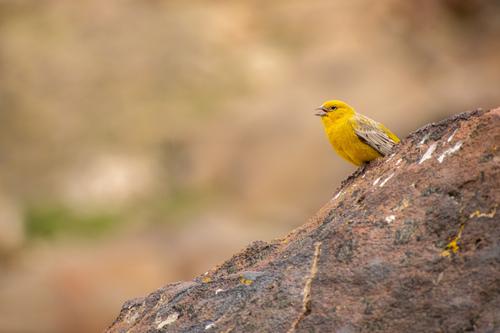 greater yellow-finch
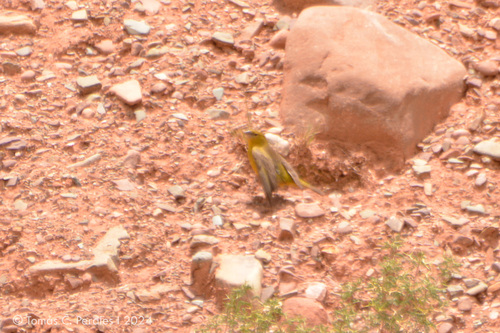 greenish yellow-finch
Em resumo
A marca de campo mais confiável entre o greater yellow-finch e o greenish yellow-finch é o tamanho: o greater yellow-finch pesa mais de duas vezes que o greenish yellow-finch, tornando-o visivelmente mais robusto em campo. Ambas as espécies podem se sobrepor em arbustos de alta altitude e florestas degradadas na Argentina e no Chile, mas o greenish yellow-finch também é encontrado mais ao norte, na Bolívia e no Peru. Na ausência de diferenças detalhadas de plumagem ou padrão de asas nas notas disponíveis, concentre-se na robustez geral, especialmente quando os pássaros são vistos lado a lado ou com espécies de referência conhecidas. A sobreposição de habitat significa que tamanho e estrutura são as pistas de campo mais práticas.
Dicas de identificação
- O tamanho é a marca de campo mais confiável: o greater yellow-finch é muito maior e mais pesado (55g vs 22g). Use isso a seu favor, especialmente quando os pássaros estão juntos ou com espécies conhecidas para escala.
- Robustez e estrutura: o greater yellow-finch parece mais robusto e forte, enquanto o greenish yellow-finch é visivelmente mais esbelto e delicado. Observe isso tanto em vistas empoleiradas quanto em voo.
- Semelhança de plumagem: ambas as espécies são yellow-finches com coloração geral semelhante. Não confie em sutis diferenças de plumagem, a menos que você tenha um conhecimento local mais detalhado ou material de referência.
- Contexto de distribuição: na Bolívia e no Peru, apenas o greenish yellow-finch é esperado. Na Argentina e no Chile, ambas as espécies podem ocorrer, então tamanho e estrutura se tornam cruciais.
- Sobreposição de habitat: ambas as espécies utilizam arbustos de alta altitude e florestas degradadas. O habitat sozinho não as separará na Argentina e no Chile.
- Bandos mistos: se você ver um grupo de Sicalis, procure os indivíduos maiores e mais robustos—esses são provavelmente o greater yellow-finch.
- Sem diferenças documentadas de padrão de asas ou voo específicas por idade: se você estiver tentando separar imaturos ou pássaros em voo, volte ao tamanho e à aparência geral, pois nenhuma marca única de juvenil ou primeiro inverno é descrita.
- Sem diferenças vocais documentadas: não confie em canto ou chamado para separação em campo com base nas fontes atuais.
- Sexo e estação: nenhuma diferença específica de sexo ou estação é descrita nas notas disponíveis. Assuma que ambos os sexos e todas as idades são semelhantes em aparência geral.
- Quando em dúvida, priorize o tamanho: se você não tiver certeza, lembre-se de que o greater yellow-finch deve se destacar como muito maior e mais robusto que o greenish yellow-finch em qualquer comparação direta.
Tamanho
O greater yellow-finch é substancialmente maior e mais pesado (55g vs 22g), fazendo com que pareça muito mais robusto e forte do que o greenish yellow-finch. Essa diferença é significativa o suficiente para ser vista mesmo à distância ou em bandos mistos. Quando empoleirado, o greater yellow-finch deve parecer mais robusto, enquanto o greenish yellow-finch parecerá mais delicado e esbelto. Use essa diferença de tamanho como sua principal pista de campo, especialmente em luz ambígua ou à distância. [wikidata]
Plumagem
Não há diferenças detalhadas de plumagem ou padrão de asas específicas por idade descritas nas fontes disponíveis para essas duas espécies. Ambas são yellow-finches, então espere tons amarelados amplamente semelhantes. Sem informações mais granulares, a plumagem sozinha não é um separador confiável em campo, especialmente para imaturos ou em luz fraca. Concentre-se em tamanho e estrutura em vez disso.
Comportamento
Nenhuma diferença comportamental é documentada nas notas disponíveis. Ambas as espécies ocupam habitats semelhantes e provavelmente mostrarão comportamentos de forrageamento e agrupamento comparáveis. Se você observar um bando misto, use tamanho e estrutura em vez de comportamento para identificação.
Habitat
Ambas as espécies ocorrem em arbustos de alta altitude e florestas degradadas, especialmente na Argentina e no Chile. No entanto, o greenish yellow-finch tem uma distribuição mais ampla, estendendo-se até a Bolívia e o Peru, enquanto o greater yellow-finch é restrito à Argentina e ao Chile. Se você estiver observando aves na Bolívia ou no Peru, é provável que encontre apenas o greenish yellow-finch. Em áreas de sobreposição, o habitat não é um separador confiável.
greater yellow-finch · greenish yellow-finch · Minhas aves difíceis