

Motmot

Greater Short-toed Lark vs Bimaculated Lark

Calandrella brachydactyla versus Melanocorypha bimaculata

Play a quiz with Greater Short-toed Lark and Bimaculated Lark
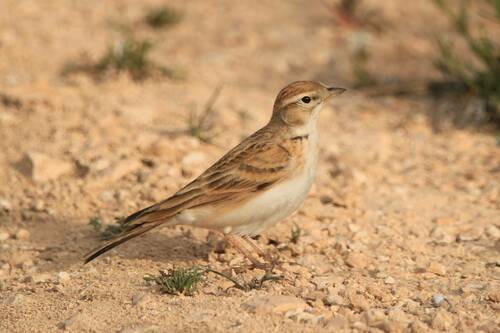
Greater Short-toed Lark (Calandrella brachydactyla) Greater Short-toed Lark
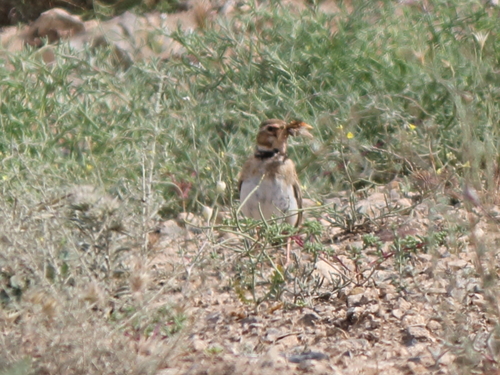
Bimaculated Lark (Melanocorypha bimaculata) Bimaculated Lark

Media

Loading…

In short

The most reliable field mark between Greater Short-toed Lark and Bimaculated Lark is the wing and tail pattern in flight: Bimaculated Lark shows short, broad wings with grey-brown underwings and a short tail with a white tip but no white edges, while Greater Short-toed Lark lacks these features. Structurally, Bimaculated Lark is noticeably heavier and bulkier, with a stouter jizz, compared to the smaller, paler, and more delicate Greater Short-toed Lark. Perched birds can be tricky, but bill shape, facial pattern, and overall coloration help. Flight views and attention to wing and tail pattern are key for separating these two, especially among immatures or in mixed flocks.

Identification tips

  1. In flight, look for the tail tip: Bimaculated Lark always shows a white-tipped tail with no white edges; Greater Short-toed Lark lacks both the white tip and white edges. This is the single most reliable field mark in all plumages and ages.
  2. Check underwing color in flight: Bimaculated Lark has grey-brown underwings, visible in good light; Greater Short-toed Lark's underwing is not described as contrasting, so appears paler and less distinct.
  3. Assess overall size and bulk: Bimaculated Lark is much heavier and bulkier (54g vs much lighter Greater Short-toed Lark), with a more robust build and broader wings. If a lark looks especially chunky among small larks, suspect Bimaculated.
  4. Bill shape and color: Greater Short-toed Lark has a strong, pointed, pinkish bill with a grey culmen, appearing finer and more delicate than the stouter bill of Bimaculated Lark.
  5. Facial pattern: Both species have a pale supercilium and dark neck patches, but Bimaculated Lark's patches are typically more prominent and isolated; Greater Short-toed Lark's are less distinct.
  6. Crown color: Some western Greater Short-toed Larks show a rufous crown, which is not a feature of Bimaculated Lark.
  7. Upperpart streaking: Greater Short-toed Lark is dark-streaked greyish-brown above and white below, giving a paler, more washed-out impression than the generally richer tones of Bimaculated Lark.
  8. Wing shape in flight: Bimaculated Lark has short, broad wings, giving it a more rounded and heavy appearance in the air; Greater Short-toed Lark's wings are proportionally longer and narrower, matching its smaller size.
  9. Flock structure: In winter, Greater Short-toed Lark forms large, tight, synchronized flocks; Bimaculated Lark is less likely to do so, and its heavier flight style stands out in mixed groups.
  10. Habitat context: If in southern Europe or North Africa, especially in dry, open country, Greater Short-toed Lark is more likely; in steppe or semi-arid regions east of Turkey, Bimaculated is expected.
  11. Roosting behavior: Greater Short-toed Lark often roosts in open ground, squatting in small soil depressions; this behavior is not noted for Bimaculated Lark.
  12. Song and calls: If you hear a dry twittering or imitative melody, it is likely Greater Short-toed Lark; Bimaculated Lark's voice is not described in these notes, so do not rely on song for separation.
  13. Sex and age: Both species are sexually monomorphic in plumage; age-related differences are not well described, but the white tail tip of Bimaculated Lark is present in all ages.
  14. Beware of confusion with other larks: Both species can be confused with other Calandrella and Melanocorypha larks; always confirm the tail and wing pattern in flight when possible.
  15. When in doubt, prioritize flight views: Perched birds can be challenging, but a good look at the tail tip and underwing in flight is usually decisive.

Size

Bimaculated Lark is substantially larger and heavier (body mass ~54g [wikidata]) than Greater Short-toed Lark, which is a notably small lark (smaller than Skylark [wikipedia], but no precise mass given). In the field, Bimaculated Lark appears bulkier and more robust, while Greater Short-toed Lark is compact and dainty. This size difference is often obvious when both species are seen together or with familiar larks for scale.

Plumage

In flight, Bimaculated Lark of all ages shows short, broad wings with grey-brown underwing coloration, and a short tail with a white tip but no white edges—this tail pattern is diagnostic and separates it from Greater Short-toed Lark, which does not show a white-tipped tail or grey-brown underwings. Greater Short-toed Lark is overall paler above and below, with dark streaking on the upperparts and a pale supercilium; some western birds show a rufous crown. Both species have dark neck patches, but these are typically more prominent and isolated in Bimaculated Lark. Sexes are similar in both species. Juvenile and immature plumages are not described in detail for either species, but the flight pattern and tail tip remain reliable at all ages for Bimaculated Lark.

Behaviour

Greater Short-toed Lark often forms large, tight, and synchronized flocks in winter, especially when flying to water or roosting on open ground. Bimaculated Lark's flocking behavior is not detailed, but its heavier build and broader wings give it a slower, more ponderous flight compared to the quick, agile movements of Greater Short-toed Lark. Both species may be found on open ground, but Greater Short-toed Lark is more likely to be seen in compact, cohesive groups.

Habitat

Greater Short-toed Lark breeds and winters across southern Europe, North Africa, and into Asia Minor, favoring open, dry habitats. Bimaculated Lark breeds further east, from Turkey into Central Asia, also in open country. Overlap is possible in parts of Turkey and the Middle East, but Greater Short-toed Lark is more westerly and often found in drier, more Mediterranean settings, while Bimaculated Lark is associated with steppe and semi-arid regions further east.

Voice

Greater Short-toed Lark's song varies from a dry twittering to a more varied and imitative melody. No vocal description is provided for Bimaculated Lark in the available notes, so voice is not a reliable separator here.

Submit a better description

Use the same sections as the comparison. Your text is published immediately.

The most reliable field mark between Greater Short-toed Lark and Bimaculated Lark is the wing and tail pattern in flight: Bimaculated Lark shows short, broad wings with grey-brown underwings and a short tail with a white tip but no white edges, while Greater Short-toed Lark lacks these features. Structurally, Bimaculated Lark is noticeably heavier and bulkier, with a stouter jizz, compared to the smaller, paler, and more delicate Greater Short-toed Lark. Perched birds can be tricky, but bill shape, facial pattern, and overall coloration help. Flight views and attention to wing and tail pattern are key for separating these two, especially among immatures or in mixed flocks.

  1. In flight, look for the tail tip: Bimaculated Lark always shows a white-tipped tail with no white edges; Greater Short-toed Lark lacks both the white tip and white edges. This is the single most reliable field mark in all plumages and ages.
  2. Check underwing color in flight: Bimaculated Lark has grey-brown underwings, visible in good light; Greater Short-toed Lark's underwing is not described as contrasting, so appears paler and less distinct.
  3. Assess overall size and bulk: Bimaculated Lark is much heavier and bulkier (54g vs much lighter Greater Short-toed Lark), with a more robust build and broader wings. If a lark looks especially chunky among small larks, suspect Bimaculated.
  4. Bill shape and color: Greater Short-toed Lark has a strong, pointed, pinkish bill with a grey culmen, appearing finer and more delicate than the stouter bill of Bimaculated Lark.
  5. Facial pattern: Both species have a pale supercilium and dark neck patches, but Bimaculated Lark's patches are typically more prominent and isolated; Greater Short-toed Lark's are less distinct.
  6. Crown color: Some western Greater Short-toed Larks show a rufous crown, which is not a feature of Bimaculated Lark.
  7. Upperpart streaking: Greater Short-toed Lark is dark-streaked greyish-brown above and white below, giving a paler, more washed-out impression than the generally richer tones of Bimaculated Lark.
  8. Wing shape in flight: Bimaculated Lark has short, broad wings, giving it a more rounded and heavy appearance in the air; Greater Short-toed Lark's wings are proportionally longer and narrower, matching its smaller size.
  9. Flock structure: In winter, Greater Short-toed Lark forms large, tight, synchronized flocks; Bimaculated Lark is less likely to do so, and its heavier flight style stands out in mixed groups.
  10. Habitat context: If in southern Europe or North Africa, especially in dry, open country, Greater Short-toed Lark is more likely; in steppe or semi-arid regions east of Turkey, Bimaculated is expected.
  11. Roosting behavior: Greater Short-toed Lark often roosts in open ground, squatting in small soil depressions; this behavior is not noted for Bimaculated Lark.
  12. Song and calls: If you hear a dry twittering or imitative melody, it is likely Greater Short-toed Lark; Bimaculated Lark's voice is not described in these notes, so do not rely on song for separation.
  13. Sex and age: Both species are sexually monomorphic in plumage; age-related differences are not well described, but the white tail tip of Bimaculated Lark is present in all ages.
  14. Beware of confusion with other larks: Both species can be confused with other Calandrella and Melanocorypha larks; always confirm the tail and wing pattern in flight when possible.
  15. When in doubt, prioritize flight views: Perched birds can be challenging, but a good look at the tail tip and underwing in flight is usually decisive.

Bimaculated Lark is substantially larger and heavier (body mass ~54g [wikidata]) than Greater Short-toed Lark, which is a notably small lark (smaller than Skylark [wikipedia], but no precise mass given). In the field, Bimaculated Lark appears bulkier and more robust, while Greater Short-toed Lark is compact and dainty. This size difference is often obvious when both species are seen together or with familiar larks for scale.

In flight, Bimaculated Lark of all ages shows short, broad wings with grey-brown underwing coloration, and a short tail with a white tip but no white edges—this tail pattern is diagnostic and separates it from Greater Short-toed Lark, which does not show a white-tipped tail or grey-brown underwings. Greater Short-toed Lark is overall paler above and below, with dark streaking on the upperparts and a pale supercilium; some western birds show a rufous crown. Both species have dark neck patches, but these are typically more prominent and isolated in Bimaculated Lark. Sexes are similar in both species. Juvenile and immature plumages are not described in detail for either species, but the flight pattern and tail tip remain reliable at all ages for Bimaculated Lark.

Greater Short-toed Lark often forms large, tight, and synchronized flocks in winter, especially when flying to water or roosting on open ground. Bimaculated Lark's flocking behavior is not detailed, but its heavier build and broader wings give it a slower, more ponderous flight compared to the quick, agile movements of Greater Short-toed Lark. Both species may be found on open ground, but Greater Short-toed Lark is more likely to be seen in compact, cohesive groups.

Greater Short-toed Lark breeds and winters across southern Europe, North Africa, and into Asia Minor, favoring open, dry habitats. Bimaculated Lark breeds further east, from Turkey into Central Asia, also in open country. Overlap is possible in parts of Turkey and the Middle East, but Greater Short-toed Lark is more westerly and often found in drier, more Mediterranean settings, while Bimaculated Lark is associated with steppe and semi-arid regions further east.

Greater Short-toed Lark's song varies from a dry twittering to a more varied and imitative melody. No vocal description is provided for Bimaculated Lark in the available notes, so voice is not a reliable separator here.

Discard your changes?

You have unsaved edits. If you leave now, those changes will be lost.

Greater Short-toed Lark · Bimaculated Lark · My Tricky Birds