

Motmot

Greater Prairie-Chicken vs Lesser Prairie-Chicken

Tympanuchus cupido versus Tympanuchus pallidicinctus

Play a quiz with Greater Prairie-Chicken and Lesser Prairie-Chicken
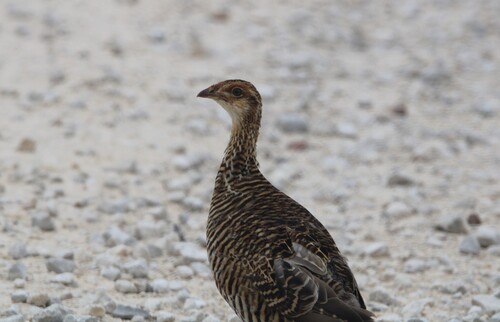
Greater Prairie-Chicken (Tympanuchus cupido) Greater Prairie-Chicken
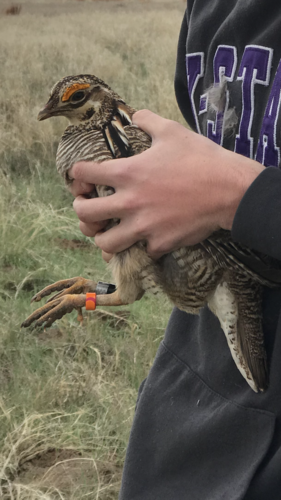
Lesser Prairie-Chicken (Tympanuchus pallidicinctus) Lesser Prairie-Chicken

Media

Loading…

In short

The most reliable field mark between Greater and Lesser Prairie-Chicken is overall size and bulk: Greater is distinctly larger and more robust, with a longer body and broader wings, while Lesser is noticeably smaller and lighter. Both species are chicken-like prairie grouse with similar barred brown-and-buff plumage, but Greater males show brighter orange neck air sacs and combs, compared to the more subdued yellow-orange in Lesser. In the field, differences in structure and display features are subtle, so careful attention to size, display coloration, and context is crucial. Immature and female birds are especially challenging, as their plumage is very similar.

Identification tips

  1. Size is the most consistent field mark: Greater Prairie-Chicken is noticeably larger and bulkier than Lesser. Use this when birds are seen together or with familiar species for scale.
  2. Display features in males: During lekking, Greater males show bright orange neck sacs and combs, while Lesser males have paler, more yellow-orange display features. This is best seen at close range or with a scope.
  3. Structure: Greater appears more robust overall, with a longer body and broader, more rounded wings. Lesser is slimmer and more compact.
  4. Tail shape: Both species have short, rounded tails, but Greater's may appear slightly fuller in proportion to body size.
  5. Head feathering: Both species have elongated head feathers in males, but these are longer and more prominent in Greater. Females and immatures have short head feathers in both species.
  6. Plumage pitfalls: Females and immatures are extremely similar in both species—barred brown and buff, lacking bright display features. Do not rely on plumage alone for these ages.
  7. Upperwing pattern: No distinctive differences are described for juveniles or immatures in flight; both show similar barred patterns.
  8. Context and abundance: Greater Prairie-Chicken is now very rare and localized, especially outside managed reserves. If seen in a region where only one species is known to persist, this can be a strong clue.
  9. Lekking behavior: Both species display in spring and, to a lesser extent, fall. Lesser may use man-made structures for leks more often, but this is not a reliable separator.
  10. Vocalizations: Both produce similar 'booming' calls; do not rely on voice for separation.
  11. Bill and face: No reliable differences in bill size or face pattern are described.
  12. Flight jizz: Greater may appear heavier and more labored in flight, with broader wings, but this is subtle and best judged with experience.
  13. Seasonal context: Display features are most obvious in spring. Outside the breeding season, both species are harder to separate.
  14. Sex differences: Only males show the bright combs and neck sacs; females and immatures are best identified by size and context.
  15. When in doubt: If you cannot judge size or see display features, and habitat/region does not clearly favor one species, it may not be possible to identify the bird to species.

Size

Greater Prairie-Chicken is the larger and heavier species, with adults reaching about 43 cm (17 in) in length and a wingspan of 69.5–72.5 cm (27.4–28.5 in) [wikipedia]. Lesser Prairie-Chicken averages around 685.5 g in mass [wikidata], making it smaller and lighter than most Greater Prairie-Chickens, which can weigh 700–1,200 g. In direct comparison, Greater appears bulkier, with a more robust build and slightly longer wings and tail. When birds are seen side by side or with good context, this size difference is often the easiest clue.

Plumage

There are no detailed age-specific upperwing or flight pattern differences described in the available notes for these two species. Both species have similar overall barred brown-and-buff plumage. Adult males of Greater Prairie-Chicken have prominent orange combs above the eye and large, bright orange inflatable neck sacs, which are especially visible during display. Lesser Prairie-Chicken males have similar display features, but the neck sacs and combs are paler—more yellow-orange than vivid orange. Females and immatures of both species lack the bright combs and have shorter head feathers, making them extremely difficult to separate on plumage alone. No distinctive juvenile or immature upperwing pattern is noted for either species in the sources.

Behaviour

Both species are famous for their lekking behavior, where males gather to display and produce 'booming' calls. Lesser Prairie-Chicken males may use slightly different lek sites, sometimes choosing man-made structures, but both species show similar territorial and display behaviors during spring and, to a lesser extent, fall. Both species nest on the ground and have similar breeding cycles. Behavioral differences are subtle and not reliable for field separation.

Habitat

Greater Prairie-Chicken was once widespread but is now restricted to remnant patches of native prairie, often in managed reserves due to severe population declines [wikipedia]. Lesser Prairie-Chicken also prefers open prairie, especially areas with short grass and scattered brush, and has adapted to using some man-made structures for lekking. Both species overlap in general habitat preference, but Greater is now much rarer and more localized. Habitat alone is not a reliable separator unless local abundance is well known.

Voice

Both species produce deep, resonant 'booming' calls during lekking displays. The notes do not provide diagnostic differences in vocalizations between the two species.

Submit a better description

Use the same sections as the comparison. Your text is published immediately.

The most reliable field mark between Greater and Lesser Prairie-Chicken is overall size and bulk: Greater is distinctly larger and more robust, with a longer body and broader wings, while Lesser is noticeably smaller and lighter. Both species are chicken-like prairie grouse with similar barred brown-and-buff plumage, but Greater males show brighter orange neck air sacs and combs, compared to the more subdued yellow-orange in Lesser. In the field, differences in structure and display features are subtle, so careful attention to size, display coloration, and context is crucial. Immature and female birds are especially challenging, as their plumage is very similar.

  1. Size is the most consistent field mark: Greater Prairie-Chicken is noticeably larger and bulkier than Lesser. Use this when birds are seen together or with familiar species for scale.
  2. Display features in males: During lekking, Greater males show bright orange neck sacs and combs, while Lesser males have paler, more yellow-orange display features. This is best seen at close range or with a scope.
  3. Structure: Greater appears more robust overall, with a longer body and broader, more rounded wings. Lesser is slimmer and more compact.
  4. Tail shape: Both species have short, rounded tails, but Greater's may appear slightly fuller in proportion to body size.
  5. Head feathering: Both species have elongated head feathers in males, but these are longer and more prominent in Greater. Females and immatures have short head feathers in both species.
  6. Plumage pitfalls: Females and immatures are extremely similar in both species—barred brown and buff, lacking bright display features. Do not rely on plumage alone for these ages.
  7. Upperwing pattern: No distinctive differences are described for juveniles or immatures in flight; both show similar barred patterns.
  8. Context and abundance: Greater Prairie-Chicken is now very rare and localized, especially outside managed reserves. If seen in a region where only one species is known to persist, this can be a strong clue.
  9. Lekking behavior: Both species display in spring and, to a lesser extent, fall. Lesser may use man-made structures for leks more often, but this is not a reliable separator.
  10. Vocalizations: Both produce similar 'booming' calls; do not rely on voice for separation.
  11. Bill and face: No reliable differences in bill size or face pattern are described.
  12. Flight jizz: Greater may appear heavier and more labored in flight, with broader wings, but this is subtle and best judged with experience.
  13. Seasonal context: Display features are most obvious in spring. Outside the breeding season, both species are harder to separate.
  14. Sex differences: Only males show the bright combs and neck sacs; females and immatures are best identified by size and context.
  15. When in doubt: If you cannot judge size or see display features, and habitat/region does not clearly favor one species, it may not be possible to identify the bird to species.

Greater Prairie-Chicken is the larger and heavier species, with adults reaching about 43 cm (17 in) in length and a wingspan of 69.5–72.5 cm (27.4–28.5 in) [wikipedia]. Lesser Prairie-Chicken averages around 685.5 g in mass [wikidata], making it smaller and lighter than most Greater Prairie-Chickens, which can weigh 700–1,200 g. In direct comparison, Greater appears bulkier, with a more robust build and slightly longer wings and tail. When birds are seen side by side or with good context, this size difference is often the easiest clue.

There are no detailed age-specific upperwing or flight pattern differences described in the available notes for these two species. Both species have similar overall barred brown-and-buff plumage. Adult males of Greater Prairie-Chicken have prominent orange combs above the eye and large, bright orange inflatable neck sacs, which are especially visible during display. Lesser Prairie-Chicken males have similar display features, but the neck sacs and combs are paler—more yellow-orange than vivid orange. Females and immatures of both species lack the bright combs and have shorter head feathers, making them extremely difficult to separate on plumage alone. No distinctive juvenile or immature upperwing pattern is noted for either species in the sources.

Both species are famous for their lekking behavior, where males gather to display and produce 'booming' calls. Lesser Prairie-Chicken males may use slightly different lek sites, sometimes choosing man-made structures, but both species show similar territorial and display behaviors during spring and, to a lesser extent, fall. Both species nest on the ground and have similar breeding cycles. Behavioral differences are subtle and not reliable for field separation.

Greater Prairie-Chicken was once widespread but is now restricted to remnant patches of native prairie, often in managed reserves due to severe population declines [wikipedia]. Lesser Prairie-Chicken also prefers open prairie, especially areas with short grass and scattered brush, and has adapted to using some man-made structures for lekking. Both species overlap in general habitat preference, but Greater is now much rarer and more localized. Habitat alone is not a reliable separator unless local abundance is well known.

Both species produce deep, resonant 'booming' calls during lekking displays. The notes do not provide diagnostic differences in vocalizations between the two species.

Discard your changes?

You have unsaved edits. If you leave now, those changes will be lost.

Greater Prairie-Chicken · Lesser Prairie-Chicken · My Tricky Birds