

Greater Honeyguide vs Yellow-tufted Pipit
Indicator indicator versus Anthus crenatus
Play a quiz with Greater Honeyguide and Yellow-tufted Pipit
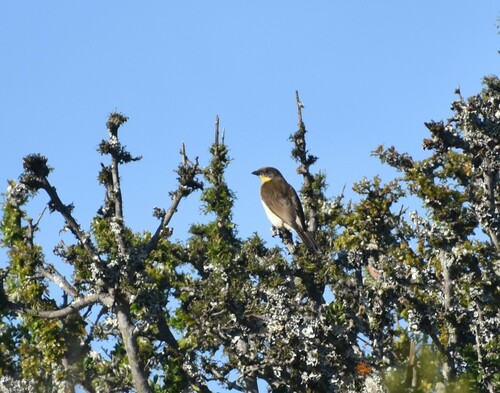 Greater Honeyguide
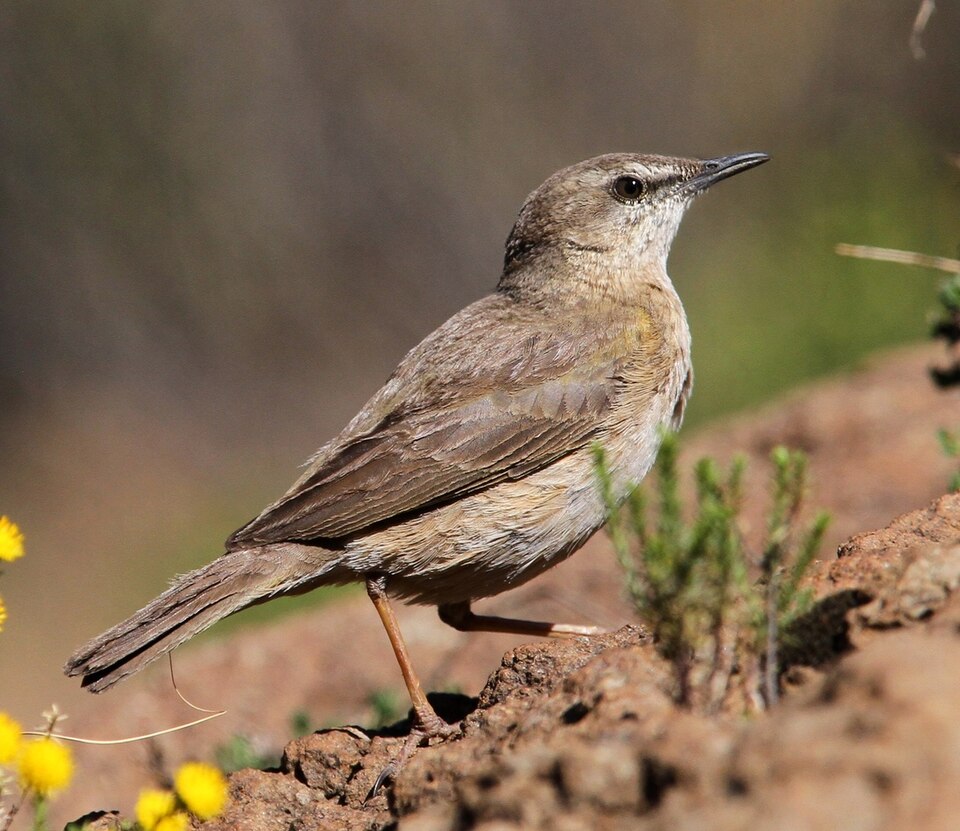 Yellow-tufted Pipit
In short
The most reliable way to separate Greater Honeyguide from Yellow-tufted Pipit is by focusing on tail and wing pattern, bill shape, and overall coloration. Greater Honeyguide shows bold white patches on the sides of the tail (especially obvious in flight) and has a heavier, woodpecker-like bill, while Yellow-tufted Pipit lacks these tail patches and has a slim, pipit-typical bill. Immature honeyguides can be confusing due to their duller colors, but the pipit's yellow on the underparts and wings, plus its distinctive eyebrow, are good clues. Habitat is also a strong separator: honeyguides are found in a range of habitats, often near bee colonies, while Yellow-tufted Pipit is restricted to high-altitude grassland and rocky slopes in southern Africa.
Identification tips
- White tail patches (all ages): Greater Honeyguide shows bold white patches on the sides of the tail, especially obvious in flight or when the tail is spread. Yellow-tufted Pipit never shows white in the tail.
- Bill shape: Honeyguide has a heavy, woodpecker-like bill (pink in males, blackish in females), while pipit has a slim, pointed, dark brown bill typical of insectivorous passerines.
- Yellow in plumage: Pipit shows yellow on the belly and within the wings (visible when perched or in flight), but honeyguide’s yellow is restricted to a shoulder patch (adults) and yellow throat/upper breast (immatures). Honeyguide never shows yellow on the belly.
- Eyebrow: Pipit has a distinct grayish-white eyebrow, lacking in honeyguide.
- Throat color: Adult male honeyguide has a black throat; female also has a blackish throat. Pipit’s throat is plain, matching the underparts, with no black.
- Upperparts: Honeyguide is dark grey-brown above (adults) or olive-brown (immatures) with a white rump; pipit is brown and gray above, lacking a white rump.
- Leg color: Pipit has light brown, petite legs; honeyguide’s legs are not described as distinctive.
- Size and jizz: Honeyguide is bulkier and longer (20 cm, 47 g) with a robust build; pipit is smaller (17–18 cm, 29–32.5 g), more slender, and delicate.
- Wing pattern: Honeyguide’s wings are streaked whitish with a yellow shoulder patch; pipit’s wings are plain brown-gray with yellow highlights, but no bold patches.
- Behavior: Honeyguide may be seen guiding humans or entering bee nests; pipit is always ground-foraging, never interacts with bees or humans.
- Habitat: Honeyguide can occur in various habitats, often near bee colonies; pipit is restricted to high-altitude grassland and rocky slopes in southern Africa.
- Vocalizations: Honeyguide gives chattering, wavering 'tya' notes; pipit gives a loud, high-pitched, repeated 'whee-tsrreeu' call.
- Sexual dimorphism: Honeyguide shows some difference between sexes (bill and throat color); pipit is monomorphic.
- Juvenile confusion: Immature honeyguide’s yellow throat and white rump could mislead, but the tail patches and bill shape remain reliable; pipit juveniles look like adults, with yellow belly and eyebrow.
- Context: If observed near bee activity or guiding humans, suspect honeyguide; if in high, open grassland, pipit is much more likely.
Size
Greater Honeyguide is noticeably heavier and slightly longer than Yellow-tufted Pipit. Honeyguide averages about 47 g and 20 cm in length [wikidata], while the pipit is lighter at 29–32.5 g and shorter at 17–18 cm [wikipedia]. In the field, honeyguide appears bulkier and more robust, with a stouter head and bill, compared to the pipit's slender, delicate build. The pipit’s petite legs and slim bill reinforce its overall lighter jizz.
Plumage
- Juvenile/Immature birds: Immature Greater Honeyguide has olive-brown upperparts, a white rump, and a yellow throat and upper breast. The tail still shows bold white patches on the sides, which are visible in flight and when the tail is spread. Immature Yellow-tufted Pipit is not described in detail, but juveniles are likely similar to adults, with brown and gray feathers, a white-gray eyebrow, and yellow on the wings and stomach.
- Adult males: Greater Honeyguide males have a black throat, pink bill, dark grey-brown upperparts, white underparts, yellow shoulder patch, and white tail sides. Yellow-tufted Pipit adults are brown and gray above, with a pale eyebrow and yellow on the belly and within the wings. No black throat or white tail patches.
- Adult females: Female honeyguides are duller than males, with a blackish bill and black throat, but still show the white tail patches and yellow shoulder. Pipits are sexually monomorphic, so both sexes look alike.
- In flight: The honeyguide’s white tail sides are diagnostic at all ages; pipit lacks any white in the tail. Pipit shows yellow in the wings and belly, but not as a bold patch. Honeyguide’s wing pattern is streaked whitish with a yellow shoulder, while pipit’s wings are plain brown-gray with yellow highlights.
Behaviour
Greater Honeyguide is famous for its mutualistic behavior with humans, actively leading people to bee colonies with distinctive chattering calls and erratic, attention-seeking flight. It is often seen near bee hives or following humans. Yellow-tufted Pipit behaves like a typical pipit: it walks or runs on the ground in open areas, often pausing to scan or make short flights. Pipits do not interact with humans or bees and are not seen guiding or scavenging. Honeyguides may be seen entering bee nests or associating with other honeyguides, while pipits are more solitary or in pairs, foraging in grassland.
Habitat
Habitat is a strong separator. Greater Honeyguide occurs in a variety of paleotropical habitats, often near bee colonies, and is not restricted to high elevations. It can be found in woodland, savanna, and sometimes near human settlements where bees are present. Yellow-tufted Pipit is much more habitat-specific: it is native only to South Africa and Lesotho, and is found exclusively in high-altitude shrubland, grassland, and rocky mountain terrain. If you are in lowland woodland or near bee activity, honeyguide is more likely; in high, rocky grassland, pipit is the default.
Voice
Greater Honeyguide gives a chattering, wavering 'tya' note with peeps or pipes, especially when guiding or agitated. This is quite different from the Yellow-tufted Pipit’s loud, high-pitched, repeated 'whee-tsrreeu' call, which is distinctive among pipits. If you hear a high, clear, repeated pipit-like song, it is not a honeyguide. Honeyguide’s calls are more varied and less musical.