
Motmot

Great Spotted Woodpecker vs Syrian Woodpecker

Dendrocopos major versus Dendrocopos syriacus

Play a quiz with Great Spotted Woodpecker and Syrian Woodpecker
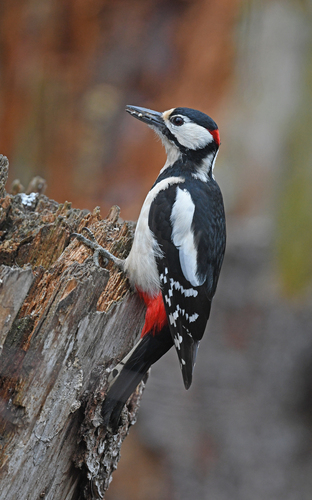
Great Spotted Woodpecker (Dendrocopos major) Great Spotted Woodpecker
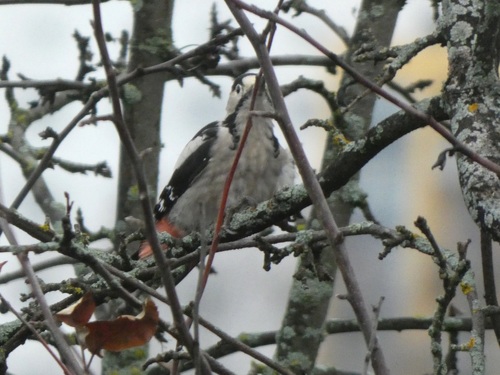
Syrian Woodpecker (Dendrocopos syriacus) Syrian Woodpecker

Media

Loading…

In short

The most reliable field mark to separate Great Spotted Woodpecker from Syrian Woodpecker is the presence or absence of a black cheek bar: Great Spotted always shows a strong black line running from the base of the bill down the neck, while Syrian lacks this, leaving the face whiter and more open. Both species are strikingly similar in size and overall pattern, but Syrian appears longer-billed and paler below, with less extensive red on the underparts. Juvenile Great Spotted can be especially confusing, as their cheek bar may be incomplete, but Syrian never shows a full black cheek bar at any age. In flight or perched, focus first on the head pattern and then check for subtle differences in bill length and underpart color.

Identification tips

  1. Black cheek bar (all ages): Great Spotted Woodpecker always shows a strong black line from the bill through the cheek; Syrian Woodpecker lacks this, resulting in a whiter, more open face. This is the single most reliable field mark.
  2. Juvenile confusion: Juvenile Great Spotted may have an incomplete cheek bar, but usually some trace is visible; Syrian juveniles never show a full cheek bar.
  3. Bill length: Syrian Woodpecker tends to have a longer, slightly more slender bill than Great Spotted, but this is subtle and best used as supporting evidence.
  4. Head pattern: Syrian has more white on the head, especially around the face and forehead, compared to the more patterned look of Great Spotted.
  5. Underparts color: Great Spotted is white below with a scarlet lower belly and undertail; Syrian is buffish white with reddish on the abdomen and undertail, often appearing paler overall.
  6. Tail pattern: The three outer tail feathers of Syrian show only a few white spots, while Great Spotted has more extensive white barring on the tail. This is best seen when the tail is spread.
  7. Shoulder patch: Both have a large white shoulder patch; not a separator.
  8. Wing pattern: Both have black-and-white barred wings; not a separator.
  9. Red crown (juveniles): Both juveniles have a red crown, but the extent varies and is not a reliable separator.
  10. Nape patch (sexes): Males of both species have a red nape patch; females lack it. Not useful for species separation.
  11. Drumming: Syrian's drumming is longer and fades in volume, while Great Spotted's is shorter and more even. Subtle and best used with experience.
  12. Call: Syrian's call is softer ('quit, quit') than Great Spotted's harsher call, but overlap and individual variation make this unreliable.
  13. Habitat: Syrian is more likely in open, cultivated areas with old trees, but both can occur in parks and woodlands where ranges overlap.
  14. Behavior: Both climb trunks and branches, using their tails for support; behavior is not a separator.
  15. Direct comparison: Where both species occur, focus on the cheek bar and face pattern first, then use bill length and underpart color as supporting marks.

Size

Both species are very close in size, with Great Spotted Woodpecker averaging 89g in mass and 20–24 cm in length, while Syrian Woodpecker is about 23 cm long (mass not specified, but similar). In the field, size alone is not a reliable separator. Syrian may appear slightly longer-billed and a touch slimmer, but this is subtle and easily missed without direct comparison.

Plumage

For all ages, the key difference is the black cheek bar: Great Spotted Woodpecker (adult and most juveniles) shows a bold black line running from the bill through the cheek, while Syrian Woodpecker lacks this, resulting in a much whiter face. Juvenile Great Spotted can have an incomplete cheek bar, but it is rarely completely absent. Both species have a large white shoulder patch and barred black-and-white wings. Underparts are white in Great Spotted, with a scarlet lower belly and undertail, while Syrian is buffish white below with reddish on the abdomen and undertail coverts. The red crown in juveniles is present in both, but the extent varies. Syrian shows more white on the head overall, and the three outer tail feathers have only a few white spots (less than Great Spotted, which has more extensive tail barring). Males of both species have a red nape patch; females lack this. Subspecific variation in Great Spotted can cause paler or darker underparts, but the cheek bar is consistent.

Behaviour

Both species forage in similar ways, climbing trunks and branches, using their stiff tails for support. Syrian Woodpecker is often more inconspicuous and can be overlooked in open woodland or parkland. Drumming behavior is similar, but Syrian's drumming is longer and decreases in volume, while Great Spotted's is shorter and more even.

Habitat

Great Spotted Woodpecker is widespread across the Palearctic, found in a variety of woodlands, including mature forests, parks, and gardens. Syrian Woodpecker is more localized, favoring open woodlands, cultivated areas with trees, and parks, often in drier or more open habitats than Great Spotted. In areas of overlap, both can occur in similar settings, so habitat alone is not diagnostic.

Voice

Syrian Woodpecker's call is a sharp, soft 'quit, quit', less harsh than Great Spotted's call. Drumming is also subtly different: Syrian's drumming is longer, decreases in volume, and is slightly faster, while Great Spotted's is shorter and more even. These differences are best appreciated with experience and are not always reliable in the field.

Submit a better description

Use the same sections as the comparison. Your text is published immediately.

The most reliable field mark to separate Great Spotted Woodpecker from Syrian Woodpecker is the presence or absence of a black cheek bar: Great Spotted always shows a strong black line running from the base of the bill down the neck, while Syrian lacks this, leaving the face whiter and more open. Both species are strikingly similar in size and overall pattern, but Syrian appears longer-billed and paler below, with less extensive red on the underparts. Juvenile Great Spotted can be especially confusing, as their cheek bar may be incomplete, but Syrian never shows a full black cheek bar at any age. In flight or perched, focus first on the head pattern and then check for subtle differences in bill length and underpart color.

  1. Black cheek bar (all ages): Great Spotted Woodpecker always shows a strong black line from the bill through the cheek; Syrian Woodpecker lacks this, resulting in a whiter, more open face. This is the single most reliable field mark.
  2. Juvenile confusion: Juvenile Great Spotted may have an incomplete cheek bar, but usually some trace is visible; Syrian juveniles never show a full cheek bar.
  3. Bill length: Syrian Woodpecker tends to have a longer, slightly more slender bill than Great Spotted, but this is subtle and best used as supporting evidence.
  4. Head pattern: Syrian has more white on the head, especially around the face and forehead, compared to the more patterned look of Great Spotted.
  5. Underparts color: Great Spotted is white below with a scarlet lower belly and undertail; Syrian is buffish white with reddish on the abdomen and undertail, often appearing paler overall.
  6. Tail pattern: The three outer tail feathers of Syrian show only a few white spots, while Great Spotted has more extensive white barring on the tail. This is best seen when the tail is spread.
  7. Shoulder patch: Both have a large white shoulder patch; not a separator.
  8. Wing pattern: Both have black-and-white barred wings; not a separator.
  9. Red crown (juveniles): Both juveniles have a red crown, but the extent varies and is not a reliable separator.
  10. Nape patch (sexes): Males of both species have a red nape patch; females lack it. Not useful for species separation.
  11. Drumming: Syrian's drumming is longer and fades in volume, while Great Spotted's is shorter and more even. Subtle and best used with experience.
  12. Call: Syrian's call is softer ('quit, quit') than Great Spotted's harsher call, but overlap and individual variation make this unreliable.
  13. Habitat: Syrian is more likely in open, cultivated areas with old trees, but both can occur in parks and woodlands where ranges overlap.
  14. Behavior: Both climb trunks and branches, using their tails for support; behavior is not a separator.
  15. Direct comparison: Where both species occur, focus on the cheek bar and face pattern first, then use bill length and underpart color as supporting marks.

Both species are very close in size, with Great Spotted Woodpecker averaging 89g in mass and 20–24 cm in length, while Syrian Woodpecker is about 23 cm long (mass not specified, but similar). In the field, size alone is not a reliable separator. Syrian may appear slightly longer-billed and a touch slimmer, but this is subtle and easily missed without direct comparison.

For all ages, the key difference is the black cheek bar: Great Spotted Woodpecker (adult and most juveniles) shows a bold black line running from the bill through the cheek, while Syrian Woodpecker lacks this, resulting in a much whiter face. Juvenile Great Spotted can have an incomplete cheek bar, but it is rarely completely absent. Both species have a large white shoulder patch and barred black-and-white wings. Underparts are white in Great Spotted, with a scarlet lower belly and undertail, while Syrian is buffish white below with reddish on the abdomen and undertail coverts. The red crown in juveniles is present in both, but the extent varies. Syrian shows more white on the head overall, and the three outer tail feathers have only a few white spots (less than Great Spotted, which has more extensive tail barring). Males of both species have a red nape patch; females lack this. Subspecific variation in Great Spotted can cause paler or darker underparts, but the cheek bar is consistent.

Both species forage in similar ways, climbing trunks and branches, using their stiff tails for support. Syrian Woodpecker is often more inconspicuous and can be overlooked in open woodland or parkland. Drumming behavior is similar, but Syrian's drumming is longer and decreases in volume, while Great Spotted's is shorter and more even.

Great Spotted Woodpecker is widespread across the Palearctic, found in a variety of woodlands, including mature forests, parks, and gardens. Syrian Woodpecker is more localized, favoring open woodlands, cultivated areas with trees, and parks, often in drier or more open habitats than Great Spotted. In areas of overlap, both can occur in similar settings, so habitat alone is not diagnostic.

Syrian Woodpecker's call is a sharp, soft 'quit, quit', less harsh than Great Spotted's call. Drumming is also subtly different: Syrian's drumming is longer, decreases in volume, and is slightly faster, while Great Spotted's is shorter and more even. These differences are best appreciated with experience and are not always reliable in the field.

Discard your changes?

You have unsaved edits. If you leave now, those changes will be lost.

Great Spotted Woodpecker · Syrian Woodpecker · My Tricky Birds