

Motmot

Great Shearwater vs Sargasso Shearwater

Ardenna gravis versus Puffinus lherminieri

Play a quiz with Great Shearwater and Sargasso Shearwater
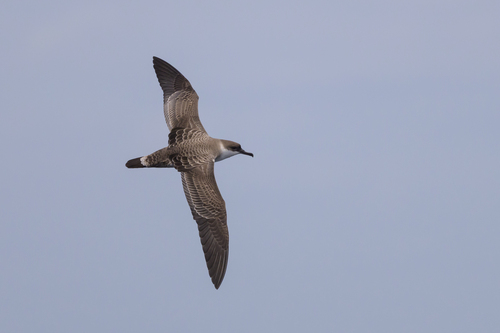
Great Shearwater (Ardenna gravis) Great Shearwater
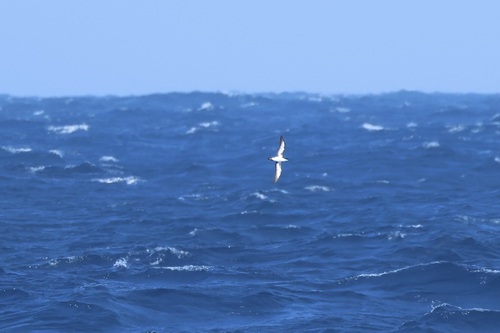
Sargasso Shearwater (Puffinus lherminieri) Sargasso Shearwater

Media

Loading…

In short

The most reliable way to separate Great Shearwater from Sargasso Shearwater is by size—Great Shearwater is nearly twice as long and has a much broader wingspan. In flight, Great Shearwater shows a bold white horseshoe at the tail base, a dark belly patch, and strong dark shoulder markings, while Sargasso Shearwater is smaller, more compact, and lacks these bold contrasts. Both species have dark upperparts and white underparts, but Great Shearwater's black cap and heavy bill are distinctive at close range. Structural differences and flight style also help: Great Shearwater appears larger and more powerful, with stiffer, straighter wings, while Sargasso Shearwater is daintier and more agile.

Identification tips

  1. Size is the fastest check: Great Shearwater is nearly twice as long and much bulkier than Sargasso Shearwater. If you see two together, the difference is striking.
  2. Wingspan and shape: Great Shearwater's wings are long and broad (over 1 meter), while Sargasso Shearwater's are much shorter and narrower (about 65–70 cm). This affects their flight profile.
  3. Tail and rump pattern: Look for the bold white 'horseshoe' at the base of the tail on Great Shearwater—Sargasso Shearwater lacks this feature entirely.
  4. Belly patch: Great Shearwater shows a distinct brown belly patch visible in flight and from below; Sargasso Shearwater's underparts are clean white without a patch.
  5. Shoulder markings: Great Shearwater has strong dark shoulder marks on the upperwing, contrasting with the rest of the wing. Sargasso Shearwater's upperwing is more uniformly dark.
  6. Cap and face: Great Shearwater has a black cap, making the head look darker and more hooded. Sargasso Shearwater's head is white below the eye and lacks a strong cap.
  7. Bill size and color: Great Shearwater has a heavy, all-black bill; Sargasso Shearwater's bill is smaller, greyish with a pinkish hue, and more delicate in proportion.
  8. Feet color: If seen well, Sargasso Shearwater has dull pink feet with black wash, while Great Shearwater's feet are not described as distinctive in this context.
  9. Flight style: Great Shearwater flies with stiff, straight wings and a powerful, direct motion, often gliding for long stretches. Sargasso Shearwater is more agile and quick, with a lighter, more fluttery flight.
  10. Plumage uniformity: Sargasso Shearwater is more uniformly dark above and white below, with less contrast than Great Shearwater.
  11. Age differences: Immature Sargasso Shearwaters look like adults, so the above marks apply to all ages. No age-specific marks are noted for Great Shearwater, so adult features are reliable.
  12. Habitat and context: If seen in the Caribbean or Sargasso Sea, Sargasso Shearwater is more likely; off the North Atlantic or Western Europe, Great Shearwater is expected, especially in large flocks.
  13. Association with boats: Both may follow ships, but Great Shearwater is more likely to be seen in large, noisy groups.
  14. Voice: Only useful at colonies—Great Shearwater gives a piercing cry, Sargasso Shearwater twitters and mews at night.
  15. Pitfalls: Do not rely solely on 'shearing' flight style, as both share this trait. Focus on size, tail/rump pattern, and belly patch for a confident ID.

Size

Great Shearwater is a large seabird, measuring 43–51 cm in length with a wingspan of 105–122 cm. Sargasso Shearwater is much smaller, at 30–33 cm in length and a wingspan of 64–72 cm. The weight difference is also significant: Great Shearwater is much heavier (not specified here, but implied by size), while Sargasso Shearwater averages 170 g. In direct comparison, Great Shearwater will appear bulkier, longer-winged, and more robust, while Sargasso Shearwater is noticeably more petite and compact.

Plumage

No age-specific upperwing pattern is described for either species, so focus on adult and general plumage. Great Shearwater stands out with its dark upperparts, white underparts, a distinct brown belly patch, dark shoulder markings, and a conspicuous white horseshoe at the tail base. The black cap and black bill further set it apart. Sargasso Shearwater is more uniformly blackish-brown above and white below, with the head below the eye also white. Its underwing is mostly white but may show some dark on the distal remiges, and it lacks the bold belly patch and tail horseshoe of Great Shearwater. The bill of Sargasso Shearwater is smaller and greyish with a pinkish hue, and the feet are dull pink with black wash. Immature Sargasso Shearwaters do not have a distinct plumage from adults, so these differences hold across ages.

Behaviour

Both species share the typical 'shearing' flight of the genus, gliding low over the water with stiff wings and few wingbeats. However, Great Shearwater's flight is more powerful and direct, with wings held stiff and straight, and it often appears larger and heavier in motion. Sargasso Shearwater, being smaller, is more agile and may appear quicker and lighter on the wing. Both may follow fishing boats and gather in feeding flocks, but Great Shearwater is more likely to be seen in large, noisy groups.

Habitat

Great Shearwater breeds on remote South Atlantic islands and migrates widely in the Atlantic, often seen off the eastern seaboard of the Americas and Western Europe. Sargasso Shearwater breeds mainly in the Caribbean and Lucayan Archipelago, ranging across the northwestern Atlantic, especially along the Gulf Stream and Sargasso Sea. Both species are pelagic and can be seen offshore, but Sargasso Shearwater is more tied to tropical and subtropical waters, while Great Shearwater is more likely in temperate zones and further north during migration.

Voice

Great Shearwater has a piercing 'eeyah' cry, typically heard when resting in groups on the water. Sargasso Shearwater gives twittering calls and mewing, mostly at night in breeding colonies. Neither species is particularly vocal at sea, so voice is rarely a useful field mark unless at a colony.

Submit a better description

Use the same sections as the comparison. Your text is published immediately.

The most reliable way to separate Great Shearwater from Sargasso Shearwater is by size—Great Shearwater is nearly twice as long and has a much broader wingspan. In flight, Great Shearwater shows a bold white horseshoe at the tail base, a dark belly patch, and strong dark shoulder markings, while Sargasso Shearwater is smaller, more compact, and lacks these bold contrasts. Both species have dark upperparts and white underparts, but Great Shearwater's black cap and heavy bill are distinctive at close range. Structural differences and flight style also help: Great Shearwater appears larger and more powerful, with stiffer, straighter wings, while Sargasso Shearwater is daintier and more agile.

  1. Size is the fastest check: Great Shearwater is nearly twice as long and much bulkier than Sargasso Shearwater. If you see two together, the difference is striking.
  2. Wingspan and shape: Great Shearwater's wings are long and broad (over 1 meter), while Sargasso Shearwater's are much shorter and narrower (about 65–70 cm). This affects their flight profile.
  3. Tail and rump pattern: Look for the bold white 'horseshoe' at the base of the tail on Great Shearwater—Sargasso Shearwater lacks this feature entirely.
  4. Belly patch: Great Shearwater shows a distinct brown belly patch visible in flight and from below; Sargasso Shearwater's underparts are clean white without a patch.
  5. Shoulder markings: Great Shearwater has strong dark shoulder marks on the upperwing, contrasting with the rest of the wing. Sargasso Shearwater's upperwing is more uniformly dark.
  6. Cap and face: Great Shearwater has a black cap, making the head look darker and more hooded. Sargasso Shearwater's head is white below the eye and lacks a strong cap.
  7. Bill size and color: Great Shearwater has a heavy, all-black bill; Sargasso Shearwater's bill is smaller, greyish with a pinkish hue, and more delicate in proportion.
  8. Feet color: If seen well, Sargasso Shearwater has dull pink feet with black wash, while Great Shearwater's feet are not described as distinctive in this context.
  9. Flight style: Great Shearwater flies with stiff, straight wings and a powerful, direct motion, often gliding for long stretches. Sargasso Shearwater is more agile and quick, with a lighter, more fluttery flight.
  10. Plumage uniformity: Sargasso Shearwater is more uniformly dark above and white below, with less contrast than Great Shearwater.
  11. Age differences: Immature Sargasso Shearwaters look like adults, so the above marks apply to all ages. No age-specific marks are noted for Great Shearwater, so adult features are reliable.
  12. Habitat and context: If seen in the Caribbean or Sargasso Sea, Sargasso Shearwater is more likely; off the North Atlantic or Western Europe, Great Shearwater is expected, especially in large flocks.
  13. Association with boats: Both may follow ships, but Great Shearwater is more likely to be seen in large, noisy groups.
  14. Voice: Only useful at colonies—Great Shearwater gives a piercing cry, Sargasso Shearwater twitters and mews at night.
  15. Pitfalls: Do not rely solely on 'shearing' flight style, as both share this trait. Focus on size, tail/rump pattern, and belly patch for a confident ID.

Great Shearwater is a large seabird, measuring 43–51 cm in length with a wingspan of 105–122 cm. Sargasso Shearwater is much smaller, at 30–33 cm in length and a wingspan of 64–72 cm. The weight difference is also significant: Great Shearwater is much heavier (not specified here, but implied by size), while Sargasso Shearwater averages 170 g. In direct comparison, Great Shearwater will appear bulkier, longer-winged, and more robust, while Sargasso Shearwater is noticeably more petite and compact.

No age-specific upperwing pattern is described for either species, so focus on adult and general plumage. Great Shearwater stands out with its dark upperparts, white underparts, a distinct brown belly patch, dark shoulder markings, and a conspicuous white horseshoe at the tail base. The black cap and black bill further set it apart. Sargasso Shearwater is more uniformly blackish-brown above and white below, with the head below the eye also white. Its underwing is mostly white but may show some dark on the distal remiges, and it lacks the bold belly patch and tail horseshoe of Great Shearwater. The bill of Sargasso Shearwater is smaller and greyish with a pinkish hue, and the feet are dull pink with black wash. Immature Sargasso Shearwaters do not have a distinct plumage from adults, so these differences hold across ages.

Both species share the typical 'shearing' flight of the genus, gliding low over the water with stiff wings and few wingbeats. However, Great Shearwater's flight is more powerful and direct, with wings held stiff and straight, and it often appears larger and heavier in motion. Sargasso Shearwater, being smaller, is more agile and may appear quicker and lighter on the wing. Both may follow fishing boats and gather in feeding flocks, but Great Shearwater is more likely to be seen in large, noisy groups.

Great Shearwater breeds on remote South Atlantic islands and migrates widely in the Atlantic, often seen off the eastern seaboard of the Americas and Western Europe. Sargasso Shearwater breeds mainly in the Caribbean and Lucayan Archipelago, ranging across the northwestern Atlantic, especially along the Gulf Stream and Sargasso Sea. Both species are pelagic and can be seen offshore, but Sargasso Shearwater is more tied to tropical and subtropical waters, while Great Shearwater is more likely in temperate zones and further north during migration.

Great Shearwater has a piercing 'eeyah' cry, typically heard when resting in groups on the water. Sargasso Shearwater gives twittering calls and mewing, mostly at night in breeding colonies. Neither species is particularly vocal at sea, so voice is rarely a useful field mark unless at a colony.

Discard your changes?

You have unsaved edits. If you leave now, those changes will be lost.

Great Shearwater · Sargasso Shearwater · My Tricky Birds