

Great Crested Grebe vs Black-necked Grebe
Podiceps cristatus versus Podiceps nigricollis
Play a quiz with Great Crested Grebe and Black-necked Grebe
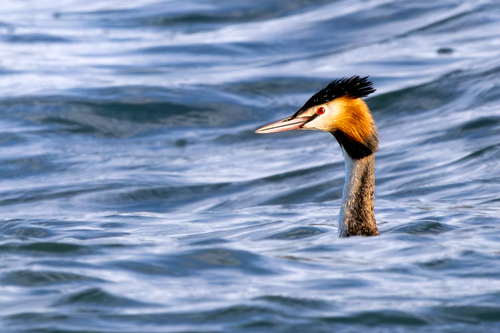 Great Crested Grebe
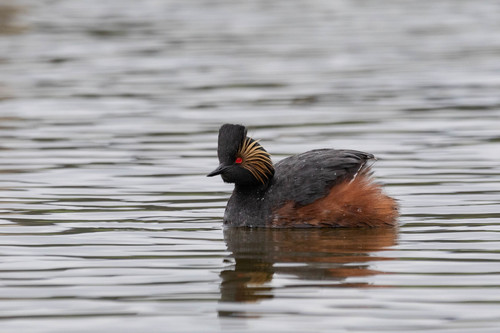 Black-necked Grebe
In short
The most reliable way to separate Great Crested Grebe from Black-necked Grebe is by size and head/neck pattern: Great Crested Grebe is much larger and, in breeding plumage, shows ornate black and orange-brown head plumes, while Black-necked Grebe is compact with a black head and neck and striking ochre feather fans behind the eye. In non-breeding or juvenile plumages, focus on bill shape, neck length, and overall bulk, as well as subtle differences in face and upperwing pattern. Juveniles of both species are striped but differ in head and neck coloration. Flight views and immature birds are a common source of confusion, so pay close attention to structure and any remaining facial patterns.
Identification tips
- Size is the easiest field mark: Great Crested Grebe is much larger and longer-necked than Black-necked Grebe. Use this when you have a sense of scale or see both species together.
- Head and neck shape: Great Crested Grebe has a long, slender neck and elongated body, while Black-necked Grebe is compact with a short neck and rounder body. This is especially useful in flight or on the water at a distance.
- Bill shape: Great Crested Grebe has a longer, straight, and pale bill (pinkish in winter), while Black-necked Grebe's bill is thin, short, slightly upturned, and dark (black or grey depending on season).
- Breeding plumage head pattern: Great Crested Grebe adults show ornate black double crests and orange-brown ruffs on the head, with a white face and neck. Black-necked Grebe adults in breeding plumage have a black head and neck with a striking ochre fan of feathers behind the eye.
- Non-breeding head pattern: In winter, Great Crested Grebe loses its head plumes but retains a white face above the eye; Black-necked Grebe becomes greyer with a dark cap extending below the eye and white ovals behind the ear-coverts.
- Juvenile/chick pattern: Both are striped, but Great Crested Grebe chicks have bold black and white head stripes; Black-necked Grebe chicks are blackish-grey with paler stripes and a pale throat/foreneck.
- Upperwing in flight: Black-necked Grebe shows a distinct white patch on the secondaries and inner primaries, visible in flight in all plumages. Great Crested Grebe's upperwing is less contrasting and lacks a strong white panel.
- Flank color: In breeding plumage, Black-necked Grebe has maroon-chestnut flanks, while Great Crested Grebe's flanks are white.
- Eye color: Black-necked Grebe has a vivid red eye with a yellow or orange orbital ring, especially striking in breeding plumage. Great Crested Grebe's eye is less conspicuous.
- Face pattern in non-breeding birds: Great Crested Grebe shows more white above the eye and a pale face; Black-necked Grebe has a darker face with white ovals behind the ear-coverts.
- Behavior: Great Crested Grebe often performs elaborate courtship displays and carries chicks on its back. Black-necked Grebe is less showy and more likely to be seen in flocks.
- Habitat: If seen on a large, open lake or reservoir, especially in Western Europe, Great Crested Grebe is more likely. Black-necked Grebe prefers smaller lakes and ponds but can overlap.
- Bill color in winter: Great Crested Grebe's bill is pinkish in winter, while Black-necked Grebe's is grey.
- When in doubt: If the bird is small, compact, with a short neck and shows a white wing patch in flight, it is almost certainly Black-necked Grebe. If it is large, long-necked, and lacks a strong wing panel, it is Great Crested Grebe.
- Pitfalls: Immature and non-breeding birds can be confusing—focus on structure, size, and any remaining face or wing pattern. Juvenile stripes fade quickly, so don't rely on them after the first winter.
Size
Great Crested Grebe is significantly larger, weighing around 875 g and measuring 46–51 cm in length with a 59–73 cm wingspan [wikidata]. In contrast, Black-necked Grebe is much smaller, at 28–34 cm length and 215–450 g, with a wingspan of 52–60 cm [wikipedia]. The size difference is usually obvious when seen together, but can be harder to judge at a distance or without direct comparison. Great Crested Grebe appears long-bodied and long-necked, while Black-necked Grebe is compact and short-necked.
Plumage
- Juvenile/immature plumage: Both species' chicks are boldly striped, but Great Crested Grebe chicks have alternating black and white stripes on the head, while Black-necked Grebe chicks have a blackish-grey head with white or pale buff-grey stripes and spots, and a paler throat and foreneck. As they mature, Great Crested Grebe juveniles lose their stripes in the first winter, while Black-necked Grebe juveniles resemble non-breeding adults but are browner with pale lores and buffy tinges on the head and neck.
- Adult breeding plumage: Great Crested Grebe is unmistakable with black double crests and orange-brown ruffs on the head, white face, and long white neck. Black-necked Grebe has a black head, neck, and breast, with a fan of ochre feathers behind the eye and maroon-chestnut flanks.
- Adult non-breeding plumage: Great Crested Grebe loses the ornate head plumes, showing a white face above the eye and a pink bill. Black-necked Grebe becomes greyer on the upperparts and neck, with a dark cap reaching below the eye and white ovals behind the ear-coverts; the bill is more grey.
- Upperwing in flight: Black-necked Grebe shows a distinct white patch on the secondaries and inner primaries, contrasting with otherwise dark wings. Great Crested Grebe's upperwing is less contrasting, generally appearing dark with less obvious white.
Behaviour
Great Crested Grebe is an excellent swimmer and diver, often seen performing elaborate courtship displays with synchronized dances. It carries chicks on its back and teaches them to swim by diving and resurfacing nearby. Black-necked Grebe is also a skilled diver but is more compact and less showy in its displays. Both species nest at the water's edge, but Great Crested Grebe's displays are more conspicuous and elaborate.
Habitat
Both species breed in vegetated areas of freshwater lakes, but Great Crested Grebe is more likely to be found on larger bodies of water and can winter on reservoirs or coastal waters. Black-necked Grebe is often found on smaller lakes and ponds, sometimes in large flocks, especially outside the breeding season. Habitat overlap can occur, but Great Crested Grebe tends to prefer more open water.