

mergulhão-de-crista vs cagarraz
Podiceps cristatus versus Podiceps nigricollis
Jogue um quiz com mergulhão-de-crista e cagarraz
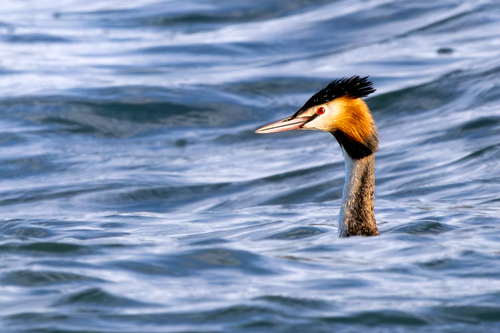 mergulhão-de-crista
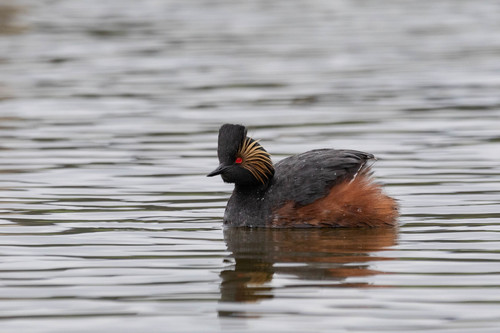 cagarraz
Em resumo
A maneira mais confiável de separar o mergulhão-de-crista do cagarraz é pelo tamanho e padrão da cabeça/pescoço: o mergulhão-de-crista é muito maior e, na plumagem de reprodução, exibe penas ornamentais pretas e laranja-avermelhadas na cabeça, enquanto o cagarraz é compacto, com cabeça e pescoço pretos e impressionantes leques de penas ocre atrás do olho. Em plumagens não reprodutivas ou juvenis, concentre-se na forma do bico, comprimento do pescoço e volume geral, bem como em diferenças sutis no padrão do rosto e da asa superior. Os juvenis de ambas as espécies são listrados, mas diferem na coloração da cabeça e do pescoço. Vistas em voo e aves imaturas são uma fonte comum de confusão, então preste atenção à estrutura e a quaisquer padrões faciais restantes.
Dicas de identificação
- O tamanho é a marca de campo mais fácil: O mergulhão-de-crista é muito maior e com pescoço mais longo do que o cagarraz. Use isso quando tiver uma noção de escala ou ver ambas as espécies juntas.
- Forma da cabeça e pescoço: O mergulhão-de-crista tem um pescoço longo e esguio e corpo alongado, enquanto o cagarraz é compacto, com pescoço curto e corpo mais arredondado. Isso é especialmente útil em voo ou na água à distância.
- Forma do bico: O mergulhão-de-crista tem um bico mais longo, reto e pálido (rosado no inverno), enquanto o bico do cagarraz é fino, curto, ligeiramente curvado para cima e escuro (preto ou cinza dependendo da estação).
- Padrão da cabeça na plumagem de reprodução: Os adultos do mergulhão-de-crista exibem cristas duplas pretas ornamentais e golas laranja-avermelhadas na cabeça, com um rosto e pescoço brancos. Os adultos do cagarraz na plumagem de reprodução têm cabeça e pescoço pretos com um impressionante leque de penas ocre atrás do olho.
- Padrão da cabeça não reprodutiva: No inverno, o mergulhão-de-crista perde suas penas ornamentais na cabeça, mas mantém um rosto branco acima do olho; o cagarraz torna-se mais cinza, com uma touca escura se estendendo abaixo do olho e ovais brancos atrás das coberturas auriculares.
- Padrão juvenil/filhote: Ambos são listrados, mas os filhotes do mergulhão-de-crista têm listras pretas e brancas bem marcadas na cabeça; os filhotes do cagarraz são cinza-escuro com listras mais claras e uma garganta/pescoço mais pálido.
- Asa superior em voo: O cagarraz mostra uma mancha branca distinta nas secundárias e primárias internas, visível em voo em todas as plumagens. A asa superior do mergulhão-de-crista é menos contrastante e carece de um forte painel branco.
- Cor da flanco: Na plumagem de reprodução, o cagarraz tem flancos castanho-avermelhados, enquanto os flancos do mergulhão-de-crista são brancos.
- Cor do olho: O cagarraz tem um olho vermelho vívido com um anel orbital amarelo ou laranja, especialmente impressionante na plumagem de reprodução. O olho do mergulhão-de-crista é menos conspícuo.
- Padrão facial em aves não reprodutivas: O mergulhão-de-crista mostra mais branco acima do olho e um rosto pálido; o cagarraz tem um rosto mais escuro com ovais brancos atrás das coberturas auriculares.
- Comportamento: O mergulhão-de-crista frequentemente realiza exibições de cortejo elaboradas e carrega filhotes nas costas. O cagarraz é menos chamativo e mais propenso a ser visto em bandos.
- Habitat: Se visto em um grande lago aberto ou reservatório, especialmente na Europa Ocidental, é mais provável que seja um mergulhão-de-crista. O cagarraz prefere lagos e lagoas menores, mas pode ocorrer sobreposição.
- Cor do bico no inverno: O bico do mergulhão-de-crista é rosado no inverno, enquanto o do cagarraz é cinza.
- Quando em dúvida: Se a ave é pequena, compacta, com pescoço curto e mostra uma mancha branca na asa em voo, é quase certamente um cagarraz. Se é grande, com pescoço longo e carece de um forte painel de asa, é um mergulhão-de-crista.
- Armadilhas: Aves imaturas e não reprodutivas podem ser confusas—concentre-se na estrutura, tamanho e quaisquer padrões faciais ou de asa restantes. As listras juvenis desaparecem rapidamente, então não confie nelas após o primeiro inverno.
Tamanho
O mergulhão-de-crista é significativamente maior, pesando cerca de 875 g e medindo 46–51 cm de comprimento com uma envergadura de 59–73 cm [wikidata]. Em contraste, o cagarraz é muito menor, com 28–34 cm de comprimento e 215–450 g, com uma envergadura de 52–60 cm [wikipedia]. A diferença de tamanho é geralmente óbvia quando vistas juntas, mas pode ser mais difícil de julgar à distância ou sem comparação direta. O mergulhão-de-crista parece ter corpo longo e pescoço longo, enquanto o cagarraz é compacto e com pescoço curto.
Plumagem
- Plumagem juvenil/imatura: Ambos os filhotes das espécies são fortemente listrados, mas os filhotes do mergulhão-de-crista têm listras alternadas pretas e brancas na cabeça, enquanto os filhotes do cagarraz têm cabeça cinza-escura com listras e manchas brancas ou cinza-pálido, e uma garganta e pescoço mais pálidos. À medida que amadurecem, os juvenis do mergulhão-de-crista perdem suas listras no primeiro inverno, enquanto os juvenis do cagarraz se assemelham a adultos não reprodutivos, mas são mais marrons com lores pálidos e tons claros na cabeça e pescoço.
- Plumagem adulta de reprodução: O mergulhão-de-crista é inconfundível com cristas duplas pretas e golas laranja-avermelhadas na cabeça, rosto branco e pescoço longo e branco. O cagarraz tem cabeça, pescoço e peito pretos, com um leque de penas ocre atrás do olho e flancos castanho-avermelhados.
- Plumagem adulta não reprodutiva: O mergulhão-de-crista perde as penas ornamentais da cabeça, mostrando um rosto branco acima do olho e um bico rosa. O cagarraz torna-se mais cinza nas partes superiores e pescoço, com uma touca escura alcançando abaixo do olho e ovais brancos atrás das coberturas auriculares; o bico é mais cinza.
- Asa superior em voo: O cagarraz mostra uma mancha branca distinta nas secundárias e primárias internas, contrastando com asas escuras. A asa superior do mergulhão-de-crista é menos contrastante, geralmente aparecendo escura com menos branco óbvio.
Comportamento
O mergulhão-de-crista é um excelente nadador e mergulhador, frequentemente visto realizando exibições de cortejo elaboradas com danças sincronizadas. Ele carrega filhotes nas costas e os ensina a nadar mergulhando e ressurgindo nas proximidades. O cagarraz também é um mergulhador habilidoso, mas é mais compacto e menos chamativo em suas exibições. Ambas as espécies fazem ninhos na borda da água, mas as exibições do mergulhão-de-crista são mais conspícuas e elaboradas.
Habitat
Ambas as espécies se reproduzem em áreas vegetadas de lagos de água doce, mas o mergulhão-de-crista é mais provável de ser encontrado em corpos d'água maiores e pode passar o inverno em reservatórios ou águas costeiras. O cagarraz é frequentemente encontrado em lagos e lagoas menores, às vezes em grandes bandos, especialmente fora da temporada de reprodução. A sobreposição de habitat pode ocorrer, mas o mergulhão-de-crista tende a preferir águas mais abertas.