

Great Cormorant vs Double-crested Cormorant
Phalacrocorax carbo versus Nannopterum auritum
Play a quiz with Great Cormorant and Double-crested Cormorant
 Great Cormorant
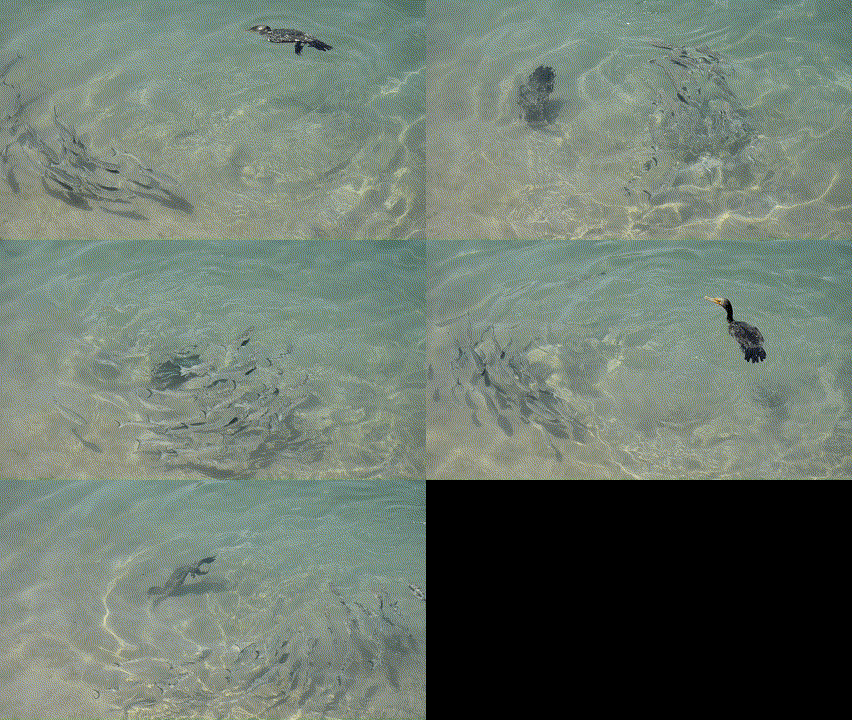 Double-crested Cormorant
In short
The most reliable field mark between Great Cormorant and Double-crested Cormorant is the presence of white thigh patches on breeding adult Great Cormorants, which Double-crested Cormorants never show. For non-breeding or immature birds, focus on structure: Great Cormorant is bulkier overall, with a heavier bill and longer tail. Double-crested Cormorant shows more yellow-orange on the throat and bill, and in breeding season, adults may show a distinctive double crest above the eyes. Juvenile plumages can be confusing, but Great Cormorant juveniles are paler below and take several years to reach full adult coloration. Use a combination of size, bill shape, facial skin color, and (in season) the presence or absence of crests and white thigh patches for the most confident separation.
Identification tips
- White thigh patches (breeding adult Great Cormorant only): If you see bold white patches on the thighs, it's a breeding adult Great Cormorant. Double-crested Cormorant never shows this feature.
- Double crest (breeding adult Double-crested only): Look for a bushy double crest (white, black, or mixed) above the eyes on Double-crested Cormorant in breeding season. Great Cormorant lacks any crest.
- Facial skin color: Double-crested Cormorant shows more extensive orange-yellow skin on the face and throat, especially in breeding season, often extending onto the lores. Great Cormorant has a yellow (sometimes red) gular patch, but it is less extensive and does not reach as far forward.
- Bill structure: Great Cormorant's bill is stouter, thicker, and more strongly hooked at the tip. Double-crested's bill is slimmer and slightly shorter in proportion to head size.
- Tail length: Great Cormorant has a longer tail with 14 feathers (vs. 12 in Double-crested), making the tail look more substantial, especially when perched.
- Overall bulk: Great Cormorant is noticeably bulkier and heavier-bodied, with a thicker neck and more massive appearance, both perched and in flight.
- Juvenile underparts: Juvenile Great Cormorant is much paler below (almost whitish), especially on the belly and breast, while Double-crested juveniles are more dusky or brownish below, with a less sharp contrast.
- Adult iridescence: Great Cormorant adults show greenish or purple iridescence on the body and wings in good light; Double-crested is more uniformly black or dark grayish, lacking strong iridescence.
- Head and neck filoplumes (breeding Great Cormorant): In breeding season, Great Cormorant may show white filoplumes on the head and upper neck, absent in Double-crested.
- Flight jizz: Great Cormorant appears heavier and more direct in flight, with deeper wingbeats; Double-crested is slightly lighter and may fly with bill slightly upturned.
- Perched posture: Great Cormorant often stands more upright and appears more massive; Double-crested can look slimmer and more horizontal.
- Habitat context: In North America, Great Cormorant is more likely on rocky, exposed coasts; Double-crested is common on inland lakes, rivers, and sheltered coasts, but check all marks in overlap zones.
- Tail feather count (if visible): Great Cormorant has 14 tail feathers, Double-crested has 12; this is rarely visible but can be diagnostic in close photos.
- Age progression: Great Cormorant takes 3–4 years to reach adult plumage, so immatures may retain pale underparts for longer; Double-crested matures faster, with juveniles darkening more quickly.
- Absence of voice cues: Neither species is reliably separated by voice in the field—rely on visual marks.
Size
Great Cormorant is the heavier and more robust species, with an average adult mass around 2200 g [wikidata], while Double-crested Cormorant is lighter (1.2–2.5 kg per [wikipedia]). In direct comparison, Great Cormorant appears bulkier, with a thicker neck and heavier, more powerful bill. Both are large cormorants, but Great Cormorant is consistently the larger and more imposing bird, especially noticeable when perched side by side or in flight.
Plumage
- Juvenile/immature plumage: Both species have paler underparts as juveniles, but Great Cormorant juveniles are distinctly pale to whitish below, with a sharp contrast to the darker upperparts, and retain this for up to 3–4 years. Double-crested Cormorant juveniles are more brownish or grayish overall, with a pale throat and breast that darkens toward the belly, but generally less sharply contrasting than Great Cormorant.
- Adult breeding plumage: Great Cormorant adults in breeding season show striking white thigh patches and sometimes white filoplumes on the head and neck; Double-crested Cormorant never shows white thigh patches, but breeding adults develop a double crest (white, black, or mixed) above the eyes and have orange facial skin. Great Cormorant adults are glossy black with greenish or purple iridescence, while Double-crested adults are black with a dark grayish back and coverts, and more extensive yellow-orange on the face and throat.
- Non-breeding adults: Both species lose their special breeding features (white patches or crests), but Great Cormorant remains bulkier and darker overall, with less yellow on the face. Double-crested Cormorant retains some yellow or orange facial skin, especially around the gular area.
- Bill and facial skin: Great Cormorant has a stouter, more hooked bill with a yellow (sometimes red) gular patch, but less extensive than the orange-yellow of Double-crested Cormorant, which also shows yellow up onto the lores.
Behaviour
Both species swim low in the water with just the head and neck visible, and both perch with wings spread to dry. In flight, Great Cormorant appears heavier and more direct, with deeper wingbeats, while Double-crested Cormorant is slightly lighter and may show a more buoyant flight. Double-crested Cormorants are often seen leaving colonies in long, single-file lines, a behavior less typical of Great Cormorant. Both species dive for fish using their feet for propulsion.
Habitat
Great Cormorant is widespread across the Old World, Australasia, and the Atlantic coast of North America, often found in coastal areas but also inland lakes and rivers. Double-crested Cormorant is widespread across North America, from Alaska to Florida and Mexico, using both freshwater and coastal habitats. Where both occur (e.g., Atlantic Canada, northeastern US), Great Cormorant is more likely on rocky coasts and offshore islands, while Double-crested is more often found on inland lakes, rivers, and sheltered coasts, but there is overlap.
Voice
Both species are mostly silent away from colonies. At breeding colonies, Great Cormorant gives guttural noises, but neither species is likely to be identified by voice in the field.
Great Cormorant · Double-crested Cormorant · My Tricky Birds