

Motmot

Great Bowerbird vs Fawn-breasted Bowerbird

Chlamydera nuchalis versus Chlamydera cerviniventris

Play a quiz with Great Bowerbird and Fawn-breasted Bowerbird
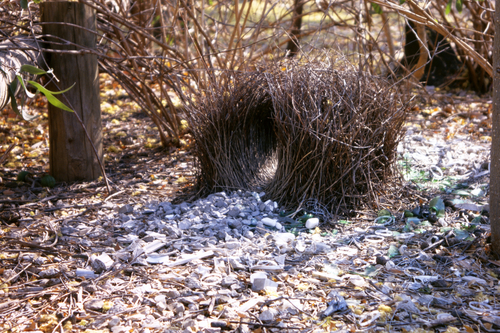
Great Bowerbird (Chlamydera nuchalis) Great Bowerbird
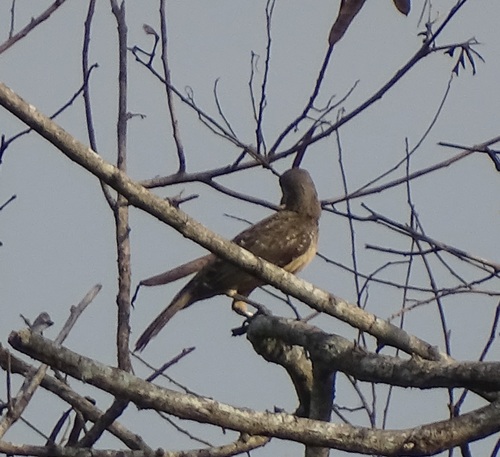
Fawn-breasted Bowerbird (Chlamydera cerviniventris) Fawn-breasted Bowerbird

Media

Loading…

In short

The most reliable field mark to separate Great Bowerbird from Fawn-breasted Bowerbird is the presence of a bright lavender nuchal crest in displaying male Great Bowerbirds, which is never shown by Fawn-breasted. Fawn-breasted Bowerbird stands out with its orange-buff underparts and a black bill, while Great Bowerbird is generally duller with less contrast below and lacks the orange wash. Both species can overlap in Cape York Peninsula, but Great Bowerbird is widespread across northern Australia, whereas Fawn-breasted is more restricted to New Guinea and the far northern Cape York. In the field, pay close attention to underpart color, bill color, and any display behavior for a confident identification.

Identification tips

  1. Lavender nuchal crest (displaying males only): Only Great Bowerbird males show a bright lavender crest during display, especially visible in good light. Fawn-breasted Bowerbird never shows this feature.
  2. Underpart color: Fawn-breasted Bowerbird has a clear orange-buff wash to the underparts, visible in both sexes and all ages. Great Bowerbird is paler below and lacks this orange wash.
  3. Bill color: Fawn-breasted Bowerbird has a black bill, while Great Bowerbird's bill is paler (not specified in detail, but not black). This is a useful check at close range.
  4. Mouth lining: Fawn-breasted Bowerbird shows a yellow mouth lining, which may be visible when the bird is calling or displaying; Great Bowerbird's mouth color is not described as yellow.
  5. Upperpart spotting: Both species have greyish-brown upperparts with white spotting, so this is not a reliable separator.
  6. Sexual dimorphism: Both species are similar between sexes, but only male Great Bowerbird shows the lavender crest in display.
  7. Juvenile/immature plumage: No specific age-related upperwing or flight pattern differences are described for either species, so do not rely on flight views for separation.
  8. Display behavior: Great Bowerbird males orient bowers north–south and display with the crest in early morning light; Fawn-breasted Bowerbird decorates with green berries but lacks the crest display.
  9. Habitat and range: If seen outside northern Cape York Peninsula or New Guinea, Fawn-breasted is unlikely; Great Bowerbird is widespread in northern Australia. In Cape York, both are possible, so use plumage and bill color.
  10. Size and structure: Both are medium-large, robust bowerbirds; size is not a reliable field mark.
  11. Perched vs. flight views: Separation is easier when perched, as underpart color and bill are visible. In flight, identification is difficult due to lack of distinctive wing pattern.
  12. Bower decoration: If observed at a bower, note the decoration: green berries suggest Fawn-breasted, but overlap in object choice is possible.
  13. Female and non-displaying birds: Focus on underpart color and bill color, as these are consistent across sexes and ages for Fawn-breasted.
  14. Lighting conditions: The lavender crest of Great Bowerbird is most visible in strong, directional light during display; otherwise, it may be hidden.
  15. Pitfalls: Do not rely on general spotted appearance or size. Always check underpart color and bill color for the most reliable field separation.

Size

Direct size comparison is limited by available data, but Fawn-breasted Bowerbird is recorded at up to 32 cm in length and 175 g in mass. Great Bowerbird is similar in size, being one of the largest bowerbirds, but no precise mass is given in the sources. Both are robust, medium-large bowerbirds, and size alone is not a reliable separator in the field.

Plumage

Adult male Great Bowerbird is unique in display with a bright lavender nuchal crest, which is absent in all ages and sexes of Fawn-breasted. Fawn-breasted Bowerbird of both sexes shows a distinctive orange-buff wash to the underparts, a black bill, and a yellow mouth lining, with greyish-brown upperparts and white spotting. Great Bowerbird is generally paler and lacks the orange-buff below, with less contrast between upper and underparts. Both species have similar overall structure and spotted upperparts, but the underpart color and bill color are key. No age-specific upperwing or flight pattern differences are described in the sources for either species, so separation relies on perched views and plumage details.

Behaviour

Both species build avenue-type bowers and males display by holding objects in their bills. Great Bowerbird males are noted for orienting their bowers north–south and using the morning light to enhance the lavender crest display. Fawn-breasted Bowerbird typically decorates bowers with green berries. Both species are conspicuous during the breeding season due to display activity, but Great Bowerbird's display is more visually striking due to the crest. Females of both species are more secretive and nest alone.

Habitat

Great Bowerbird is found across a broad swath of northern Australia, including forest, woodland, vine forest margins, monsoon forest, and mangrove swamps, from Broome to Cape York and south to Townsville. Fawn-breasted Bowerbird is more restricted, occurring in New Guinea and the northernmost Cape York Peninsula, favoring tropical forests, mangroves, savanna woodlands, and forest edges. Overlap is possible only in the far north of Cape York. Habitat alone is not diagnostic where ranges overlap, but elsewhere can be a strong clue.

Submit a better description

Use the same sections as the comparison. Your text is published immediately.

The most reliable field mark to separate Great Bowerbird from Fawn-breasted Bowerbird is the presence of a bright lavender nuchal crest in displaying male Great Bowerbirds, which is never shown by Fawn-breasted. Fawn-breasted Bowerbird stands out with its orange-buff underparts and a black bill, while Great Bowerbird is generally duller with less contrast below and lacks the orange wash. Both species can overlap in Cape York Peninsula, but Great Bowerbird is widespread across northern Australia, whereas Fawn-breasted is more restricted to New Guinea and the far northern Cape York. In the field, pay close attention to underpart color, bill color, and any display behavior for a confident identification.

  1. Lavender nuchal crest (displaying males only): Only Great Bowerbird males show a bright lavender crest during display, especially visible in good light. Fawn-breasted Bowerbird never shows this feature.
  2. Underpart color: Fawn-breasted Bowerbird has a clear orange-buff wash to the underparts, visible in both sexes and all ages. Great Bowerbird is paler below and lacks this orange wash.
  3. Bill color: Fawn-breasted Bowerbird has a black bill, while Great Bowerbird's bill is paler (not specified in detail, but not black). This is a useful check at close range.
  4. Mouth lining: Fawn-breasted Bowerbird shows a yellow mouth lining, which may be visible when the bird is calling or displaying; Great Bowerbird's mouth color is not described as yellow.
  5. Upperpart spotting: Both species have greyish-brown upperparts with white spotting, so this is not a reliable separator.
  6. Sexual dimorphism: Both species are similar between sexes, but only male Great Bowerbird shows the lavender crest in display.
  7. Juvenile/immature plumage: No specific age-related upperwing or flight pattern differences are described for either species, so do not rely on flight views for separation.
  8. Display behavior: Great Bowerbird males orient bowers north–south and display with the crest in early morning light; Fawn-breasted Bowerbird decorates with green berries but lacks the crest display.
  9. Habitat and range: If seen outside northern Cape York Peninsula or New Guinea, Fawn-breasted is unlikely; Great Bowerbird is widespread in northern Australia. In Cape York, both are possible, so use plumage and bill color.
  10. Size and structure: Both are medium-large, robust bowerbirds; size is not a reliable field mark.
  11. Perched vs. flight views: Separation is easier when perched, as underpart color and bill are visible. In flight, identification is difficult due to lack of distinctive wing pattern.
  12. Bower decoration: If observed at a bower, note the decoration: green berries suggest Fawn-breasted, but overlap in object choice is possible.
  13. Female and non-displaying birds: Focus on underpart color and bill color, as these are consistent across sexes and ages for Fawn-breasted.
  14. Lighting conditions: The lavender crest of Great Bowerbird is most visible in strong, directional light during display; otherwise, it may be hidden.
  15. Pitfalls: Do not rely on general spotted appearance or size. Always check underpart color and bill color for the most reliable field separation.

Direct size comparison is limited by available data, but Fawn-breasted Bowerbird is recorded at up to 32 cm in length and 175 g in mass. Great Bowerbird is similar in size, being one of the largest bowerbirds, but no precise mass is given in the sources. Both are robust, medium-large bowerbirds, and size alone is not a reliable separator in the field.

Adult male Great Bowerbird is unique in display with a bright lavender nuchal crest, which is absent in all ages and sexes of Fawn-breasted. Fawn-breasted Bowerbird of both sexes shows a distinctive orange-buff wash to the underparts, a black bill, and a yellow mouth lining, with greyish-brown upperparts and white spotting. Great Bowerbird is generally paler and lacks the orange-buff below, with less contrast between upper and underparts. Both species have similar overall structure and spotted upperparts, but the underpart color and bill color are key. No age-specific upperwing or flight pattern differences are described in the sources for either species, so separation relies on perched views and plumage details.

Both species build avenue-type bowers and males display by holding objects in their bills. Great Bowerbird males are noted for orienting their bowers north–south and using the morning light to enhance the lavender crest display. Fawn-breasted Bowerbird typically decorates bowers with green berries. Both species are conspicuous during the breeding season due to display activity, but Great Bowerbird's display is more visually striking due to the crest. Females of both species are more secretive and nest alone.

Great Bowerbird is found across a broad swath of northern Australia, including forest, woodland, vine forest margins, monsoon forest, and mangrove swamps, from Broome to Cape York and south to Townsville. Fawn-breasted Bowerbird is more restricted, occurring in New Guinea and the northernmost Cape York Peninsula, favoring tropical forests, mangroves, savanna woodlands, and forest edges. Overlap is possible only in the far north of Cape York. Habitat alone is not diagnostic where ranges overlap, but elsewhere can be a strong clue.

Discard your changes?

You have unsaved edits. If you leave now, those changes will be lost.

Great Bowerbird · Fawn-breasted Bowerbird · My Tricky Birds