

Motmot

Great Black-backed Gull vs Iceland Gull

Larus marinus versus Larus glaucoides

Play a quiz with Great Black-backed Gull and Iceland Gull
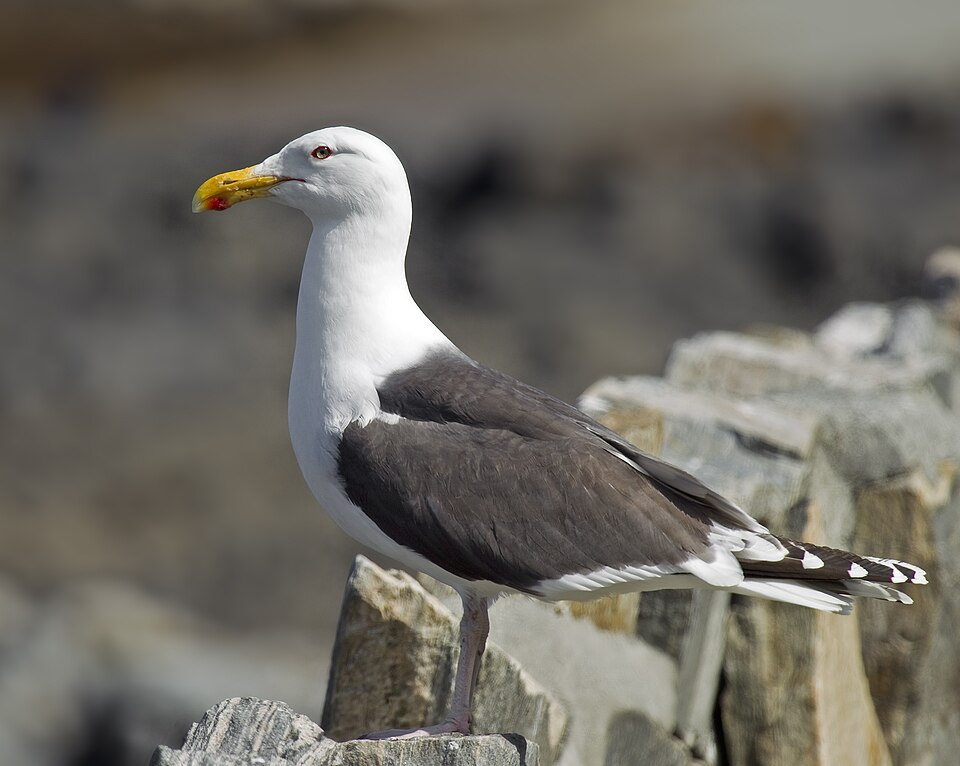
Great Black-backed Gull (Larus marinus) Great Black-backed Gull
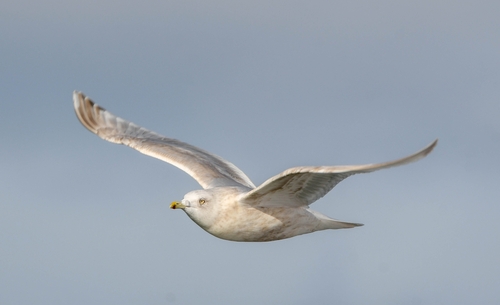
Iceland Gull (Larus glaucoides) Iceland Gull

Media

Loading…

In short

The most reliable field mark between Great Black-backed Gull and Iceland Gull is the adult upperwing: Great Black-backed shows a jet-black mantle and upperwings with white mirrors, while Iceland Gull is much paler, with a light grey mantle and white primaries lacking black. Juvenile and immature birds are also separable in flight: Great Black-backed shows dark, checkered upperparts and a bold blackish trailing edge to the wing, while Iceland Gull immatures are overall much paler and lack strong contrast in the wing. Structurally, Great Black-backed is much bulkier and heavier-billed, while Iceland Gull is notably slimmer and more delicate. Size difference is dramatic, but beware lone birds or mixed flocks for scale. Voice is rarely diagnostic, but Great Black-backed's call is much deeper.

Identification tips

  1. Upperwing pattern in immatures: Juvenile and first-winter Great Black-backed Gulls show a bold, dark trailing edge to the wing and blackish-brown flight feathers, with checkered upperparts. Iceland Gull immatures are pale overall, lacking strong dark contrasts in the wing; their flight feathers and upperparts are pale grey or creamy, with no black.
  2. Adult upperwing and mantle: Adult Great Black-backed Gulls have jet-black upperwings and mantle with white mirrors in the primaries. Adult Iceland Gulls are pale grey above, with white primaries and no black anywhere in the wing.
  3. Tail pattern in juveniles: Juvenile Great Black-backed has a white tail with zigzag bars and a broken black band near the tip. Iceland Gull juveniles have a much paler tail, lacking strong barring or a bold terminal band.
  4. Bill structure: Great Black-backed has a massive, thick, and powerful bill, yellow with a red spot in adults. Iceland Gull's bill is much slimmer, shorter, and yellowish-green in adults; immatures have a more extensively dark bill, but still thinner than Great Black-backed.
  5. Size and bulk: Great Black-backed is dramatically larger and bulkier than Iceland Gull, with a heavier body and thicker neck. Iceland Gull is medium-sized, slim, and light-billed. Use direct comparison in flocks for best results; beware of lone birds for scale.
  6. Leg color: Juvenile Great Black-backed has dark bluish-grey legs with some pink tones; Iceland Gull immatures have pale legs, though leg color is variable and not always reliable.
  7. Overall darkness: Great Black-backed of all ages is darker and more patterned than Iceland Gull at the same age. Iceland Gull always appears pale and washed-out, lacking strong contrasts.
  8. Flight style: Great Black-backed flies with heavy, powerful wingbeats and appears massive; Iceland Gull is more buoyant and graceful in flight.
  9. Behavior: Great Black-backed is aggressive, often chasing or attacking other birds, including other gulls. Iceland Gull is more passive and rarely predatory.
  10. Habitat context: In the North Atlantic, Great Black-backed is common year-round, while Iceland Gull is a winter visitor from the Arctic. In Europe, Iceland Gull is much scarcer.
  11. Voice: A very deep, booming 'laughing' call points to Great Black-backed; Iceland Gull's voice is not distinctive.
  12. Maturity timing: Both species take four years to reach adult plumage, but Great Black-backed immatures remain darker and more patterned throughout.
  13. Bill color in immatures: Iceland Gull immatures have a more extensively dark bill than Glaucous Gull, but still thinner and more delicate than Great Black-backed. Great Black-backed immatures have a brownish-black bill with a white tip, becoming darker before paling.
  14. Plumage progression: As Great Black-backed ages, it becomes more contrasting and darker; Iceland Gull remains pale throughout.
  15. Pitfalls: Beware of lighting conditions that can make Iceland Gull look darker or Great Black-backed look paler. Always check multiple features, especially in mixed flocks or distant views.

Size

Great Black-backed Gull is the largest gull in the North Atlantic, with a massive, thick bill and heavy body. Iceland Gull is medium-sized, much lighter and more slender, with a thinner bill. For reference, Great Black-backed measures 64–79 cm in length, wingspan 150–170 cm, and mass 1.1–2.3 kg [avonet/wikidata], while Iceland Gull is 50–64 cm long, wingspan 115–150 cm, and mass 480–1,100 g [wikipedia]. Even a large male Iceland Gull will look noticeably smaller and lighter than a female Great Black-backed. In direct comparison or mixed flocks, the size difference is obvious, but beware of lone birds where scale is hard to judge.

Plumage

Juvenile and first-winter birds are best separated by upperwing pattern in flight: Great Black-backed Gull immatures (under one year) show scaly, checkered black-brown upperparts with a bold, dark trailing edge to the wing and blackish-brown flight feathers. Their tails are white with zigzag bars and a broken black band near the tip. In contrast, Iceland Gull immatures are very pale overall, lacking strong contrast in the wing, and show pale grey upperparts with no dark trailing edge or black in the primaries. Adult Great Black-backed Gulls are unmistakable with their jet-black upperwings and mantle, while adult Iceland Gulls are pale grey above with white primaries and no black anywhere in the wing. The bill of adult Great Black-backed is yellow with a red spot, thick and powerful; Iceland Gull's is slimmer and yellowish-green. As both species age, Great Black-backed remains darker and more contrasting, while Iceland Gull stays pale and washed-out. Both species take four years to reach maturity, but Great Black-backed immatures are always darker and more patterned than Iceland Gull of the same age.

Behaviour

Great Black-backed Gull is highly aggressive, often behaving like a raptor: it hunts, pirates, and scavenges, and is known to attack and kill other birds, including adults of smaller species. Iceland Gull is a typical omnivorous gull, feeding on fish, mollusks, scraps, and eggs, and is less likely to be seen predating other birds. In mixed flocks, Great Black-backed often dominates, chasing off other gulls. Iceland Gull is more likely to be seen foraging quietly or scavenging at dumps and harbors. Flight style differs: Great Black-backed appears heavy and powerful, while Iceland Gull is more buoyant and graceful.

Habitat

Both species occur along North Atlantic coasts, but their breeding and wintering ranges differ. Great Black-backed breeds on coasts and islands of northern Europe and northeastern North America, and is often resident or only locally migratory. Iceland Gull breeds in Arctic Canada and Greenland, wintering farther south along the Atlantic coast, including the British Isles and northeastern US. Iceland Gull is much scarcer in Europe than Great Black-backed. In winter, both can be found at harbors, garbage dumps, and coastal areas, but Great Black-backed is more likely to be seen year-round in temperate zones.

Voice

Great Black-backed Gull's call is a deep, 'laughing' cry, much lower-pitched than most other gulls, and can sound almost mammalian. Iceland Gull's voice is not described in detail in the sources, but is not noted as distinctive or particularly deep. In practice, calls are rarely a primary field mark for separating these two, but a very deep, booming call points to Great Black-backed.

Submit a better description

Use the same sections as the comparison. Your text is published immediately.

The most reliable field mark between Great Black-backed Gull and Iceland Gull is the adult upperwing: Great Black-backed shows a jet-black mantle and upperwings with white mirrors, while Iceland Gull is much paler, with a light grey mantle and white primaries lacking black. Juvenile and immature birds are also separable in flight: Great Black-backed shows dark, checkered upperparts and a bold blackish trailing edge to the wing, while Iceland Gull immatures are overall much paler and lack strong contrast in the wing. Structurally, Great Black-backed is much bulkier and heavier-billed, while Iceland Gull is notably slimmer and more delicate. Size difference is dramatic, but beware lone birds or mixed flocks for scale. Voice is rarely diagnostic, but Great Black-backed's call is much deeper.

  1. Upperwing pattern in immatures: Juvenile and first-winter Great Black-backed Gulls show a bold, dark trailing edge to the wing and blackish-brown flight feathers, with checkered upperparts. Iceland Gull immatures are pale overall, lacking strong dark contrasts in the wing; their flight feathers and upperparts are pale grey or creamy, with no black.
  2. Adult upperwing and mantle: Adult Great Black-backed Gulls have jet-black upperwings and mantle with white mirrors in the primaries. Adult Iceland Gulls are pale grey above, with white primaries and no black anywhere in the wing.
  3. Tail pattern in juveniles: Juvenile Great Black-backed has a white tail with zigzag bars and a broken black band near the tip. Iceland Gull juveniles have a much paler tail, lacking strong barring or a bold terminal band.
  4. Bill structure: Great Black-backed has a massive, thick, and powerful bill, yellow with a red spot in adults. Iceland Gull's bill is much slimmer, shorter, and yellowish-green in adults; immatures have a more extensively dark bill, but still thinner than Great Black-backed.
  5. Size and bulk: Great Black-backed is dramatically larger and bulkier than Iceland Gull, with a heavier body and thicker neck. Iceland Gull is medium-sized, slim, and light-billed. Use direct comparison in flocks for best results; beware of lone birds for scale.
  6. Leg color: Juvenile Great Black-backed has dark bluish-grey legs with some pink tones; Iceland Gull immatures have pale legs, though leg color is variable and not always reliable.
  7. Overall darkness: Great Black-backed of all ages is darker and more patterned than Iceland Gull at the same age. Iceland Gull always appears pale and washed-out, lacking strong contrasts.
  8. Flight style: Great Black-backed flies with heavy, powerful wingbeats and appears massive; Iceland Gull is more buoyant and graceful in flight.
  9. Behavior: Great Black-backed is aggressive, often chasing or attacking other birds, including other gulls. Iceland Gull is more passive and rarely predatory.
  10. Habitat context: In the North Atlantic, Great Black-backed is common year-round, while Iceland Gull is a winter visitor from the Arctic. In Europe, Iceland Gull is much scarcer.
  11. Voice: A very deep, booming 'laughing' call points to Great Black-backed; Iceland Gull's voice is not distinctive.
  12. Maturity timing: Both species take four years to reach adult plumage, but Great Black-backed immatures remain darker and more patterned throughout.
  13. Bill color in immatures: Iceland Gull immatures have a more extensively dark bill than Glaucous Gull, but still thinner and more delicate than Great Black-backed. Great Black-backed immatures have a brownish-black bill with a white tip, becoming darker before paling.
  14. Plumage progression: As Great Black-backed ages, it becomes more contrasting and darker; Iceland Gull remains pale throughout.
  15. Pitfalls: Beware of lighting conditions that can make Iceland Gull look darker or Great Black-backed look paler. Always check multiple features, especially in mixed flocks or distant views.

Great Black-backed Gull is the largest gull in the North Atlantic, with a massive, thick bill and heavy body. Iceland Gull is medium-sized, much lighter and more slender, with a thinner bill. For reference, Great Black-backed measures 64–79 cm in length, wingspan 150–170 cm, and mass 1.1–2.3 kg [avonet/wikidata], while Iceland Gull is 50–64 cm long, wingspan 115–150 cm, and mass 480–1,100 g [wikipedia]. Even a large male Iceland Gull will look noticeably smaller and lighter than a female Great Black-backed. In direct comparison or mixed flocks, the size difference is obvious, but beware of lone birds where scale is hard to judge.

Juvenile and first-winter birds are best separated by upperwing pattern in flight: Great Black-backed Gull immatures (under one year) show scaly, checkered black-brown upperparts with a bold, dark trailing edge to the wing and blackish-brown flight feathers. Their tails are white with zigzag bars and a broken black band near the tip. In contrast, Iceland Gull immatures are very pale overall, lacking strong contrast in the wing, and show pale grey upperparts with no dark trailing edge or black in the primaries. Adult Great Black-backed Gulls are unmistakable with their jet-black upperwings and mantle, while adult Iceland Gulls are pale grey above with white primaries and no black anywhere in the wing. The bill of adult Great Black-backed is yellow with a red spot, thick and powerful; Iceland Gull's is slimmer and yellowish-green. As both species age, Great Black-backed remains darker and more contrasting, while Iceland Gull stays pale and washed-out. Both species take four years to reach maturity, but Great Black-backed immatures are always darker and more patterned than Iceland Gull of the same age.

Great Black-backed Gull is highly aggressive, often behaving like a raptor: it hunts, pirates, and scavenges, and is known to attack and kill other birds, including adults of smaller species. Iceland Gull is a typical omnivorous gull, feeding on fish, mollusks, scraps, and eggs, and is less likely to be seen predating other birds. In mixed flocks, Great Black-backed often dominates, chasing off other gulls. Iceland Gull is more likely to be seen foraging quietly or scavenging at dumps and harbors. Flight style differs: Great Black-backed appears heavy and powerful, while Iceland Gull is more buoyant and graceful.

Both species occur along North Atlantic coasts, but their breeding and wintering ranges differ. Great Black-backed breeds on coasts and islands of northern Europe and northeastern North America, and is often resident or only locally migratory. Iceland Gull breeds in Arctic Canada and Greenland, wintering farther south along the Atlantic coast, including the British Isles and northeastern US. Iceland Gull is much scarcer in Europe than Great Black-backed. In winter, both can be found at harbors, garbage dumps, and coastal areas, but Great Black-backed is more likely to be seen year-round in temperate zones.

Great Black-backed Gull's call is a deep, 'laughing' cry, much lower-pitched than most other gulls, and can sound almost mammalian. Iceland Gull's voice is not described in detail in the sources, but is not noted as distinctive or particularly deep. In practice, calls are rarely a primary field mark for separating these two, but a very deep, booming call points to Great Black-backed.

Discard your changes?

You have unsaved edits. If you leave now, those changes will be lost.

Great Black-backed Gull · Iceland Gull · My Tricky Birds