

Mugnaiaccio vs Gabbiano d'Islanda
Larus marinus contro Larus glaucoides
Fai un quiz con Mugnaiaccio e Gabbiano d'Islanda
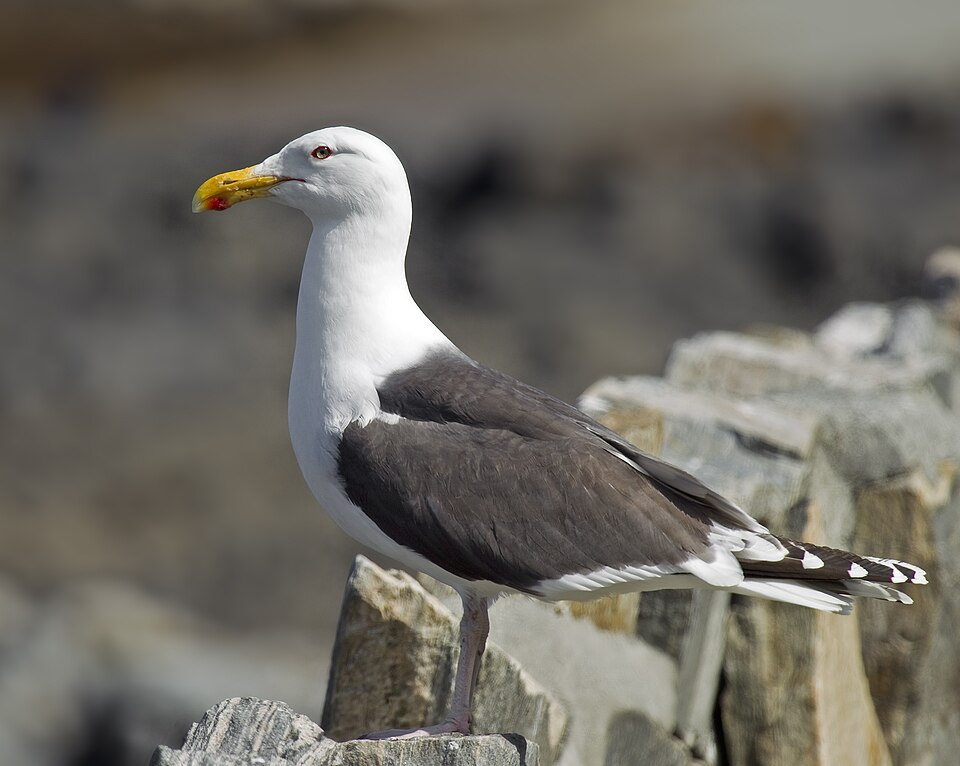 Mugnaiaccio
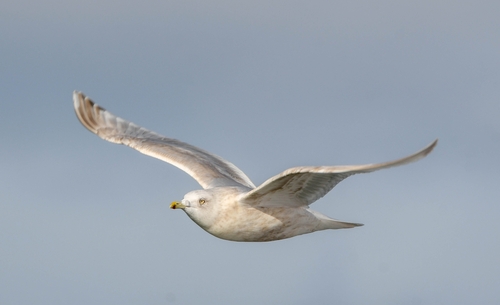 Gabbiano d'Islanda
In breve
Il segno distintivo più affidabile tra il Mugnaiaccio e il Gabbiano d'Islanda è l'ala superiore dell'adulto: il Mugnaiaccio mostra un mantello nero corvino e ali superiori con specchi bianchi, mentre il Gabbiano d'Islanda è molto più chiaro, con un mantello grigio chiaro e primarie bianche prive di nero. Gli uccelli juvenili e immaturi sono anche separabili in volo: il Mugnaiaccio mostra parti superiori scure a scacchi e un bordo posteriore audace e nerastro all'ala, mentre i giovani Gabbiani d'Islanda sono complessivamente molto più chiari e mancano di un forte contrasto nell'ala. Strutturalmente, il Mugnaiaccio è molto più massiccio e con un becco più pesante, mentre il Gabbiano d'Islanda è notevolmente più snello e delicato. La differenza di dimensioni è drammatica, ma attenzione agli uccelli solitari o ai gruppi misti per la scala. La voce è raramente diagnostica, ma il richiamo del Mugnaiaccio è molto più profondo.
Consigli di identificazione
- Upperwing pattern in immatures: I giovani e i Mugnaiacci di primo inverno mostrano un audace bordo posteriore scuro all'ala e penne da volo bruno-nerastre, con parti superiori a scacchi. I giovani Gabbiani d'Islanda sono complessivamente chiari, privi di forti contrasti scuri nell'ala; le loro penne da volo e parti superiori sono grigie chiare o crema, senza nero.
- Adult upperwing and mantle: I Mugnaiacci adulti hanno ali superiori e mantello nero corvino con specchi bianchi nelle primarie. I Gabbiani d'Islanda adulti sono grigi chiari sopra, con primarie bianche e senza nero in nessuna parte dell'ala.
- Tail pattern in juveniles: Il giovane Mugnaiaccio ha una coda bianca con barre a zigzag e una banda nera spezzata vicino alla punta. I giovani Gabbiani d'Islanda hanno una coda molto più chiara, priva di forti barre o di una banda terminale audace.
- Bill structure: Il Mugnaiaccio ha un becco massiccio, spesso e potente, giallo con una macchia rossa negli adulti. Il becco del Gabbiano d'Islanda è molto più snello, più corto e giallo-verde negli adulti; gli immaturi hanno un becco più scuro, ma comunque più sottile rispetto al Mugnaiaccio.
- Size and bulk: Il Mugnaiaccio è drammaticamente più grande e massiccio rispetto al Gabbiano d'Islanda, con un corpo più pesante e un collo più spesso. Il Gabbiano d'Islanda è di dimensioni medie, snello e con un becco leggero. Utilizzare il confronto diretto nei gruppi per i migliori risultati; attenzione agli uccelli solitari per la scala.
- Leg color: Il giovane Mugnaiaccio ha zampe grigio-blu scuro con alcune tonalità rosa; i giovani Gabbiani d'Islanda hanno zampe chiare, anche se il colore delle zampe è variabile e non sempre affidabile.
- Overall darkness: Il Mugnaiaccio di tutte le età è più scuro e più patternato rispetto al Gabbiano d'Islanda della stessa età. Il Gabbiano d'Islanda appare sempre chiaro e sbiadito, privo di forti contrasti.
- Flight style: Il Mugnaiaccio vola con battiti d'ala pesanti e potenti e appare massiccio; il Gabbiano d'Islanda è più leggero e aggraziato in volo.
- Behavior: Il Mugnaiaccio è aggressivo, spesso inseguendo o attaccando altri uccelli, compresi altri gabbiani. Il Gabbiano d'Islanda è più passivo e raramente predatorio.
- Habitat context: Nell'Atlantico settentrionale, il Mugnaiaccio è comune tutto l'anno, mentre il Gabbiano d'Islanda è un visitatore invernale dall'Artico. In Europa, il Gabbiano d'Islanda è molto più raro.
- Voice: Un richiamo molto profondo e rimbombante 'ridacchiante' indica il Mugnaiaccio; la voce del Gabbiano d'Islanda non è distintiva.
- Maturity timing: Entrambe le specie impiegano quattro anni per raggiungere il piumaggio adulto, ma i giovani Mugnaiacci rimangono più scuri e più patternati nel tempo.
- Bill color in immatures: I giovani Gabbiani d'Islanda hanno un becco più scuro rispetto al Gabbiano glauco, ma comunque più sottile e delicato rispetto al Mugnaiaccio. I giovani Mugnaiacci hanno un becco bruno-nerastro con una punta bianca, diventando più scuri prima di schiarirsi.
- Plumage progression: Man mano che il Mugnaiaccio invecchia, diventa più contrastante e scuro; il Gabbiano d'Islanda rimane chiaro per tutto il tempo.
- Pitfalls: Attenzione alle condizioni di illuminazione che possono far sembrare il Gabbiano d'Islanda più scuro o il Mugnaiaccio più chiaro. Controllare sempre più caratteristiche, specialmente in gruppi misti o viste distanti.
Taglia
Il Mugnaiaccio è il gabbiano più grande dell'Atlantico settentrionale, con un becco massiccio e spesso e un corpo pesante. Il Gabbiano d'Islanda è di dimensioni medie, molto più leggero e più snello, con un becco più sottile. A titolo di riferimento, il Mugnaiaccio misura 64–79 cm di lunghezza, apertura alare 150–170 cm e massa 1.1–2.3 kg [avonet/wikidata], mentre il Gabbiano d'Islanda è lungo 50–64 cm, apertura alare 115–150 cm e massa 480–1,100 g [wikipedia]. Anche un grande maschio di Gabbiano d'Islanda apparirà notevolmente più piccolo e più leggero di una femmina di Mugnaiaccio. In confronto diretto o in gruppi misti, la differenza di dimensioni è ovvia, ma attenzione agli uccelli solitari dove la scala è difficile da giudicare.
Piumaggio
Gli uccelli juvenili e di primo inverno sono meglio separati dal pattern dell'ala superiore in volo: i giovani Mugnaiacci (sotto un anno) mostrano parti superiori bruno-nerastre a scacchi con un audace bordo posteriore scuro all'ala e penne da volo bruno-nerastre. Le loro code sono bianche con barre a zigzag e una banda nera spezzata vicino alla punta. Al contrario, i giovani Gabbiani d'Islanda sono molto chiari nel complesso, privi di forti contrasti nell'ala, e mostrano parti superiori grigie chiare senza bordo posteriore scuro o nero nelle primarie. I Mugnaiacci adulti sono inconfondibili con le loro ali superiori e mantello nero corvino, mentre i Gabbiani d'Islanda adulti sono grigi chiari sopra con primarie bianche e senza nero in nessuna parte dell'ala. Il becco del Mugnaiaccio adulto è giallo con una macchia rossa, spesso e potente; quello del Gabbiano d'Islanda è più snello e giallo-verde. Man mano che entrambe le specie invecchiano, il Mugnaiaccio rimane più scuro e più contrastante, mentre il Gabbiano d'Islanda rimane chiaro e sbiadito. Entrambe le specie impiegano quattro anni per raggiungere la maturità, ma i giovani Mugnaiacci sono sempre più scuri e più patternati rispetto al Gabbiano d'Islanda della stessa età.
Comportamento
Il Mugnaiaccio è altamente aggressivo, spesso comportandosi come un rapace: caccia, pirata e si nutre di avanzi, ed è noto per attaccare e uccidere altri uccelli, compresi gli adulti di specie più piccole. Il Gabbiano d'Islanda è un tipico gabbiano onnivoro, nutrendosi di pesci, molluschi, avanzi e uova, ed è meno probabile che venga visto predare altri uccelli. Nei gruppi misti, il Mugnaiaccio spesso domina, scacciando altri gabbiani. Il Gabbiano d'Islanda è più probabile che venga visto cercare cibo in modo tranquillo o nutrirsi in discariche e porti. Lo stile di volo differisce: il Mugnaiaccio appare pesante e potente, mentre il Gabbiano d'Islanda è più leggero e aggraziato.
Habitat
Entrambe le specie si trovano lungo le coste dell'Atlantico settentrionale, ma le loro aree di nidificazione e svernamento differiscono. Il Mugnaiaccio nidifica sulle coste e isole dell'Europa settentrionale e del nord-est dell'America del Nord, ed è spesso residente o solo migratorio localmente. Il Gabbiano d'Islanda nidifica in Canada artico e Groenlandia, svernando più a sud lungo la costa atlantica, comprese le Isole Britanniche e il nord-est degli Stati Uniti. Il Gabbiano d'Islanda è molto più raro in Europa rispetto al Mugnaiaccio. In inverno, entrambi possono essere trovati nei porti, nelle discariche e nelle aree costiere, ma il Mugnaiaccio è più probabile che venga visto tutto l'anno nelle zone temperate.
Voce
Il richiamo del Mugnaiaccio è un profondo grido 'ridacchiante', molto più basso rispetto alla maggior parte degli altri gabbiani, e può suonare quasi mammifero. La voce del Gabbiano d'Islanda non è descritta in dettaglio nelle fonti, ma non è nota come distintiva o particolarmente profonda. In pratica, i richiami sono raramente un segno distintivo primario per separare questi due, ma un richiamo molto profondo e rimbombante indica il Mugnaiaccio.