

Motmot

Grass Wren vs Band-backed Wren

Cistothorus platensis versus Campylorhynchus zonatus

Play a quiz with Grass Wren and Band-backed Wren
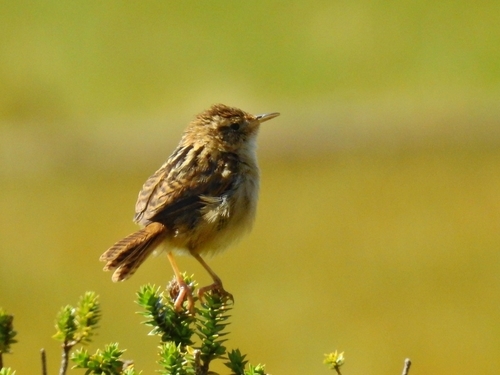
Grass Wren (Cistothorus platensis) Grass Wren
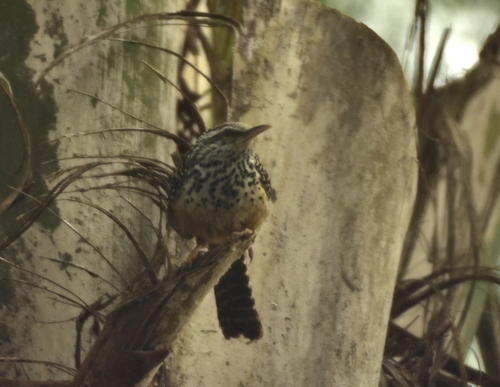
Band-backed Wren (Campylorhynchus zonatus) Band-backed Wren

Media

Loading…

In short

The most reliable way to separate Grass Wren from Band-backed Wren is by size and structure: Band-backed Wren is dramatically larger and bulkier, with a heavier build and much bolder plumage patterning. Grass Wren is a tiny, slim wren with plain buffy underparts and fine streaking above, while Band-backed Wren is much bigger, with a strikingly barred back, black-spotted white throat and breast, and a cinnamon belly. Juvenile Band-backed Wrens are duller but still show the large size and heavier structure. If you see a wren in a group foraging noisily in open woodland or near houses, it's almost certainly Band-backed; Grass Wren is solitary or in pairs and prefers grassy, open habitats. Voice and behavior also differ strongly.

Identification tips

  1. Size is the quickest check: Band-backed Wren is much larger and heavier than Grass Wren. If the bird looks small and delicate, it's almost certainly Grass Wren.
  2. Structure: Band-backed Wren is robust, with a large head and thick bill; Grass Wren is slim, fine-billed, and dainty.
  3. Plumage pattern: Band-backed Wren has heavily barred upperparts and tail, with bold black, tawny, and white patterning. Grass Wren is finely streaked above, never barred, and much plainer.
  4. Underparts: Grass Wren has mostly plain buffy underparts; Band-backed Wren has a white throat and breast with heavy black spotting and a cinnamon belly.
  5. Juvenile confusion: Young Band-backed Wrens are duller but retain size and some barring; they never look as plain as Grass Wren.
  6. Tail pattern: Both have some tail patterning, but only Band-backed Wren shows heavy barring throughout the tail.
  7. Social behavior: Band-backed Wren is almost always in noisy family groups; Grass Wren is solitary or in pairs.
  8. Foraging height: Band-backed Wren forages at various heights in trees and shrubs; Grass Wren stays low in grass or brush.
  9. Nest type: Band-backed Wren builds large, spherical nests high in trees; Grass Wren's nests are smaller and hidden in grass.
  10. Habitat: Grass Wren is found in open grassy or marshy areas; Band-backed Wren prefers woodland, scrub, and areas near houses.
  11. Geographic overlap: Both can occur in Central America, but Band-backed Wren is more likely in the Caribbean foothills and near human habitation.
  12. Vocalizations: If you hear a short rasping 'zek' or complex chattering song, it's Band-backed Wren. Grass Wren's voice is not described here.
  13. Group size: Any group of wrens larger than three is almost certainly Band-backed Wren.
  14. Flight style: No distinctive flight marks are described, but Band-backed Wren's bulk and group flight are distinctive.
  15. When in doubt: Use a combination of size, group behavior, and boldness of plumage pattern—Band-backed Wren is big, social, and boldly marked; Grass Wren is tiny, solitary, and plain.

Size

Band-backed Wren is over four times heavier than Grass Wren (34.6 g vs. 8.0 g) and much longer (16.5 cm vs. 10–10.5 cm). In the field, Band-backed Wren appears robust and chunky, with a large head and thick bill, while Grass Wren is tiny, slim, and delicate. Even juvenile Band-backed Wrens are much larger than any Grass Wren. Size alone is often enough to rule out confusion if seen together or with familiar species for scale.

Plumage

No age-specific upperwing or flight pattern marks are described for either species, so focus on overall plumage. Adult Grass Wren is buffy brown above with fine black and buffy whitish streaks on the back, and wings and tail have dusky bands. Underparts are mostly buffy and plain. Band-backed Wren adults have a brown-grey crown, black nape, and the rest of the upperparts and tail are heavily barred with black, tawny, and white. The throat and breast are white with heavy black spotting, and the belly is cinnamon. Juvenile Band-backed Wrens are duller above and have off-white to buff underparts, but still show the larger size and some barring. Grass Wren never shows the bold barring or black spotting of Band-backed Wren at any age.

Behaviour

Band-backed Wren is highly social, foraging in noisy family groups of 4–12 birds, often in the open and at various heights in trees or shrubs. They also build large, conspicuous spherical nests high in trees, sometimes in bromeliads, and use dormitory nests year-round. Grass Wren is much more secretive and usually seen alone or in pairs, often low in dense grass or brush, and builds smaller, more concealed nests. Group foraging is a strong clue for Band-backed Wren.

Habitat

Grass Wren prefers open grassy areas, marshes, and grassland edges, often in more open country. Band-backed Wren is found in thinned forest, open woodland, scrub, second growth, and groves around houses, mainly on the Caribbean side of Central American mountain ranges. It is much more likely near human habitation or in mixed woodland, while Grass Wren avoids these settings. If the bird is in tall grass or marsh, it's likely Grass Wren; if in trees or near houses, suspect Band-backed Wren.

Voice

Band-backed Wren gives a short, rasping 'zek' call and a complex song of dry chatters, splutters, and gurgles. Grass Wren's vocalizations are not described in the provided notes, so voice is only useful if you hear the distinctive Band-backed Wren sounds. Band-backed Wrens are also more vocal and conspicuous in groups.

Submit a better description

Use the same sections as the comparison. Your text is published immediately.

The most reliable way to separate Grass Wren from Band-backed Wren is by size and structure: Band-backed Wren is dramatically larger and bulkier, with a heavier build and much bolder plumage patterning. Grass Wren is a tiny, slim wren with plain buffy underparts and fine streaking above, while Band-backed Wren is much bigger, with a strikingly barred back, black-spotted white throat and breast, and a cinnamon belly. Juvenile Band-backed Wrens are duller but still show the large size and heavier structure. If you see a wren in a group foraging noisily in open woodland or near houses, it's almost certainly Band-backed; Grass Wren is solitary or in pairs and prefers grassy, open habitats. Voice and behavior also differ strongly.

  1. Size is the quickest check: Band-backed Wren is much larger and heavier than Grass Wren. If the bird looks small and delicate, it's almost certainly Grass Wren.
  2. Structure: Band-backed Wren is robust, with a large head and thick bill; Grass Wren is slim, fine-billed, and dainty.
  3. Plumage pattern: Band-backed Wren has heavily barred upperparts and tail, with bold black, tawny, and white patterning. Grass Wren is finely streaked above, never barred, and much plainer.
  4. Underparts: Grass Wren has mostly plain buffy underparts; Band-backed Wren has a white throat and breast with heavy black spotting and a cinnamon belly.
  5. Juvenile confusion: Young Band-backed Wrens are duller but retain size and some barring; they never look as plain as Grass Wren.
  6. Tail pattern: Both have some tail patterning, but only Band-backed Wren shows heavy barring throughout the tail.
  7. Social behavior: Band-backed Wren is almost always in noisy family groups; Grass Wren is solitary or in pairs.
  8. Foraging height: Band-backed Wren forages at various heights in trees and shrubs; Grass Wren stays low in grass or brush.
  9. Nest type: Band-backed Wren builds large, spherical nests high in trees; Grass Wren's nests are smaller and hidden in grass.
  10. Habitat: Grass Wren is found in open grassy or marshy areas; Band-backed Wren prefers woodland, scrub, and areas near houses.
  11. Geographic overlap: Both can occur in Central America, but Band-backed Wren is more likely in the Caribbean foothills and near human habitation.
  12. Vocalizations: If you hear a short rasping 'zek' or complex chattering song, it's Band-backed Wren. Grass Wren's voice is not described here.
  13. Group size: Any group of wrens larger than three is almost certainly Band-backed Wren.
  14. Flight style: No distinctive flight marks are described, but Band-backed Wren's bulk and group flight are distinctive.
  15. When in doubt: Use a combination of size, group behavior, and boldness of plumage pattern—Band-backed Wren is big, social, and boldly marked; Grass Wren is tiny, solitary, and plain.

Band-backed Wren is over four times heavier than Grass Wren (34.6 g vs. 8.0 g) and much longer (16.5 cm vs. 10–10.5 cm). In the field, Band-backed Wren appears robust and chunky, with a large head and thick bill, while Grass Wren is tiny, slim, and delicate. Even juvenile Band-backed Wrens are much larger than any Grass Wren. Size alone is often enough to rule out confusion if seen together or with familiar species for scale.

No age-specific upperwing or flight pattern marks are described for either species, so focus on overall plumage. Adult Grass Wren is buffy brown above with fine black and buffy whitish streaks on the back, and wings and tail have dusky bands. Underparts are mostly buffy and plain. Band-backed Wren adults have a brown-grey crown, black nape, and the rest of the upperparts and tail are heavily barred with black, tawny, and white. The throat and breast are white with heavy black spotting, and the belly is cinnamon. Juvenile Band-backed Wrens are duller above and have off-white to buff underparts, but still show the larger size and some barring. Grass Wren never shows the bold barring or black spotting of Band-backed Wren at any age.

Band-backed Wren is highly social, foraging in noisy family groups of 4–12 birds, often in the open and at various heights in trees or shrubs. They also build large, conspicuous spherical nests high in trees, sometimes in bromeliads, and use dormitory nests year-round. Grass Wren is much more secretive and usually seen alone or in pairs, often low in dense grass or brush, and builds smaller, more concealed nests. Group foraging is a strong clue for Band-backed Wren.

Grass Wren prefers open grassy areas, marshes, and grassland edges, often in more open country. Band-backed Wren is found in thinned forest, open woodland, scrub, second growth, and groves around houses, mainly on the Caribbean side of Central American mountain ranges. It is much more likely near human habitation or in mixed woodland, while Grass Wren avoids these settings. If the bird is in tall grass or marsh, it's likely Grass Wren; if in trees or near houses, suspect Band-backed Wren.

Band-backed Wren gives a short, rasping 'zek' call and a complex song of dry chatters, splutters, and gurgles. Grass Wren's vocalizations are not described in the provided notes, so voice is only useful if you hear the distinctive Band-backed Wren sounds. Band-backed Wrens are also more vocal and conspicuous in groups.

Discard your changes?

You have unsaved edits. If you leave now, those changes will be lost.

Grass Wren · Band-backed Wren · My Tricky Birds