

Motmot

Glaucous-winged Gull vs Slaty-backed Gull

Larus glaucescens versus Larus schistisagus

Play a quiz with Glaucous-winged Gull and Slaty-backed Gull
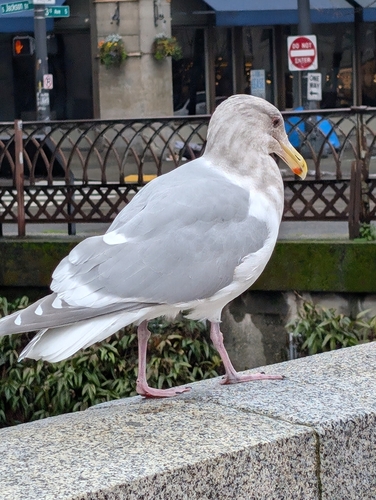
Glaucous-winged Gull (Larus glaucescens) Glaucous-winged Gull
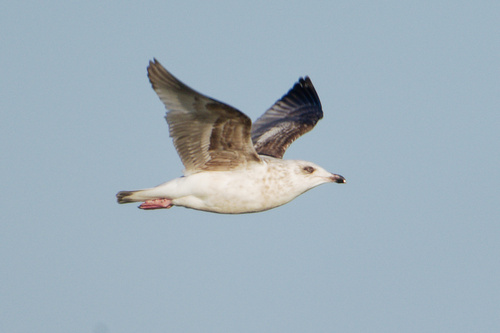
Slaty-backed Gull (Larus schistisagus) Slaty-backed Gull

Media

Loading…

In short

The most reliable field mark between Glaucous-winged Gull and Slaty-backed Gull is the color and pattern of the wingtips in adults: Glaucous-winged has pale grey wingtips that closely match the mantle, while Slaty-backed shows distinctly darker, slaty-grey upperwings with a bold white trailing edge and a 'string of pearls' pattern on the primaries. Immature birds are trickier, but Slaty-backed immatures show a more patterned wing with a strong white trailing edge and 'string of pearls,' while Glaucous-winged immatures are plainer brownish and lack these features. Structurally, Slaty-backed is stouter and more pot-bellied with shorter legs, and has yellow eyes with a colored orbital ring, compared to Glaucous-winged's paler eye and longer-legged look. Both species are large, pink-legged, white-headed gulls, but careful attention to wingtip contrast, trailing edge, and overall structure is key.

Identification tips

  1. Adult wingtip color (all seasons): Glaucous-winged Gull has pale grey wingtips that match the mantle, giving a washed-out, low-contrast look; Slaty-backed Gull has distinctly darker, slaty-grey wingtips with a bold white trailing edge and a 'string of pearls' pattern on the primaries.
  2. Immature wing pattern (juvenile/first-winter): Slaty-backed immatures show a broad white trailing edge and a series of white crescents ('string of pearls') on the mid-primaries, visible in flight; Glaucous-winged immatures are plainer brown with little contrast and lack these marks.
  3. Back and mantle color (adults): Slaty-backed's back and wings are darker slaty-grey, darker than Glaucous-winged's pale silvery-grey mantle.
  4. Primary 'mirrors' (adults): Slaty-backed shows large white spots (mirrors) on the outer primaries (p9, p10); Glaucous-winged's mirrors are smaller or absent, and the primaries are pale.
  5. Trailing edge (all ages): Slaty-backed has a broad, crisp white trailing edge to the wing, especially obvious in flight; Glaucous-winged's trailing edge is much less distinct.
  6. Eye color and orbital ring (adults): Slaty-backed has yellow eyes with a purple to deep pink orbital ring; Glaucous-winged typically has paler eyes and a less colorful orbital ring.
  7. Leg color and length: Both have pink legs, but Slaty-backed's are shorter, making it look more squat and pot-bellied; Glaucous-winged stands taller and longer-legged.
  8. Bill: Both species have a yellow bill with a red spot, but Slaty-backed's bill may appear slightly stouter; not a strong field mark.
  9. Head shape and jizz: Slaty-backed often looks more pot-bellied and thick-necked, with a shorter-legged, compact stance; Glaucous-winged is longer-legged and more elongated.
  10. Head streaking (nonbreeding): Pure Glaucous-winged Gulls are usually white-headed in winter, but hybrids may show streaking; Slaty-backed remains mostly white-headed.
  11. Hybrid confusion: In the Pacific Northwest, Glaucous-winged x Western Gull hybrids ('Olympic Gulls') can show intermediate wingtip darkness and head streaking, sometimes mimicking Slaty-backed; rely on the full suite of marks, especially trailing edge and 'string of pearls.'
  12. Habitat and context: In North America, a Slaty-backed is rare and usually among flocks of Glaucous-winged and other large gulls; always double-check vagrant candidates.
  13. Flight appearance: In flight, Slaty-backed shows a bold white trailing edge and darker upperwings; Glaucous-winged looks paler and more uniform.
  14. Size: Both are large gulls and overlap in size; use structure and plumage, not size, for ID.
  15. Immature confusion: Immature Slaty-backed can resemble Herring Gull, but compared to Glaucous-winged, look for the patterned trailing edge and 'string of pearls.'

Size

Both species are among the largest gulls, with overlapping length and wingspan. Glaucous-winged Gull averages about 1063 g in mass [wikidata], and is 50–68 cm long with a 120–150 cm wingspan. Slaty-backed Gull is similar, at 55–68.5 cm long and 132–160 cm wingspan, and a mass of 1050–1700 g [wikipedia]. In the field, size alone is not a reliable separator, but Slaty-backed may appear slightly bulkier and more pot-bellied, with shorter legs relative to body size.

Plumage

Juvenile/immature birds: Slaty-backed Gull immatures are brown overall but show a strong, broad white trailing edge to the wing and a 'string of pearls' pattern (white crescents) on the mid-primaries, connecting to the trailing edge. Glaucous-winged Gull immatures are more uniformly brownish and lack the bold white trailing edge and 'string of pearls,' appearing plainer in flight.

Adult birds: Glaucous-winged Gull adults have pale grey wingtips that are nearly the same shade as the mantle, resulting in little contrast; the wings look washed out and uniform. Slaty-backed Gull adults have distinctly darker slaty-grey upperwings and back, with a broad white trailing edge and a series of white spots ('mirrors') on the outer primaries. The contrast between the mantle and wingtips is much stronger in Slaty-backed. Both have white heads, tails, and underparts, but Slaty-backed's back and wings are darker.

Nonbreeding: Both species have white heads, but Glaucous-winged can show more streaking in hybrids, while pure birds are usually clean-headed. Slaty-backed's head remains mostly white.

Behaviour

Both species are large, powerful gulls often seen loafing on shorelines or flying along coasts. Slaty-backed may appear more pot-bellied and upright when perched, with shorter legs, while Glaucous-winged stands taller and longer-legged. In flight, Slaty-backed can look broader-winged and heavier, while Glaucous-winged appears more elongated. Both are aggressive and dominant among gulls, but behavioral differences are subtle and not reliable for field ID.

Habitat

Both species frequent coastal environments, including beaches, harbors, and estuaries. Glaucous-winged Gull is more common along the Pacific coast of North America, while Slaty-backed is a rare visitor there, mainly breeding in northeast Asia and wintering along the Pacific Rim. In North America, a Slaty-backed is typically a vagrant among flocks of Glaucous-winged and other large gulls. Habitat overlap is possible in winter, so context helps but is not definitive.

Submit a better description

Use the same sections as the comparison. Your text is published immediately.

The most reliable field mark between Glaucous-winged Gull and Slaty-backed Gull is the color and pattern of the wingtips in adults: Glaucous-winged has pale grey wingtips that closely match the mantle, while Slaty-backed shows distinctly darker, slaty-grey upperwings with a bold white trailing edge and a 'string of pearls' pattern on the primaries. Immature birds are trickier, but Slaty-backed immatures show a more patterned wing with a strong white trailing edge and 'string of pearls,' while Glaucous-winged immatures are plainer brownish and lack these features. Structurally, Slaty-backed is stouter and more pot-bellied with shorter legs, and has yellow eyes with a colored orbital ring, compared to Glaucous-winged's paler eye and longer-legged look. Both species are large, pink-legged, white-headed gulls, but careful attention to wingtip contrast, trailing edge, and overall structure is key.

  1. Adult wingtip color (all seasons): Glaucous-winged Gull has pale grey wingtips that match the mantle, giving a washed-out, low-contrast look; Slaty-backed Gull has distinctly darker, slaty-grey wingtips with a bold white trailing edge and a 'string of pearls' pattern on the primaries.
  2. Immature wing pattern (juvenile/first-winter): Slaty-backed immatures show a broad white trailing edge and a series of white crescents ('string of pearls') on the mid-primaries, visible in flight; Glaucous-winged immatures are plainer brown with little contrast and lack these marks.
  3. Back and mantle color (adults): Slaty-backed's back and wings are darker slaty-grey, darker than Glaucous-winged's pale silvery-grey mantle.
  4. Primary 'mirrors' (adults): Slaty-backed shows large white spots (mirrors) on the outer primaries (p9, p10); Glaucous-winged's mirrors are smaller or absent, and the primaries are pale.
  5. Trailing edge (all ages): Slaty-backed has a broad, crisp white trailing edge to the wing, especially obvious in flight; Glaucous-winged's trailing edge is much less distinct.
  6. Eye color and orbital ring (adults): Slaty-backed has yellow eyes with a purple to deep pink orbital ring; Glaucous-winged typically has paler eyes and a less colorful orbital ring.
  7. Leg color and length: Both have pink legs, but Slaty-backed's are shorter, making it look more squat and pot-bellied; Glaucous-winged stands taller and longer-legged.
  8. Bill: Both species have a yellow bill with a red spot, but Slaty-backed's bill may appear slightly stouter; not a strong field mark.
  9. Head shape and jizz: Slaty-backed often looks more pot-bellied and thick-necked, with a shorter-legged, compact stance; Glaucous-winged is longer-legged and more elongated.
  10. Head streaking (nonbreeding): Pure Glaucous-winged Gulls are usually white-headed in winter, but hybrids may show streaking; Slaty-backed remains mostly white-headed.
  11. Hybrid confusion: In the Pacific Northwest, Glaucous-winged x Western Gull hybrids ('Olympic Gulls') can show intermediate wingtip darkness and head streaking, sometimes mimicking Slaty-backed; rely on the full suite of marks, especially trailing edge and 'string of pearls.'
  12. Habitat and context: In North America, a Slaty-backed is rare and usually among flocks of Glaucous-winged and other large gulls; always double-check vagrant candidates.
  13. Flight appearance: In flight, Slaty-backed shows a bold white trailing edge and darker upperwings; Glaucous-winged looks paler and more uniform.
  14. Size: Both are large gulls and overlap in size; use structure and plumage, not size, for ID.
  15. Immature confusion: Immature Slaty-backed can resemble Herring Gull, but compared to Glaucous-winged, look for the patterned trailing edge and 'string of pearls.'

Both species are among the largest gulls, with overlapping length and wingspan. Glaucous-winged Gull averages about 1063 g in mass [wikidata], and is 50–68 cm long with a 120–150 cm wingspan. Slaty-backed Gull is similar, at 55–68.5 cm long and 132–160 cm wingspan, and a mass of 1050–1700 g [wikipedia]. In the field, size alone is not a reliable separator, but Slaty-backed may appear slightly bulkier and more pot-bellied, with shorter legs relative to body size.

Juvenile/immature birds: Slaty-backed Gull immatures are brown overall but show a strong, broad white trailing edge to the wing and a 'string of pearls' pattern (white crescents) on the mid-primaries, connecting to the trailing edge. Glaucous-winged Gull immatures are more uniformly brownish and lack the bold white trailing edge and 'string of pearls,' appearing plainer in flight.

Adult birds: Glaucous-winged Gull adults have pale grey wingtips that are nearly the same shade as the mantle, resulting in little contrast; the wings look washed out and uniform. Slaty-backed Gull adults have distinctly darker slaty-grey upperwings and back, with a broad white trailing edge and a series of white spots ('mirrors') on the outer primaries. The contrast between the mantle and wingtips is much stronger in Slaty-backed. Both have white heads, tails, and underparts, but Slaty-backed's back and wings are darker.

Nonbreeding: Both species have white heads, but Glaucous-winged can show more streaking in hybrids, while pure birds are usually clean-headed. Slaty-backed's head remains mostly white.

Both species are large, powerful gulls often seen loafing on shorelines or flying along coasts. Slaty-backed may appear more pot-bellied and upright when perched, with shorter legs, while Glaucous-winged stands taller and longer-legged. In flight, Slaty-backed can look broader-winged and heavier, while Glaucous-winged appears more elongated. Both are aggressive and dominant among gulls, but behavioral differences are subtle and not reliable for field ID.

Both species frequent coastal environments, including beaches, harbors, and estuaries. Glaucous-winged Gull is more common along the Pacific coast of North America, while Slaty-backed is a rare visitor there, mainly breeding in northeast Asia and wintering along the Pacific Rim. In North America, a Slaty-backed is typically a vagrant among flocks of Glaucous-winged and other large gulls. Habitat overlap is possible in winter, so context helps but is not definitive.

Discard your changes?

You have unsaved edits. If you leave now, those changes will be lost.

Glaucous-winged Gull · Slaty-backed Gull · My Tricky Birds