

Motmot

ワシカモメ 対 オオセグロカモメ

Larus glaucescens 対 Larus schistisagus

ワシカモメとオオセグロカモメのクイズ
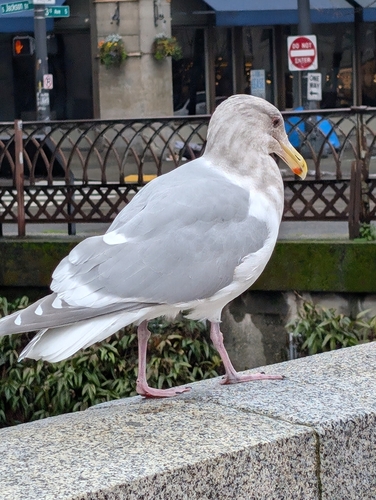
ワシカモメ (Larus glaucescens) ワシカモメ
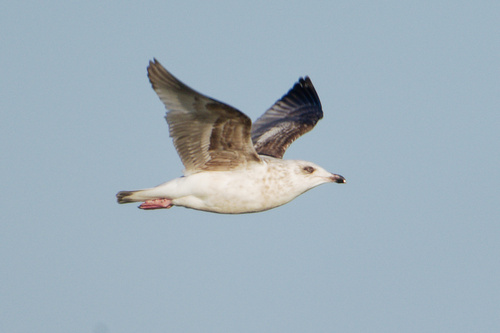
オオセグロカモメ (Larus schistisagus) オオセグロカモメ

メディア

読み込み中…

要点

ワシカモメとオオセグロカモメの間で最も信頼できるフィールドマークは、成鳥の翼先端の色とパターンです:ワシカモメは羽毛とほぼ同じ色合いの淡い灰色の翼先端を持ち、オオセグロカモメは明らかに暗いスレートグレーの上翼を持ち、太い白い後縁と一次羽に「真珠のネックレス」パターンを示します。未熟な鳥はより難しいですが、オオセグロカモメの未熟鳥は強い白い後縁と「真珠のネックレス」を持つよりパターン化された翼を示し、ワシカモメの未熟鳥はより単純な茶色でこれらの特徴が欠けています。構造的には、オオセグロカモメはより頑丈で腹が出ており、脚が短く、黄色い目と色付きの眼窩リングを持っていますが、ワシカモメはより淡い目と長い脚の外観を持っています。両種は大きく、ピンクの脚を持ち、白い頭のカモメですが、翼先端のコントラスト、後縁、全体的な構造に注意を払うことが重要です。

識別のコツ

  1. 成鳥の翼先端の色(全シーズン): ワシカモメは羽毛と一致する淡い灰色の翼先端を持ち、洗い流されたような低コントラストの外観を与えます;オオセグロカモメは明らかに暗いスレートグレーの翼先端を持ち、太い白い後縁と一次羽に「真珠のネックレス」パターンを示します。
  2. 未熟な翼のパターン(幼鳥/初冬): オオセグロカモメの未熟鳥は広い白い後縁と中一次羽に白い三日月の連続(「真珠のネックレス」)を示し、飛行中に見えます;ワシカモメの未熟鳥はより単純な茶色でコントラストが少なく、これらのマークが欠けています。
  3. 背中と羽毛の色(成鳥): オオセグロカモメの背中と翼は暗いスレートグレーで、ワシカモメの淡い銀灰色の羽毛よりも暗いです。
  4. 一次羽の「ミラー」(成鳥): オオセグロカモメは外側の一次羽(p9、p10)に大きな白い斑点(ミラー)を示します;ワシカモメのミラーは小さいか欠けており、一次羽は淡いです。
  5. 後縁(全年齢): オオセグロカモメは翼に広く、鮮明な白い後縁を持ち、特に飛行中に明らかです;ワシカモメの後縁ははるかに目立たないです。
  6. 目の色と眼窩リング(成鳥): オオセグロカモメは紫から濃いピンクの眼窩リングを持つ黄色い目を持っています;ワシカモメは通常、より淡い目とあまり色のない眼窩リングを持っています。
  7. 脚の色と長さ: 両方ともピンクの脚を持っていますが、オオセグロカモメの脚は短く、よりずんぐりとした腹が出た外観を持っています;ワシカモメはより高く、脚が長いです。
  8. くちばし: 両種は赤い斑点のある黄色いくちばしを持っていますが、オオセグロカモメのくちばしは少し頑丈に見えるかもしれません;強いフィールドマークではありません。
  9. 頭の形とジズ: オオセグロカモメはしばしばより腹が出ていて首が太く見え、脚が短く、コンパクトな姿勢を持っています;ワシカモメは脚が長く、より細長いです。
  10. 頭の縞模様(非繁殖期): 純粋なワシカモメは通常、冬に白い頭を持っていますが、ハイブリッドは縞模様を示すことがあります;オオセグロカモメはほぼ白い頭を保ちます。
  11. ハイブリッドの混乱: 太平洋北西部では、ワシカモメとアメリカオオセグロカモメのハイブリッド(「オリンピックカモメ」)は中間的な翼先端の暗さと頭の縞模様を示すことがあり、時にはオオセグロカモメを模倣します;特に後縁と「真珠のネックレス」の完全なマークのセットに依存してください。
  12. 生息地と文脈: 北アメリカでは、オオセグロカモメは珍しく、通常はワシカモメや他の大きなカモメの群れの中にいます;常に迷子の候補を再確認してください。
  13. 飛行中の外観: 飛行中、オオセグロカモメは太い白い後縁と暗い上翼を示します;ワシカモメはより淡く、均一に見えます。
  14. サイズ: 両方とも大きなカモメで、サイズが重なります;IDには構造と羽毛を使用し、サイズではなく使用してください。
  15. 未熟な混乱: 未熟なオオセグロカモメはHerring Gullに似ることがありますが、ワシカモメと比較して、パターン化された後縁と「真珠のネックレス」を探してください。

大きさ

両種は最大のカモメの中にあり、長さと翼幅が重なります。ワシカモメは平均約1063gの質量を持ち、50〜68cmの長さで、120〜150cmの翼幅を持っています。オオセグロカモメは55〜68.5cmの長さと132〜160cmの翼幅を持ち、質量は1050〜1700gです。フィールドでは、サイズだけでは信頼できる分離要因ではありませんが、オオセグロカモメはわずかによりがっしりとして腹が出ているように見え、体のサイズに対して脚が短いかもしれません。

羽色

幼鳥/未熟な鳥:オオセグロカモメの未熟鳥は全体的に茶色ですが、翼に強い広い白い後縁と中一次羽に「真珠のネックレス」パターン(白い三日月)を示し、後縁に接続しています。ワシカモメの未熟鳥はより均一に茶色で、太い白い後縁と「真珠のネックレス」が欠けており、飛行中により単純に見えます。

成鳥:ワシカモメの成鳥は羽毛とほぼ同じ色合いの淡い灰色の翼先端を持ち、コントラストがほとんどありません;翼は洗い流されたように見え、均一です。オオセグロカモメの成鳥は明らかに暗いスレートグレーの上翼と背中を持ち、広い白い後縁と外側の一次羽に一連の白い斑点(「ミラー」)を持っています。羽毛と翼先端のコントラストはオオセグロカモメでより強いです。両方とも白い頭、尾、腹部を持っていますが、オオセグロカモメの背中と翼は暗いです。

非繁殖期:両種は白い頭を持っていますが、ワシカモメはハイブリッドでより多くの縞模様を示すことがありますが、純粋な鳥は通常、きれいな頭を持っています。オオセグロカモメの頭はほぼ白いままです。

行動

両種は大きく、力強いカモメで、しばしば海岸でくつろいでいるか、沿岸を飛んでいるのが見られます。オオセグロカモメは止まっているときにより腹が出ていて直立して見えることがあり、脚が短いですが、ワシカモメはより高く、脚が長いです。飛行中、オオセグロカモメはより広い翼と重い外観に見えることがありますが、ワシカモメはより細長く見えます。両方とも攻撃的でカモメの中で優位ですが、行動の違いは微妙でフィールドIDには信頼できません。

生息環境

両種は海岸環境、ビーチ、港、河口を含む場所によく出没します。ワシカモメは北アメリカの太平洋沿岸でより一般的ですが、オオセグロカモメはそこでは珍しい訪問者で、主に北東アジアで繁殖し、太平洋沿岸で越冬します。北アメリカでは、オオセグロカモメは通常、ワシカモメや他の大きなカモメの群れの中にいる迷子です。冬には生息地の重なりが可能ですが、文脈は助けになりますが決定的ではありません。

より良い説明を送る

比較と同じ項目を使ってください。文章はすぐに公開されます。

The most reliable field mark between Glaucous-winged Gull and Slaty-backed Gull is the color and pattern of the wingtips in adults: Glaucous-winged has pale grey wingtips that closely match the mantle, while Slaty-backed shows distinctly darker, slaty-grey upperwings with a bold white trailing edge and a 'string of pearls' pattern on the primaries. Immature birds are trickier, but Slaty-backed immatures show a more patterned wing with a strong white trailing edge and 'string of pearls,' while Glaucous-winged immatures are plainer brownish and lack these features. Structurally, Slaty-backed is stouter and more pot-bellied with shorter legs, and has yellow eyes with a colored orbital ring, compared to Glaucous-winged's paler eye and longer-legged look. Both species are large, pink-legged, white-headed gulls, but careful attention to wingtip contrast, trailing edge, and overall structure is key.

  1. Adult wingtip color (all seasons): Glaucous-winged Gull has pale grey wingtips that match the mantle, giving a washed-out, low-contrast look; Slaty-backed Gull has distinctly darker, slaty-grey wingtips with a bold white trailing edge and a 'string of pearls' pattern on the primaries.
  2. Immature wing pattern (juvenile/first-winter): Slaty-backed immatures show a broad white trailing edge and a series of white crescents ('string of pearls') on the mid-primaries, visible in flight; Glaucous-winged immatures are plainer brown with little contrast and lack these marks.
  3. Back and mantle color (adults): Slaty-backed's back and wings are darker slaty-grey, darker than Glaucous-winged's pale silvery-grey mantle.
  4. Primary 'mirrors' (adults): Slaty-backed shows large white spots (mirrors) on the outer primaries (p9, p10); Glaucous-winged's mirrors are smaller or absent, and the primaries are pale.
  5. Trailing edge (all ages): Slaty-backed has a broad, crisp white trailing edge to the wing, especially obvious in flight; Glaucous-winged's trailing edge is much less distinct.
  6. Eye color and orbital ring (adults): Slaty-backed has yellow eyes with a purple to deep pink orbital ring; Glaucous-winged typically has paler eyes and a less colorful orbital ring.
  7. Leg color and length: Both have pink legs, but Slaty-backed's are shorter, making it look more squat and pot-bellied; Glaucous-winged stands taller and longer-legged.
  8. Bill: Both species have a yellow bill with a red spot, but Slaty-backed's bill may appear slightly stouter; not a strong field mark.
  9. Head shape and jizz: Slaty-backed often looks more pot-bellied and thick-necked, with a shorter-legged, compact stance; Glaucous-winged is longer-legged and more elongated.
  10. Head streaking (nonbreeding): Pure Glaucous-winged Gulls are usually white-headed in winter, but hybrids may show streaking; Slaty-backed remains mostly white-headed.
  11. Hybrid confusion: In the Pacific Northwest, Glaucous-winged x Western Gull hybrids ('Olympic Gulls') can show intermediate wingtip darkness and head streaking, sometimes mimicking Slaty-backed; rely on the full suite of marks, especially trailing edge and 'string of pearls.'
  12. Habitat and context: In North America, a Slaty-backed is rare and usually among flocks of Glaucous-winged and other large gulls; always double-check vagrant candidates.
  13. Flight appearance: In flight, Slaty-backed shows a bold white trailing edge and darker upperwings; Glaucous-winged looks paler and more uniform.
  14. Size: Both are large gulls and overlap in size; use structure and plumage, not size, for ID.
  15. Immature confusion: Immature Slaty-backed can resemble Herring Gull, but compared to Glaucous-winged, look for the patterned trailing edge and 'string of pearls.'

Both species are among the largest gulls, with overlapping length and wingspan. Glaucous-winged Gull averages about 1063 g in mass [wikidata], and is 50–68 cm long with a 120–150 cm wingspan. Slaty-backed Gull is similar, at 55–68.5 cm long and 132–160 cm wingspan, and a mass of 1050–1700 g [wikipedia]. In the field, size alone is not a reliable separator, but Slaty-backed may appear slightly bulkier and more pot-bellied, with shorter legs relative to body size.

Juvenile/immature birds: Slaty-backed Gull immatures are brown overall but show a strong, broad white trailing edge to the wing and a 'string of pearls' pattern (white crescents) on the mid-primaries, connecting to the trailing edge. Glaucous-winged Gull immatures are more uniformly brownish and lack the bold white trailing edge and 'string of pearls,' appearing plainer in flight.

Adult birds: Glaucous-winged Gull adults have pale grey wingtips that are nearly the same shade as the mantle, resulting in little contrast; the wings look washed out and uniform. Slaty-backed Gull adults have distinctly darker slaty-grey upperwings and back, with a broad white trailing edge and a series of white spots ('mirrors') on the outer primaries. The contrast between the mantle and wingtips is much stronger in Slaty-backed. Both have white heads, tails, and underparts, but Slaty-backed's back and wings are darker.

Nonbreeding: Both species have white heads, but Glaucous-winged can show more streaking in hybrids, while pure birds are usually clean-headed. Slaty-backed's head remains mostly white.

Both species are large, powerful gulls often seen loafing on shorelines or flying along coasts. Slaty-backed may appear more pot-bellied and upright when perched, with shorter legs, while Glaucous-winged stands taller and longer-legged. In flight, Slaty-backed can look broader-winged and heavier, while Glaucous-winged appears more elongated. Both are aggressive and dominant among gulls, but behavioral differences are subtle and not reliable for field ID.

Both species frequent coastal environments, including beaches, harbors, and estuaries. Glaucous-winged Gull is more common along the Pacific coast of North America, while Slaty-backed is a rare visitor there, mainly breeding in northeast Asia and wintering along the Pacific Rim. In North America, a Slaty-backed is typically a vagrant among flocks of Glaucous-winged and other large gulls. Habitat overlap is possible in winter, so context helps but is not definitive.

変更を破棄しますか?

保存していない編集があります。今離れると失われます。

ワシカモメ · オオセグロカモメ · 苦手な鳥