

Motmot

Fulvous Whistling-Duck vs Wandering Whistling-Duck

Dendrocygna bicolor versus Dendrocygna arcuata

Play a quiz with Fulvous Whistling-Duck and Wandering Whistling-Duck
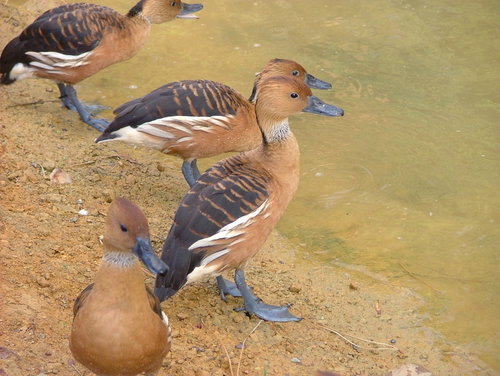
Fulvous Whistling-Duck (Dendrocygna bicolor) Fulvous Whistling-Duck

Wandering Whistling-Duck (Dendrocygna arcuata) Wandering Whistling-Duck

Media

Loading…

In short

The most reliable field mark to separate Fulvous Whistling-Duck from Wandering Whistling-Duck is the bold white crescent or band across the black tail, visible in flight on Fulvous but absent on Wandering. Both species are long-legged, long-necked whistling ducks with similar structure and overall brown coloration, but Fulvous is more uniformly rich buff to reddish-brown, while Wandering shows a darker crown and hindneck and more extensive black spotting on the breast. Juvenile and adult plumages are similar within each species, but the Fulvous always shows the white tail band in flight, which Wandering lacks. Size difference is minor and not reliable in the field, but Wandering averages slightly heavier and longer. Vocalizations are similar whistling calls, so visual marks are more dependable.

Identification tips

  1. White tail band in flight (all ages): Fulvous Whistling-Duck always shows a bold white crescent or band across the black tail in flight, easily seen from behind or below. Wandering Whistling-Duck lacks this mark entirely.
  2. Crown and neck pattern: Fulvous has a dark brown to black stripe running from the crown down the back of the neck; Wandering has a generally darker crown and hindneck but lacks the crisp stripe.
  3. Breast and flank color: Fulvous is rich buff to fulvous on the head, neck, and breast, with paler flanks and some whitish striping. Wandering is darker brown overall with prominent black spotting on the breast and less contrast on the flanks.
  4. Juvenile plumage: Young Fulvous are paler and duller but still show the white tail band in flight. Wandering juveniles are not distinctly described but likely resemble adults without the white tail mark.
  5. Bill and leg color: Both have long grey bills and legs; this is not a useful separator.
  6. Wing pattern in flight: Fulvous shows brown upperwings and black underwings with no white, apart from the white tail band. Wandering's wing pattern is not described as distinctive.
  7. Size: Wandering averages slightly heavier and longer, but this is not reliable in the field.
  8. Voice: Both have loud whistling calls; Fulvous gives a 'kee-wee-ooo,' but calls are not reliably different in the field.
  9. Habitat: Fulvous is found in the Americas, Africa, and South Asia; Wandering is in Australasia and the Pacific. Check your location first.
  10. Behavior: Both species are noisy, sociable, and feed in wetlands, often in groups.
  11. Sex differences: Female Fulvous is slightly smaller and duller than male, but this is subtle and not a field mark.
  12. Perched vs. flight views: The white tail band on Fulvous is most obvious in flight; perched birds may require close study of head and breast pattern.
  13. Confusion risk: In regions where only one species occurs, default to the local species unless a clear field mark suggests otherwise.
  14. Flank stripes: Fulvous may show whitish stripes on the flanks; Wandering does not.
  15. Head shape: Wandering described as having a strong head and neck, but this is subjective and not a primary separator.

Size

Both species are large whistling ducks with long legs and necks. Wandering Whistling-Duck averages slightly heavier (about 799 g vs. 682 g for Fulvous) and is marginally longer (54–60 cm vs. 45–53 cm for Fulvous), but this difference is subtle and unlikely to be diagnostic in the field. Both appear large and lanky, with a similar overall silhouette.

Plumage

For all ages, Fulvous Whistling-Duck shows a distinctive white crescent or band across the black tail in flight, which is lacking in Wandering Whistling-Duck. Juvenile Fulvous are paler and duller than adults, especially on the flanks, but still show the white tail band. Wandering Whistling-Duck has a darker crown and hindneck, with black spotting on the breast and mostly dark brown feathers overall. Fulvous has a rich buff (fulvous) head, neck, and breast, with a dark stripe running down the crown and back of the neck. In flight, Fulvous shows brown upperwings and black underwings with no white, apart from the white tail band; Wandering's wing pattern is not described as distinctive. Both have long grey bills and legs, but Fulvous is more uniformly reddish-brown, while Wandering appears darker and more patterned on the head and breast.

Behaviour

Both species are noisy, often calling in flight or on the ground. They feed in wetlands, often in groups, and are active by day or night. Fulvous may be more likely to be seen in open wetlands or rice fields, while Wandering is also found in similar wetland habitats in its range. Both may be wary and seek cover during wing molt.

Habitat

Fulvous Whistling-Duck is found in tropical wetlands across the Americas, Africa, and South Asia, while Wandering Whistling-Duck inhabits tropical and subtropical Australia, Southeast Asia, and Pacific islands. Both prefer wetlands with dense vegetation, shallow lakes, and flooded fields. In regions where both occur (rare), Fulvous is more likely in open, vegetated wetlands, but habitat overlap is broad.

Voice

Both species have loud, clear whistling calls given in flight or on the ground. Fulvous gives a 'kee-wee-ooo' call, and both species' wingbeats produce a dull whistling sound. Vocal differences are subtle and not reliable for field separation.

Submit a better description

Use the same sections as the comparison. Your text is published immediately.

The most reliable field mark to separate Fulvous Whistling-Duck from Wandering Whistling-Duck is the bold white crescent or band across the black tail, visible in flight on Fulvous but absent on Wandering. Both species are long-legged, long-necked whistling ducks with similar structure and overall brown coloration, but Fulvous is more uniformly rich buff to reddish-brown, while Wandering shows a darker crown and hindneck and more extensive black spotting on the breast. Juvenile and adult plumages are similar within each species, but the Fulvous always shows the white tail band in flight, which Wandering lacks. Size difference is minor and not reliable in the field, but Wandering averages slightly heavier and longer. Vocalizations are similar whistling calls, so visual marks are more dependable.

  1. White tail band in flight (all ages): Fulvous Whistling-Duck always shows a bold white crescent or band across the black tail in flight, easily seen from behind or below. Wandering Whistling-Duck lacks this mark entirely.
  2. Crown and neck pattern: Fulvous has a dark brown to black stripe running from the crown down the back of the neck; Wandering has a generally darker crown and hindneck but lacks the crisp stripe.
  3. Breast and flank color: Fulvous is rich buff to fulvous on the head, neck, and breast, with paler flanks and some whitish striping. Wandering is darker brown overall with prominent black spotting on the breast and less contrast on the flanks.
  4. Juvenile plumage: Young Fulvous are paler and duller but still show the white tail band in flight. Wandering juveniles are not distinctly described but likely resemble adults without the white tail mark.
  5. Bill and leg color: Both have long grey bills and legs; this is not a useful separator.
  6. Wing pattern in flight: Fulvous shows brown upperwings and black underwings with no white, apart from the white tail band. Wandering's wing pattern is not described as distinctive.
  7. Size: Wandering averages slightly heavier and longer, but this is not reliable in the field.
  8. Voice: Both have loud whistling calls; Fulvous gives a 'kee-wee-ooo,' but calls are not reliably different in the field.
  9. Habitat: Fulvous is found in the Americas, Africa, and South Asia; Wandering is in Australasia and the Pacific. Check your location first.
  10. Behavior: Both species are noisy, sociable, and feed in wetlands, often in groups.
  11. Sex differences: Female Fulvous is slightly smaller and duller than male, but this is subtle and not a field mark.
  12. Perched vs. flight views: The white tail band on Fulvous is most obvious in flight; perched birds may require close study of head and breast pattern.
  13. Confusion risk: In regions where only one species occurs, default to the local species unless a clear field mark suggests otherwise.
  14. Flank stripes: Fulvous may show whitish stripes on the flanks; Wandering does not.
  15. Head shape: Wandering described as having a strong head and neck, but this is subjective and not a primary separator.

Both species are large whistling ducks with long legs and necks. Wandering Whistling-Duck averages slightly heavier (about 799 g vs. 682 g for Fulvous) and is marginally longer (54–60 cm vs. 45–53 cm for Fulvous), but this difference is subtle and unlikely to be diagnostic in the field. Both appear large and lanky, with a similar overall silhouette.

For all ages, Fulvous Whistling-Duck shows a distinctive white crescent or band across the black tail in flight, which is lacking in Wandering Whistling-Duck. Juvenile Fulvous are paler and duller than adults, especially on the flanks, but still show the white tail band. Wandering Whistling-Duck has a darker crown and hindneck, with black spotting on the breast and mostly dark brown feathers overall. Fulvous has a rich buff (fulvous) head, neck, and breast, with a dark stripe running down the crown and back of the neck. In flight, Fulvous shows brown upperwings and black underwings with no white, apart from the white tail band; Wandering's wing pattern is not described as distinctive. Both have long grey bills and legs, but Fulvous is more uniformly reddish-brown, while Wandering appears darker and more patterned on the head and breast.

Both species are noisy, often calling in flight or on the ground. They feed in wetlands, often in groups, and are active by day or night. Fulvous may be more likely to be seen in open wetlands or rice fields, while Wandering is also found in similar wetland habitats in its range. Both may be wary and seek cover during wing molt.

Fulvous Whistling-Duck is found in tropical wetlands across the Americas, Africa, and South Asia, while Wandering Whistling-Duck inhabits tropical and subtropical Australia, Southeast Asia, and Pacific islands. Both prefer wetlands with dense vegetation, shallow lakes, and flooded fields. In regions where both occur (rare), Fulvous is more likely in open, vegetated wetlands, but habitat overlap is broad.

Both species have loud, clear whistling calls given in flight or on the ground. Fulvous gives a 'kee-wee-ooo' call, and both species' wingbeats produce a dull whistling sound. Vocal differences are subtle and not reliable for field separation.

Discard your changes?

You have unsaved edits. If you leave now, those changes will be lost.

Fulvous Whistling-Duck · Wandering Whistling-Duck · My Tricky Birds