

Motmot

アカリュウキュウガモ 対 オオリュウキュウガモ

Dendrocygna bicolor 対 Dendrocygna arcuata

アカリュウキュウガモとオオリュウキュウガモのクイズ
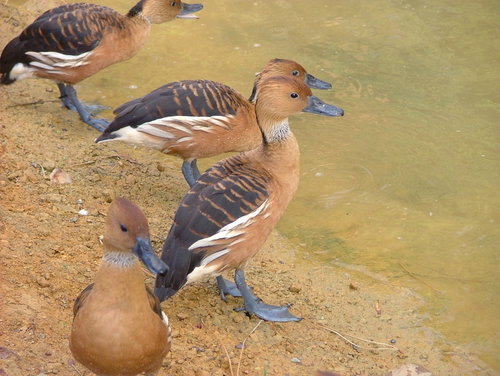
アカリュウキュウガモ (Dendrocygna bicolor) アカリュウキュウガモ
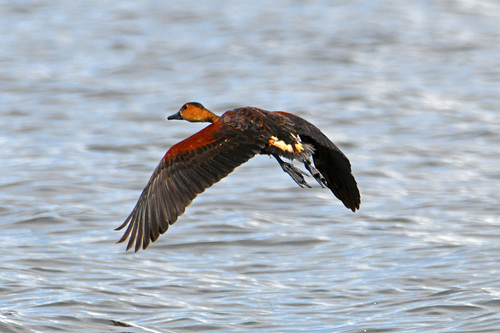
オオリュウキュウガモ (Dendrocygna arcuata) オオリュウキュウガモ

メディア

読み込み中…

要点

アカリュウキュウガモとオオリュウキュウガモを区別する最も信頼できるフィールドマークは、黒い尾に横切る太い白い三日月またはバンドで、アカリュウキュウガモの飛行中に見えるが、オオリュウキュウガモには欠けている。両種は長い脚と長い首を持つホイッスルダックで、構造と全体的な茶色の色合いは似ているが、アカリュウキュウガモはより均一にリッチなバフから赤褐色であり、オオリュウキュウガモは暗い冠と後頸部を示し、胸により広範な黒い斑点がある。幼鳥と成鳥の羽毛は各種内で似ているが、アカリュウキュウガモは常に飛行中に白い尾のバンドを示し、オオリュウキュウガモにはそれがない。サイズの違いは小さく、フィールドで信頼できるものではないが、オオリュウキュウガモは平均してわずかに重く、長い。声は似たようなホイッスルコールであるため、視覚的なマークがより信頼できる。

識別のコツ

  1. 白い尾のバンド(すべての年齢で): アカリュウキュウガモは常に飛行中に黒い尾に太い白い三日月またはバンドを示し、後ろまたは下から簡単に見える。オオリュウキュウガモはこのマークが完全に欠けている。
  2. 冠と首のパターン: アカリュウキュウガモは冠から首の後ろにかけて暗い茶色から黒のストライプが走っている; オオリュウキュウガモは一般的に暗い冠と後頸部を持つが、はっきりしたストライプが欠けている。
  3. 胸と脇の色: アカリュウキュウガモは頭、首、胸がリッチなバフからアカリュウキュウガモで、脇は淡い色合いでいくつかの白っぽいストライプがある。オオリュウキュウガモは全体的に暗い茶色で、胸に目立つ黒い斑点があり、脇のコントラストは少ない。
  4. 幼鳥の羽毛: 幼いアカリュウキュウガモは淡く鈍いが、飛行中に白い尾のバンドを示す。オオリュウキュウガモの幼鳥は明確に記述されていないが、白い尾のマークがない成鳥に似ている可能性が高い。
  5. くちばしと脚の色: 両者は長い灰色のくちばしと脚を持つ; これは有用な区別にはならない。
  6. 飛行中の翼のパターン: アカリュウキュウガモは白がない茶色の上翼と黒の下翼を示し、白い尾のバンドを除いては特徴がない。オオリュウキュウガモの翼のパターンは特徴的とは記述されていない。
  7. サイズ: オオリュウキュウガモはわずかに重く、長いが、これはフィールドで信頼できるものではない。
  8. 声: 両者は大きなホイッスルコールを持つ; アカリュウキュウガモは「キーウィーオー」と鳴くが、フィールドでのコールは信頼できるほど異ならない。
  9. 生息地: アカリュウキュウガモはアメリカ、アフリカ、南アジアに見られ、オオリュウキュウガモはオーストラレーシアと太平洋にいる。まず自分の場所を確認してください。
  10. 行動: 両種は騒がしく、社交的で、湿地で餌を食べ、しばしば群れで行動する。
  11. 性差: メスのアカリュウキュウガモはオスよりもわずかに小さく鈍いが、これは微妙でフィールドマークではない。
  12. 止まっていると飛行中の視点: アカリュウキュウガモの白い尾のバンドは飛行中に最も明らかである; 止まっている鳥は頭と胸のパターンを近くで観察する必要があるかもしれない。
  13. 混乱のリスク: 1種のみが生息する地域では、明確なフィールドマークが示さない限り、地元の種にデフォルトする。
  14. 脇のストライプ: アカリュウキュウガモは脇に白っぽいストライプを示すことがある; オオリュウキュウガモは示さない。
  15. 頭の形: オオリュウキュウガモは強い頭と首を持つと記述されているが、これは主観的であり、主要な区別ではない。

大きさ

両種は長い脚と首を持つ大きなホイッスルダックである。オオリュウキュウガモはわずかに重い(アカリュウキュウガモの682 gに対して約799 g)と平均して長い(アカリュウキュウガモの45–53 cmに対して54–60 cm)が、この違いは微妙でフィールドで診断可能である可能性は低い。両者は大きくて細長く見え、全体的なシルエットは似ている。

羽色

すべての年齢において、アカリュウキュウガモは飛行中に黒い尾に横切る独特の白い三日月またはバンドを示し、これはオオリュウキュウガモには欠けている。幼鳥のアカリュウキュウガモは成鳥よりも淡く鈍いが、特に脇では白い尾のバンドを示す。オオリュウキュウガモは暗い冠と後頸部を持ち、胸に黒い斑点があり、全体的に主に暗い茶色の羽毛を持つ。アカリュウキュウガモはリッチなバフ(アカリュウキュウガモ)の頭、首、胸を持ち、冠と首の後ろに暗いストライプが走っている。飛行中、アカリュウキュウガモは白い尾のバンドを除いて白がない茶色の上翼と黒の下翼を示し、オオリュウキュウガモの翼のパターンは特徴的とは記述されていない。両者は長い灰色のくちばしと脚を持つが、アカリュウキュウガモはより均一に赤褐色であり、オオリュウキュウガモは頭と胸においてより暗く、より模様があるように見える。

行動

両種は騒がしく、飛行中または地上でしばしば呼びかける。彼らは湿地で餌を食べ、しばしば群れで行動し、昼夜を問わず活動する。アカリュウキュウガモは開けた湿地や水田で見られる可能性が高いが、オオリュウキュウガモもその範囲内の同様の湿地生息地に見られる。両者は警戒心が強く、羽の換羽中に隠れ場所を求めることがある。

生息環境

アカリュウキュウガモはアメリカ、アフリカ、南アジアの熱帯湿地に見られ、オオリュウキュウガモは熱帯および亜熱帯のオーストラレーシア、東南アジア、太平洋の島々に生息している。両者は密な植生、浅い湖、洪水のかかった田んぼのある湿地を好む。両者が生息する地域(稀)では、アカリュウキュウガモは開けた植生のある湿地にいる可能性が高いが、生息地の重複は広い。

声

両種は飛行中または地上で与えられる大きく明瞭なホイッスルコールを持つ。アカリュウキュウガモは「キーウィーオー」と呼び、両種の翼の拍動は鈍いホイッスル音を生じる。声の違いは微妙で、フィールドでの区別には信頼できない。

より良い説明を送る

比較と同じ項目を使ってください。文章はすぐに公開されます。

The most reliable field mark to separate Fulvous Whistling-Duck from Wandering Whistling-Duck is the bold white crescent or band across the black tail, visible in flight on Fulvous but absent on Wandering. Both species are long-legged, long-necked whistling ducks with similar structure and overall brown coloration, but Fulvous is more uniformly rich buff to reddish-brown, while Wandering shows a darker crown and hindneck and more extensive black spotting on the breast. Juvenile and adult plumages are similar within each species, but the Fulvous always shows the white tail band in flight, which Wandering lacks. Size difference is minor and not reliable in the field, but Wandering averages slightly heavier and longer. Vocalizations are similar whistling calls, so visual marks are more dependable.

  1. White tail band in flight (all ages): Fulvous Whistling-Duck always shows a bold white crescent or band across the black tail in flight, easily seen from behind or below. Wandering Whistling-Duck lacks this mark entirely.
  2. Crown and neck pattern: Fulvous has a dark brown to black stripe running from the crown down the back of the neck; Wandering has a generally darker crown and hindneck but lacks the crisp stripe.
  3. Breast and flank color: Fulvous is rich buff to fulvous on the head, neck, and breast, with paler flanks and some whitish striping. Wandering is darker brown overall with prominent black spotting on the breast and less contrast on the flanks.
  4. Juvenile plumage: Young Fulvous are paler and duller but still show the white tail band in flight. Wandering juveniles are not distinctly described but likely resemble adults without the white tail mark.
  5. Bill and leg color: Both have long grey bills and legs; this is not a useful separator.
  6. Wing pattern in flight: Fulvous shows brown upperwings and black underwings with no white, apart from the white tail band. Wandering's wing pattern is not described as distinctive.
  7. Size: Wandering averages slightly heavier and longer, but this is not reliable in the field.
  8. Voice: Both have loud whistling calls; Fulvous gives a 'kee-wee-ooo,' but calls are not reliably different in the field.
  9. Habitat: Fulvous is found in the Americas, Africa, and South Asia; Wandering is in Australasia and the Pacific. Check your location first.
  10. Behavior: Both species are noisy, sociable, and feed in wetlands, often in groups.
  11. Sex differences: Female Fulvous is slightly smaller and duller than male, but this is subtle and not a field mark.
  12. Perched vs. flight views: The white tail band on Fulvous is most obvious in flight; perched birds may require close study of head and breast pattern.
  13. Confusion risk: In regions where only one species occurs, default to the local species unless a clear field mark suggests otherwise.
  14. Flank stripes: Fulvous may show whitish stripes on the flanks; Wandering does not.
  15. Head shape: Wandering described as having a strong head and neck, but this is subjective and not a primary separator.

Both species are large whistling ducks with long legs and necks. Wandering Whistling-Duck averages slightly heavier (about 799 g vs. 682 g for Fulvous) and is marginally longer (54–60 cm vs. 45–53 cm for Fulvous), but this difference is subtle and unlikely to be diagnostic in the field. Both appear large and lanky, with a similar overall silhouette.

For all ages, Fulvous Whistling-Duck shows a distinctive white crescent or band across the black tail in flight, which is lacking in Wandering Whistling-Duck. Juvenile Fulvous are paler and duller than adults, especially on the flanks, but still show the white tail band. Wandering Whistling-Duck has a darker crown and hindneck, with black spotting on the breast and mostly dark brown feathers overall. Fulvous has a rich buff (fulvous) head, neck, and breast, with a dark stripe running down the crown and back of the neck. In flight, Fulvous shows brown upperwings and black underwings with no white, apart from the white tail band; Wandering's wing pattern is not described as distinctive. Both have long grey bills and legs, but Fulvous is more uniformly reddish-brown, while Wandering appears darker and more patterned on the head and breast.

Both species are noisy, often calling in flight or on the ground. They feed in wetlands, often in groups, and are active by day or night. Fulvous may be more likely to be seen in open wetlands or rice fields, while Wandering is also found in similar wetland habitats in its range. Both may be wary and seek cover during wing molt.

Fulvous Whistling-Duck is found in tropical wetlands across the Americas, Africa, and South Asia, while Wandering Whistling-Duck inhabits tropical and subtropical Australia, Southeast Asia, and Pacific islands. Both prefer wetlands with dense vegetation, shallow lakes, and flooded fields. In regions where both occur (rare), Fulvous is more likely in open, vegetated wetlands, but habitat overlap is broad.

Both species have loud, clear whistling calls given in flight or on the ground. Fulvous gives a 'kee-wee-ooo' call, and both species' wingbeats produce a dull whistling sound. Vocal differences are subtle and not reliable for field separation.

変更を破棄しますか?

保存していない編集があります。今離れると失われます。

アカリュウキュウガモ · オオリュウキュウガモ · 苦手な鳥