

Dendrocigna fulva vs Wandering Whistling-Duck
Dendrocygna bicolor contro Dendrocygna arcuata
Fai un quiz con Dendrocigna fulva e Wandering Whistling-Duck
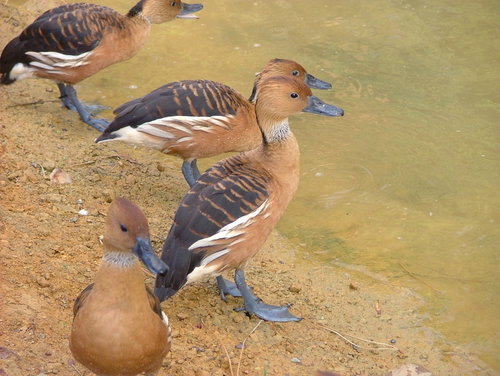 Dendrocigna fulva
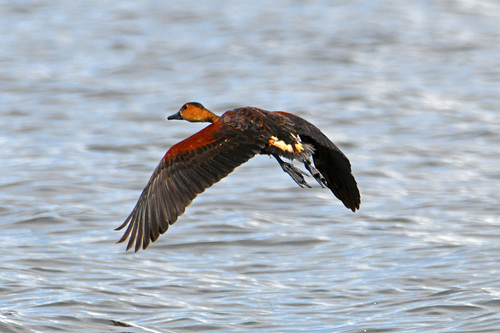 Wandering Whistling-Duck
In breve
Il segno di campo più affidabile per separare il Dendrocigna fulva dal Wandering Whistling-Duck è il bold white crescent o band attraverso la coda nera, visibile in volo su Fulvous ma assente su Wandering. Entrambe le specie sono anatre fischianti con gambe lunghe e collo lungo, con struttura simile e colorazione marrone complessiva, ma Fulvous è più uniformemente ricco di buff a marrone rossiccio, mentre Wandering mostra una corona e un collo posteriore più scuri e una maculatura nera più estesa sul petto. Le piume giovanili e adulte sono simili all'interno di ciascuna specie, ma il Fulvous mostra sempre la banda bianca della coda in volo, che Wandering manca. La differenza di dimensioni è minore e non affidabile sul campo, ma Wandering è in media leggermente più pesante e lungo. Le vocalizzazioni sono simili a richiami fischianti, quindi i segni visivi sono più affidabili.
Consigli di identificazione
- Banda bianca della coda in volo (tutte le età): Il Dendrocigna fulva mostra sempre un bold white crescent o band attraverso la coda nera in volo, facilmente visibile da dietro o sotto. Il Wandering Whistling-Duck manca completamente di questo segno.
- Pattern della corona e del collo: Fulvous ha una striscia marrone scuro a nera che corre dalla corona lungo il retro del collo; Wandering ha una corona e un collo posteriore generalmente più scuri ma manca della striscia netta.
- Colore del petto e dei fianchi: Fulvous è ricco di buff a fulvo sulla testa, collo e petto, con fianchi più chiari e alcune striature biancastre. Wandering è di un marrone più scuro complessivamente con maculature nere prominenti sul petto e meno contrasto sui fianchi.
- Piumaggio giovanile: I giovani Fulvous sono più chiari e opachi ma mostrano ancora la banda bianca della coda in volo. I giovanili di Wandering non sono descritti distintamente ma probabilmente assomigliano agli adulti senza il segno della coda bianca.
- Colore del becco e delle gambe: Entrambi hanno becchi e gambe lunghi e grigi; questo non è un separatore utile.
- Pattern delle ali in volo: Fulvous mostra ali superiori marroni e ali inferiori nere senza bianco, a parte la banda bianca della coda. Il pattern delle ali di Wandering non è descritto come distintivo.
- Dimensioni: Wandering è in media leggermente più pesante e lungo, ma questo non è affidabile sul campo.
- Voce: Entrambi hanno richiami fischianti forti; Fulvous emette un 'kee-wee-ooo', ma i richiami non sono affidabilmente diversi sul campo.
- Habitat: Fulvous si trova nelle Americhe, in Africa e nel Sud Asia; Wandering si trova in Australasia e nel Pacifico. Controlla prima la tua posizione.
- Comportamento: Entrambe le specie sono rumorose, socievoli, e si nutrono in zone umide, spesso in gruppi.
- Differenze sessuali: La femmina di Fulvous è leggermente più piccola e opaca rispetto al maschio, ma questo è sottile e non è un segno di campo.
- Viste da posato vs. in volo: La banda bianca della coda su Fulvous è più ovvia in volo; gli uccelli posati possono richiedere uno studio ravvicinato del pattern della testa e del petto.
- Rischio di confusione: Nelle regioni in cui si verifica solo una specie, fare riferimento alla specie locale a meno che un chiaro segno di campo suggerisca diversamente.
- Strisce sui fianchi: Fulvous può mostrare strisce biancastre sui fianchi; Wandering non lo fa.
- Forma della testa: Wandering è descritto come avente una testa e un collo forti, ma questo è soggettivo e non è un separatore primario.
Taglia
Entrambe le specie sono grandi anatre fischianti con gambe e colli lunghi. Il Wandering Whistling-Duck è in media leggermente più pesante (circa 799 g contro 682 g per Fulvous) ed è marginalmente più lungo (54–60 cm contro 45–53 cm per Fulvous), ma questa differenza è sottile e improbabile che sia diagnostica sul campo. Entrambi appaiono grandi e slanciati, con una silhouette complessiva simile.
Piumaggio
Per tutte le età, il Dendrocigna fulva mostra un distintivo bold white crescent o band attraverso la coda nera in volo, che manca nel Wandering Whistling-Duck. I giovanili di Fulvous sono più chiari e opachi rispetto agli adulti, specialmente sui fianchi, ma mostrano ancora la banda bianca della coda. Il Wandering Whistling-Duck ha una corona e un collo posteriore più scuri, con maculature nere sul petto e piume per lo più marroni scure complessivamente. Fulvous ha una testa, collo e petto di un ricco buff (fulvo), con una striscia scura che scende dalla corona e dal retro del collo. In volo, Fulvous mostra ali superiori marroni e ali inferiori nere senza bianco, a parte la banda bianca della coda; il pattern delle ali di Wandering non è descritto come distintivo. Entrambi hanno becchi e gambe lunghi e grigi, ma Fulvous è più uniformemente marrone-rossiccio, mentre Wandering appare più scuro e più patternizzato sulla testa e sul petto.
Comportamento
Entrambe le specie sono rumorose, spesso chiamando in volo o a terra. Si nutrono in zone umide, spesso in gruppi, e sono attive di giorno o di notte. Fulvous potrebbe essere più probabile da vedere in zone umide aperte o campi di riso, mentre Wandering si trova anche in habitat umidi simili nel suo areale. Entrambi possono essere diffidenti e cercare riparo durante la muta delle ali.
Habitat
Il Dendrocigna fulva si trova in zone umide tropicali nelle Americhe, in Africa e nel Sud Asia, mentre il Wandering Whistling-Duck abita in Australia tropicale e subtropicale, nel Sud-est asiatico e nelle isole del Pacifico. Entrambi preferiscono zone umide con vegetazione densa, laghi poco profondi e campi allagati. Nelle regioni in cui entrambe le specie si verificano (rare), Fulvous è più probabile in zone umide aperte e vegetate, ma la sovrapposizione degli habitat è ampia.
Voce
Entrambe le specie hanno richiami fischianti forti e chiari emessi in volo o a terra. Fulvous emette un richiamo 'kee-wee-ooo', e i battiti d'ali di entrambe le specie producono un suono fischiante sordo. Le differenze vocali sono sottili e non affidabili per la separazione sul campo.
Dendrocigna fulva · Wandering Whistling-Duck · I miei uccelli difficili