

Motmot

Fulvous Whistling-Duck vs Bar-headed Goose

Dendrocygna bicolor versus Anser indicus

Play a quiz with Fulvous Whistling-Duck and Bar-headed Goose
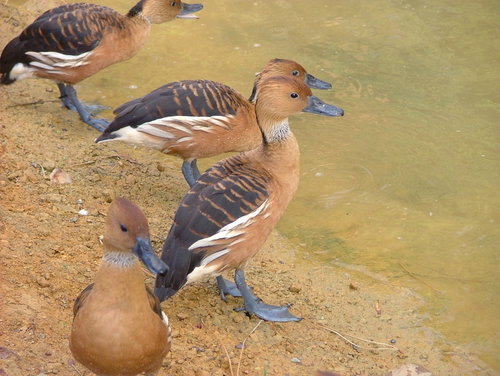
Fulvous Whistling-Duck (Dendrocygna bicolor) Fulvous Whistling-Duck
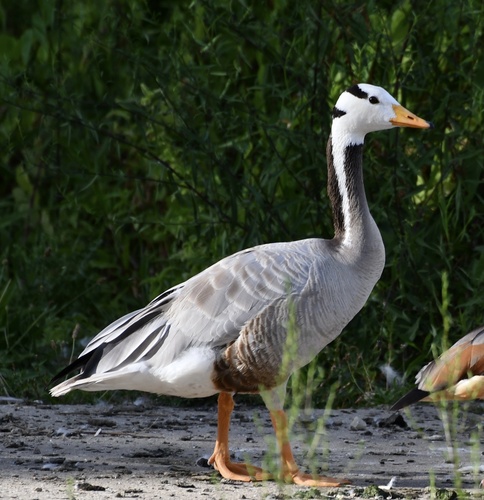
Bar-headed Goose (Anser indicus) Bar-headed Goose

Media

Loading…

In short

The most reliable field mark to separate Fulvous Whistling-Duck from Bar-headed Goose is the Fulvous Whistling-Duck’s rich reddish-brown (fulvous) plumage with a distinctive white crescent across the rump and black tail in flight, versus the Bar-headed Goose’s pale gray body and bold black-and-white head pattern. Juvenile Fulvous Whistling-Ducks are duller but still show a dark crown stripe and lack the strong contrast of the goose. Structurally, the goose is much larger and bulkier, with a shorter bill and neck, while the whistling-duck is slim, long-legged, and long-necked. In flight, Fulvous Whistling-Ducks show brown upperwings and black underwings with no white, while Bar-headed Geese are pale gray with broad, dark trailing edges on the wings. Both species may be found in wetlands, but the Bar-headed Goose is a true goose with a very different jizz and behavior.

Identification tips

  1. Head pattern: Fulvous Whistling-Duck has a dark brown to black stripe running from the crown down the back of the neck; Bar-headed Goose has a white head with two bold black bars across the crown (adults), never a full dark crown stripe. This is the most reliable mark at all ages.
  2. Rump and tail in flight: Fulvous Whistling-Duck shows a distinctive white crescent across the rump with a black tail in flight; Bar-headed Goose lacks this, showing a pale gray rump and tail with no sharp contrast.
  3. Overall plumage color: Fulvous Whistling-Duck is rich reddish-brown (fulvous) with buffy head and neck; Bar-headed Goose is pale gray with no reddish or fulvous tones.
  4. Wing pattern in flight: Fulvous Whistling-Duck has brown upperwings and black underwings with no white; Bar-headed Goose has pale gray wings with broad dark trailing edges, both above and below.
  5. Juvenile confusion: Juvenile Fulvous Whistling-Duck is duller but still shows the crown stripe; juvenile Bar-headed Goose is pale gray with a white face and lacks any dark crown stripe.
  6. Bill and leg color: Fulvous Whistling-Duck has a long gray bill and gray legs; Bar-headed Goose has a shorter, stubbier bill and orange legs (not always visible at distance, but useful when seen).
  7. Size and structure: Bar-headed Goose is nearly three times heavier and much bulkier, with a shorter neck and bill relative to body size; Fulvous Whistling-Duck is slim, long-legged, and long-necked, with a more upright stance.
  8. Jizz in flight: Whistling-ducks have a floppy, loose flight with legs often trailing; geese are strong, direct fliers, often in V-formation.
  9. Group size and behavior: Fulvous Whistling-Ducks are usually in small groups or pairs, often among vegetation; Bar-headed Geese are highly gregarious, forming large flocks in open areas.
  10. Habitat context: Whistling-ducks prefer dense, vegetated wetlands; geese are more often in open lakes or fields, especially on migration or wintering grounds.
  11. Vocalizations: Whistling-ducks give high-pitched whistles; geese give deep honks or barks. If you hear a whistling call, it is not a Bar-headed Goose.
  12. Flank markings: Fulvous Whistling-Duck shows whitish stripes on the flanks; Bar-headed Goose lacks any strong flank stripes.
  13. Tail shape: Fulvous Whistling-Duck has a black tail with a white crescent above; Bar-headed Goose has a pale tail with no contrasting markings.
  14. Sex differences: Both species have little sexual dimorphism in the field, but Fulvous Whistling-Duck females are slightly smaller and duller than males; this is rarely useful for field ID.
  15. Seasonal context: In South Asia, Bar-headed Goose is present mainly in winter, while Fulvous Whistling-Duck is resident or locally migratory; check the season for likely species, but do not rely solely on this.

Size

Bar-headed Goose is dramatically larger, with an average adult mass of 2367.5 g compared to the Fulvous Whistling-Duck’s 682.0 g [wikidata]. The goose is not only heavier but also bulkier and longer-bodied, with a proportionally shorter neck and bill compared to its size. The whistling-duck is slim, long-legged, and long-necked, giving a more upright, delicate appearance. Even at a distance or in flight, the size difference is substantial: Bar-headed Goose is nearly three times heavier and appears much more imposing.

Plumage

Juvenile and adult Fulvous Whistling-Ducks are mostly rich reddish-brown (fulvous) with a darker back, buffy head and neck, and a dark brown to black stripe running from the crown down the back of the neck [wikipedia]. They show whitish stripes on the flanks and a white crescent on the rump, which is especially visible in flight against the black tail. The wings are brown above and black below, with no white markings at any age. Juveniles are paler and duller, especially on the flanks, but retain the crown stripe. In contrast, Bar-headed Geese of all ages are pale gray overall, with a white face and head marked by two bold black bars across the crown (adults; juveniles may have less distinct bars but never a full dark crown stripe). The goose’s wings are pale gray above with a broad dark trailing edge, and the underwings are also pale with dark edges. The Bar-headed Goose lacks any fulvous or reddish tones, and never shows a white rump crescent or black tail. The head pattern is the most striking difference: Fulvous Whistling-Duck has a dark crown stripe, while Bar-headed Goose has a white head with two black bars.

Behaviour

Fulvous Whistling-Ducks are typically seen in small groups or pairs, often standing upright among emergent vegetation or swimming in shallow wetlands. They feed by dabbling or grazing on seeds and plant material, and are known for their whistling calls. In flight, they have a loose, floppy flight style and often show dangling legs when landing. Bar-headed Geese are highly gregarious, forming large flocks, especially in migration or on wintering grounds. They graze in open fields or on short grass near lakes, and their flight is strong, direct, and purposeful, often in V-formations. The goose’s behavior is more terrestrial and social, while the whistling-duck is more aquatic and secretive.

Habitat

Fulvous Whistling-Duck prefers tropical and subtropical wetlands with dense vegetation, including shallow lakes, marshes, and rice paddies [wikipedia]. They are most often found in lowland areas with abundant emergent plants. Bar-headed Goose breeds at high-altitude lakes in Central Asia and winters in open fields and lakes across South Asia, sometimes far from dense vegetation [wikipedia]. While both can be seen in wetlands, the goose is more likely in open, grassy areas or agricultural fields, especially outside the breeding season. Overlap is possible in winter in South Asia, but the context and habitat use differ: whistling-ducks stick to vegetated wetlands, geese to open water and fields.

Voice

Fulvous Whistling-Duck gives a clear, whistling 'kee-wee-ooo' call, often heard both in flight and on the ground, and a harsh repeated 'kee' when agitated [wikipedia]. These calls are high-pitched and distinctive. Bar-headed Goose, like other geese, gives loud, honking or barking calls, which are deeper and more resonant than the whistling-duck’s voice. The difference in vocalizations is marked: whistling-ducks whistle, geese honk.

Submit a better description

Use the same sections as the comparison. Your text is published immediately.

The most reliable field mark to separate Fulvous Whistling-Duck from Bar-headed Goose is the Fulvous Whistling-Duck’s rich reddish-brown (fulvous) plumage with a distinctive white crescent across the rump and black tail in flight, versus the Bar-headed Goose’s pale gray body and bold black-and-white head pattern. Juvenile Fulvous Whistling-Ducks are duller but still show a dark crown stripe and lack the strong contrast of the goose. Structurally, the goose is much larger and bulkier, with a shorter bill and neck, while the whistling-duck is slim, long-legged, and long-necked. In flight, Fulvous Whistling-Ducks show brown upperwings and black underwings with no white, while Bar-headed Geese are pale gray with broad, dark trailing edges on the wings. Both species may be found in wetlands, but the Bar-headed Goose is a true goose with a very different jizz and behavior.

  1. Head pattern: Fulvous Whistling-Duck has a dark brown to black stripe running from the crown down the back of the neck; Bar-headed Goose has a white head with two bold black bars across the crown (adults), never a full dark crown stripe. This is the most reliable mark at all ages.
  2. Rump and tail in flight: Fulvous Whistling-Duck shows a distinctive white crescent across the rump with a black tail in flight; Bar-headed Goose lacks this, showing a pale gray rump and tail with no sharp contrast.
  3. Overall plumage color: Fulvous Whistling-Duck is rich reddish-brown (fulvous) with buffy head and neck; Bar-headed Goose is pale gray with no reddish or fulvous tones.
  4. Wing pattern in flight: Fulvous Whistling-Duck has brown upperwings and black underwings with no white; Bar-headed Goose has pale gray wings with broad dark trailing edges, both above and below.
  5. Juvenile confusion: Juvenile Fulvous Whistling-Duck is duller but still shows the crown stripe; juvenile Bar-headed Goose is pale gray with a white face and lacks any dark crown stripe.
  6. Bill and leg color: Fulvous Whistling-Duck has a long gray bill and gray legs; Bar-headed Goose has a shorter, stubbier bill and orange legs (not always visible at distance, but useful when seen).
  7. Size and structure: Bar-headed Goose is nearly three times heavier and much bulkier, with a shorter neck and bill relative to body size; Fulvous Whistling-Duck is slim, long-legged, and long-necked, with a more upright stance.
  8. Jizz in flight: Whistling-ducks have a floppy, loose flight with legs often trailing; geese are strong, direct fliers, often in V-formation.
  9. Group size and behavior: Fulvous Whistling-Ducks are usually in small groups or pairs, often among vegetation; Bar-headed Geese are highly gregarious, forming large flocks in open areas.
  10. Habitat context: Whistling-ducks prefer dense, vegetated wetlands; geese are more often in open lakes or fields, especially on migration or wintering grounds.
  11. Vocalizations: Whistling-ducks give high-pitched whistles; geese give deep honks or barks. If you hear a whistling call, it is not a Bar-headed Goose.
  12. Flank markings: Fulvous Whistling-Duck shows whitish stripes on the flanks; Bar-headed Goose lacks any strong flank stripes.
  13. Tail shape: Fulvous Whistling-Duck has a black tail with a white crescent above; Bar-headed Goose has a pale tail with no contrasting markings.
  14. Sex differences: Both species have little sexual dimorphism in the field, but Fulvous Whistling-Duck females are slightly smaller and duller than males; this is rarely useful for field ID.
  15. Seasonal context: In South Asia, Bar-headed Goose is present mainly in winter, while Fulvous Whistling-Duck is resident or locally migratory; check the season for likely species, but do not rely solely on this.

Bar-headed Goose is dramatically larger, with an average adult mass of 2367.5 g compared to the Fulvous Whistling-Duck’s 682.0 g [wikidata]. The goose is not only heavier but also bulkier and longer-bodied, with a proportionally shorter neck and bill compared to its size. The whistling-duck is slim, long-legged, and long-necked, giving a more upright, delicate appearance. Even at a distance or in flight, the size difference is substantial: Bar-headed Goose is nearly three times heavier and appears much more imposing.

Juvenile and adult Fulvous Whistling-Ducks are mostly rich reddish-brown (fulvous) with a darker back, buffy head and neck, and a dark brown to black stripe running from the crown down the back of the neck [wikipedia]. They show whitish stripes on the flanks and a white crescent on the rump, which is especially visible in flight against the black tail. The wings are brown above and black below, with no white markings at any age. Juveniles are paler and duller, especially on the flanks, but retain the crown stripe. In contrast, Bar-headed Geese of all ages are pale gray overall, with a white face and head marked by two bold black bars across the crown (adults; juveniles may have less distinct bars but never a full dark crown stripe). The goose’s wings are pale gray above with a broad dark trailing edge, and the underwings are also pale with dark edges. The Bar-headed Goose lacks any fulvous or reddish tones, and never shows a white rump crescent or black tail. The head pattern is the most striking difference: Fulvous Whistling-Duck has a dark crown stripe, while Bar-headed Goose has a white head with two black bars.

Fulvous Whistling-Ducks are typically seen in small groups or pairs, often standing upright among emergent vegetation or swimming in shallow wetlands. They feed by dabbling or grazing on seeds and plant material, and are known for their whistling calls. In flight, they have a loose, floppy flight style and often show dangling legs when landing. Bar-headed Geese are highly gregarious, forming large flocks, especially in migration or on wintering grounds. They graze in open fields or on short grass near lakes, and their flight is strong, direct, and purposeful, often in V-formations. The goose’s behavior is more terrestrial and social, while the whistling-duck is more aquatic and secretive.

Fulvous Whistling-Duck prefers tropical and subtropical wetlands with dense vegetation, including shallow lakes, marshes, and rice paddies [wikipedia]. They are most often found in lowland areas with abundant emergent plants. Bar-headed Goose breeds at high-altitude lakes in Central Asia and winters in open fields and lakes across South Asia, sometimes far from dense vegetation [wikipedia]. While both can be seen in wetlands, the goose is more likely in open, grassy areas or agricultural fields, especially outside the breeding season. Overlap is possible in winter in South Asia, but the context and habitat use differ: whistling-ducks stick to vegetated wetlands, geese to open water and fields.

Fulvous Whistling-Duck gives a clear, whistling 'kee-wee-ooo' call, often heard both in flight and on the ground, and a harsh repeated 'kee' when agitated [wikipedia]. These calls are high-pitched and distinctive. Bar-headed Goose, like other geese, gives loud, honking or barking calls, which are deeper and more resonant than the whistling-duck’s voice. The difference in vocalizations is marked: whistling-ducks whistle, geese honk.

Discard your changes?

You have unsaved edits. If you leave now, those changes will be lost.

Fulvous Whistling-Duck · Bar-headed Goose · My Tricky Birds