

Motmot

Flesh-footed Shearwater vs Sooty Shearwater

Ardenna carneipes versus Ardenna grisea

Play a quiz with Flesh-footed Shearwater and Sooty Shearwater
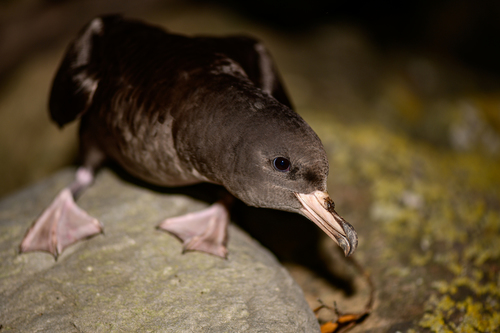
Flesh-footed Shearwater (Ardenna carneipes) Flesh-footed Shearwater
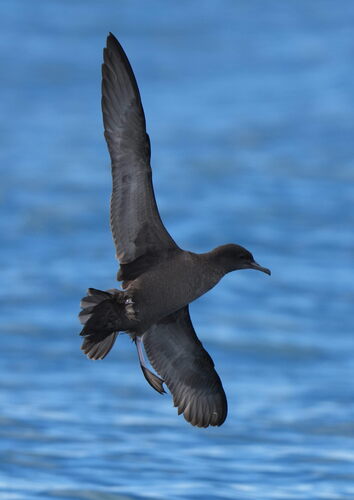
Sooty Shearwater (Ardenna grisea) Sooty Shearwater

Media

Loading…

In short

The most reliable way to separate Flesh-footed Shearwater from Sooty Shearwater is by looking for the pale pinkish feet and pale bill with a distinct black tip on Flesh-footed, versus the all-dark bill and feet of Sooty. In good light, Sooty Shearwater shows a silvery underwing panel, while Flesh-footed appears more uniformly dark below. Both are medium-large shearwaters with similar flight styles, so focus on bare part color and underwing pattern when possible. Structure and size are very close, so do not rely on overall shape or bulk alone.

Identification tips

  1. Bill color is the single best field mark: Flesh-footed Shearwater has a pale bill with a distinct black tip, while Sooty Shearwater’s bill is all dark. This is visible at moderate range in good light.
  2. Feet color is diagnostic: Flesh-footed has pale pinkish feet, often visible trailing behind in flight or when perched. Sooty’s feet are dark and do not contrast with the body.
  3. Underwing pattern: Sooty Shearwater shows a silvery stripe along the center of the underwing in good light, visible in both adults and immatures. Flesh-footed’s underwing is more uniformly dark, lacking this silvery panel.
  4. Overall plumage tone: In good light, Sooty Shearwater appears dark chocolate-brown, while Flesh-footed is more blackish. In poor light, both may look all dark, so do not rely on this alone.
  5. Flight style: Both species have similar 'shearing' flight, but Sooty may appear especially powerful and direct, sometimes resembling a small albatross. This is subtle and not always reliable.
  6. Legs and feet in flight: Look for pale feet extending beyond the tail in Flesh-footed; Sooty’s feet are dark and less conspicuous.
  7. Bill shape and size: Both have similar bill shapes, but the pale color of Flesh-footed’s bill makes it stand out more than Sooty’s.
  8. Habitat and range: If seen far from the Indo-Pacific, Sooty is much more likely, but in the Indo-Pacific both can occur together. Do not use range alone for ID.
  9. Group size: Sooty Shearwaters often occur in very large flocks, especially on migration. Flesh-footed is less likely to be seen in such numbers, but this is not a hard rule.
  10. Voice: Not useful at sea; both are silent away from breeding grounds.
  11. Juvenile/immature plumage: No distinctive age-specific upperwing marks separate these two; use bare part color and underwing pattern for all ages.
  12. Pitfalls: In poor light or at great distance, both can appear uniformly dark and similar in size and shape. Always try to get a view of the bill and feet, or the underwing in good light.
  13. Sex differences: No sexual dimorphism is noted in either species for field marks relevant to separation.
  14. Perched views: If seen sitting on the water, look for the pale bill and feet of Flesh-footed versus the all-dark bare parts of Sooty.
  15. When marks fail: If you cannot see the bill or feet, and the underwing is not visible or is in shadow, identification may not be possible. Wait for a better view or note the uncertainty.

Size

Both species are medium-large shearwaters and very similar in size. Flesh-footed Shearwater averages about 609 g in body mass [wikidata], while Sooty Shearwater is in the same general range (no direct AVONET mass given here, but sources agree they are close). Length and wingspan overlap extensively, so size is not a reliable field mark between these two.

Plumage

For all ages, Flesh-footed Shearwater is overall blackish with a pale bill (with a black tip) and pale pinkish feet, which are often visible in flight or when perched. Sooty Shearwater is also dark overall, but in good light shows a dark chocolate-brown tone rather than true black, and crucially, a silvery stripe along the center of the underwing, visible in flight in both adults and immatures. Sooty’s bill and feet are dark, lacking the pale contrasts of Flesh-footed. Juvenile and immature plumages are not described as differing in upperwing pattern between these two, so focus on underwing and bare parts for all ages.

Behaviour

Both species display the typical 'shearing' flight of their genus: stiff-winged, low to the water, with few wingbeats and frequent glides. Sooty Shearwater is noted for especially powerful, direct flight, sometimes giving the impression of a small albatross. Both are usually silent at sea, and their flight behavior is not reliably separable in the field.

Habitat

Flesh-footed Shearwater is mainly found in the Indo-Pacific, while Sooty Shearwater has a wider range, breeding in both the South Pacific and South Atlantic and migrating long distances into the North Pacific and North Atlantic. In the Indo-Pacific, both can occur together, but Sooty is more likely to be seen in massive migratory flocks, especially off the Pacific coasts. Habitat overlap is extensive at sea, so context is not a strong separator.

Voice

Both species are mostly silent at sea. Sooty Shearwater is vocal at night on breeding grounds, with loud coos and croaks, but this is not useful for field separation at sea. Calls are not a practical field mark for separating these two.

Submit a better description

Use the same sections as the comparison. Your text is published immediately.

The most reliable way to separate Flesh-footed Shearwater from Sooty Shearwater is by looking for the pale pinkish feet and pale bill with a distinct black tip on Flesh-footed, versus the all-dark bill and feet of Sooty. In good light, Sooty Shearwater shows a silvery underwing panel, while Flesh-footed appears more uniformly dark below. Both are medium-large shearwaters with similar flight styles, so focus on bare part color and underwing pattern when possible. Structure and size are very close, so do not rely on overall shape or bulk alone.

  1. Bill color is the single best field mark: Flesh-footed Shearwater has a pale bill with a distinct black tip, while Sooty Shearwater’s bill is all dark. This is visible at moderate range in good light.
  2. Feet color is diagnostic: Flesh-footed has pale pinkish feet, often visible trailing behind in flight or when perched. Sooty’s feet are dark and do not contrast with the body.
  3. Underwing pattern: Sooty Shearwater shows a silvery stripe along the center of the underwing in good light, visible in both adults and immatures. Flesh-footed’s underwing is more uniformly dark, lacking this silvery panel.
  4. Overall plumage tone: In good light, Sooty Shearwater appears dark chocolate-brown, while Flesh-footed is more blackish. In poor light, both may look all dark, so do not rely on this alone.
  5. Flight style: Both species have similar 'shearing' flight, but Sooty may appear especially powerful and direct, sometimes resembling a small albatross. This is subtle and not always reliable.
  6. Legs and feet in flight: Look for pale feet extending beyond the tail in Flesh-footed; Sooty’s feet are dark and less conspicuous.
  7. Bill shape and size: Both have similar bill shapes, but the pale color of Flesh-footed’s bill makes it stand out more than Sooty’s.
  8. Habitat and range: If seen far from the Indo-Pacific, Sooty is much more likely, but in the Indo-Pacific both can occur together. Do not use range alone for ID.
  9. Group size: Sooty Shearwaters often occur in very large flocks, especially on migration. Flesh-footed is less likely to be seen in such numbers, but this is not a hard rule.
  10. Voice: Not useful at sea; both are silent away from breeding grounds.
  11. Juvenile/immature plumage: No distinctive age-specific upperwing marks separate these two; use bare part color and underwing pattern for all ages.
  12. Pitfalls: In poor light or at great distance, both can appear uniformly dark and similar in size and shape. Always try to get a view of the bill and feet, or the underwing in good light.
  13. Sex differences: No sexual dimorphism is noted in either species for field marks relevant to separation.
  14. Perched views: If seen sitting on the water, look for the pale bill and feet of Flesh-footed versus the all-dark bare parts of Sooty.
  15. When marks fail: If you cannot see the bill or feet, and the underwing is not visible or is in shadow, identification may not be possible. Wait for a better view or note the uncertainty.

Both species are medium-large shearwaters and very similar in size. Flesh-footed Shearwater averages about 609 g in body mass [wikidata], while Sooty Shearwater is in the same general range (no direct AVONET mass given here, but sources agree they are close). Length and wingspan overlap extensively, so size is not a reliable field mark between these two.

For all ages, Flesh-footed Shearwater is overall blackish with a pale bill (with a black tip) and pale pinkish feet, which are often visible in flight or when perched. Sooty Shearwater is also dark overall, but in good light shows a dark chocolate-brown tone rather than true black, and crucially, a silvery stripe along the center of the underwing, visible in flight in both adults and immatures. Sooty’s bill and feet are dark, lacking the pale contrasts of Flesh-footed. Juvenile and immature plumages are not described as differing in upperwing pattern between these two, so focus on underwing and bare parts for all ages.

Both species display the typical 'shearing' flight of their genus: stiff-winged, low to the water, with few wingbeats and frequent glides. Sooty Shearwater is noted for especially powerful, direct flight, sometimes giving the impression of a small albatross. Both are usually silent at sea, and their flight behavior is not reliably separable in the field.

Flesh-footed Shearwater is mainly found in the Indo-Pacific, while Sooty Shearwater has a wider range, breeding in both the South Pacific and South Atlantic and migrating long distances into the North Pacific and North Atlantic. In the Indo-Pacific, both can occur together, but Sooty is more likely to be seen in massive migratory flocks, especially off the Pacific coasts. Habitat overlap is extensive at sea, so context is not a strong separator.

Both species are mostly silent at sea. Sooty Shearwater is vocal at night on breeding grounds, with loud coos and croaks, but this is not useful for field separation at sea. Calls are not a practical field mark for separating these two.

Discard your changes?

You have unsaved edits. If you leave now, those changes will be lost.

Flesh-footed Shearwater · Sooty Shearwater · My Tricky Birds