

Motmot

Fawn-throated Foliage-gleaner vs Western Woodhaunter

Automolus cervinigularis versus Automolus virgatus

Play a quiz with Fawn-throated Foliage-gleaner and Western Woodhaunter
Fawn-throated Foliage-gleaner (Automolus cervinigularis) Fawn-throated Foliage-gleaner
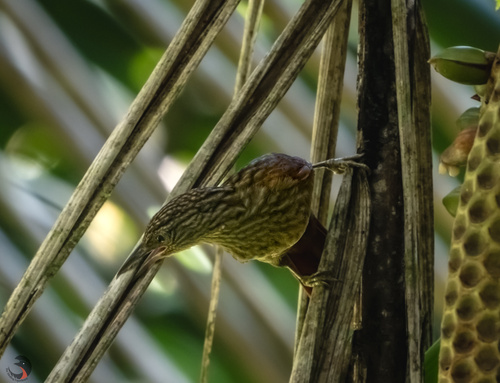
Western Woodhaunter (Automolus virgatus) Western Woodhaunter

Media

Loading…

In short

The most reliable field mark between Fawn-throated Foliage-gleaner and Western Woodhaunter is the pattern and color of the throat and breast: Fawn-throated shows a deep buff throat with dusky scaling on the breast, while Western Woodhaunter has a paler fawn throat with faint brownish edges and a deeper fawn breast with dusky feather edges. Both are large, heavy-billed foliage-gleaners, but Fawn-throated is slightly larger and has a richer brown and rufous tone overall, while Western Woodhaunter is more streaked and cinnamon-toned, especially on the back and tail. Face pattern also differs subtly, with Fawn-throated showing a bold buff eyering and Western Woodhaunter displaying golden-buff streaks on the face and crown. Both can overlap in range from Nicaragua to Panama, so careful attention to these plumage details is essential.

Identification tips

  1. Throat color and pattern: Fawn-throated Foliage-gleaner has a deep buff or ochraceous-buff throat, often with faint dark flecks, while Western Woodhaunter shows a paler fawn throat with faint brownish feather edges. This is the most consistent field mark for adults.
  2. Breast markings: Fawn-throated's breast is buff with a dusky scaling pattern, whereas Western Woodhaunter's breast is a deeper fawn with dusky feather edges but lacks the same scaling effect. Look for the difference in texture and color depth.
  3. Face pattern: Fawn-throated has a bold buff eyering and a stripe behind the eye, with a mostly dark brownish face and faint reddish streaks on the ear coverts. Western Woodhaunter's face is streaked with golden-buff, has a pale eyering, and the lores are grizzled brownish and buff. The golden-buff streaking on the crown and face is a good clue for Western Woodhaunter.
  4. Crown and back: Fawn-throated's crown and nape are dark brown with faint blackish brown scalloping, and its back is rich dark brown. Western Woodhaunter has a blackish brown crown with golden-buff streaks that continue onto the back, making the upperparts appear more streaked and contrasting.
  5. Rump and tail color: Fawn-throated has rufous uppertail coverts and a rufous tail, blending from the dark brown back. Western Woodhaunter shows a dull rusty olivaceous brown rump, deep reddish cinnamon uppertail coverts, and a paler cinnamon tail. The tail contrast is more pronounced in Western Woodhaunter.
  6. Belly and undertail coverts: Fawn-throated's belly is dusky buff with pale buff undertail coverts, while Western Woodhaunter's belly, flanks, and undertail coverts are olivaceous brown.
  7. Bill color: Both have heavy bills, but Fawn-throated's maxilla is dark gray with a pale horn mandible, while Western Woodhaunter's bill is brownish black with some yellow on the mandible. This is subtle and often hard to see.
  8. Subspecies variation: Be aware that subspecies of both can show variation in throat and undertail color, but the throat/breast pattern remains the most reliable mark.
  9. Size and structure: Fawn-throated is slightly larger and can appear bulkier and longer-tailed, but this is not always obvious in the field.
  10. Habitat and range: If in Mexico or Belize, only Fawn-throated occurs. If in Colombia or Ecuador, only Western Woodhaunter is present. In Nicaragua to Panama, both are possible—do not rely on location alone.
  11. Behavior: Western Woodhaunter may be seen more actively 'burrowing' into debris, but both species forage in similar ways and this is not a strong separator.
  12. Sex and age: Both species are sexually monomorphic and no juvenile/immature-specific wing or flight marks are described, so all field marks apply to adults and immatures alike.
  13. Perched vs. in flight: No diagnostic flight or upperwing pattern differences are described; rely on throat, breast, and face pattern in all views.
  14. Voice: No comparative vocal information is available; do not use voice for separation based on current sources.
  15. Pitfalls: Beware of lighting and wear, which can obscure throat and breast color. Subtle differences in face streaking and tail color are best seen in good light and close views.

Size

Fawn-throated Foliage-gleaner is marginally larger, measuring 18–20 cm and weighing 30–46 g, compared to Western Woodhaunter at 17–18 cm and about 35 g. Both are among the larger Automolus, but Fawn-throated tends to look bulkier and longer-tailed in the field. Bill size is similar: both have heavy, shortish bills, but Fawn-throated's may appear slightly more robust. These differences are subtle and not always reliable for separation at a glance.

Plumage

No age-specific wing or flight pattern differences are described for either species; both sexes are alike. For adults, Fawn-throated Foliage-gleaner is characterized by a deep buff (ochraceous) throat, bold buff eyering, and a breast with dusky scaling on a buff background. Its back and wing coverts are rich dark brown, with rufous uppertail coverts and a rufous tail. The face is mostly dark brownish with a bold buff eyering and a stripe behind the eye. Western Woodhaunter, in contrast, has a paler fawn throat with faint brownish feather edges, a deeper fawn breast with dusky feather edges, and a belly and undertail that are olivaceous brown. The face is dark brownish with golden-buff streaks, a pale eyering, and a grizzled appearance on the lores. The crown and back are blackish brown with golden-buff streaks, and the rump and tail are cinnamon to reddish cinnamon, with the tail paler than the uppertail coverts. Subspecies variation in both can affect tone, but the throat and breast pattern remain the best field marks.

Behaviour

Both species forage in the forest understory and middle levels, often as part of mixed-species flocks. Western Woodhaunter is noted for 'burrowing' into clumps and flinging aside debris to reach prey, which may give it a more energetic, probing appearance compared to the methodical leaf-gleaning of Fawn-throated. However, their foraging behaviors are broadly similar and not reliably diagnostic without prolonged observation.

Habitat

Ranges overlap in Central America from Nicaragua to Panama, but Fawn-throated extends north to Mexico and Belize, while Western Woodhaunter ranges south to Colombia and Ecuador. Both inhabit humid forests, especially in the lowlands and foothills, and are most often encountered in dense, mature woodland. Habitat alone is not a safe separator where their ranges overlap.

Submit a better description

Use the same sections as the comparison. Your text is published immediately.

The most reliable field mark between Fawn-throated Foliage-gleaner and Western Woodhaunter is the pattern and color of the throat and breast: Fawn-throated shows a deep buff throat with dusky scaling on the breast, while Western Woodhaunter has a paler fawn throat with faint brownish edges and a deeper fawn breast with dusky feather edges. Both are large, heavy-billed foliage-gleaners, but Fawn-throated is slightly larger and has a richer brown and rufous tone overall, while Western Woodhaunter is more streaked and cinnamon-toned, especially on the back and tail. Face pattern also differs subtly, with Fawn-throated showing a bold buff eyering and Western Woodhaunter displaying golden-buff streaks on the face and crown. Both can overlap in range from Nicaragua to Panama, so careful attention to these plumage details is essential.

  1. Throat color and pattern: Fawn-throated Foliage-gleaner has a deep buff or ochraceous-buff throat, often with faint dark flecks, while Western Woodhaunter shows a paler fawn throat with faint brownish feather edges. This is the most consistent field mark for adults.
  2. Breast markings: Fawn-throated's breast is buff with a dusky scaling pattern, whereas Western Woodhaunter's breast is a deeper fawn with dusky feather edges but lacks the same scaling effect. Look for the difference in texture and color depth.
  3. Face pattern: Fawn-throated has a bold buff eyering and a stripe behind the eye, with a mostly dark brownish face and faint reddish streaks on the ear coverts. Western Woodhaunter's face is streaked with golden-buff, has a pale eyering, and the lores are grizzled brownish and buff. The golden-buff streaking on the crown and face is a good clue for Western Woodhaunter.
  4. Crown and back: Fawn-throated's crown and nape are dark brown with faint blackish brown scalloping, and its back is rich dark brown. Western Woodhaunter has a blackish brown crown with golden-buff streaks that continue onto the back, making the upperparts appear more streaked and contrasting.
  5. Rump and tail color: Fawn-throated has rufous uppertail coverts and a rufous tail, blending from the dark brown back. Western Woodhaunter shows a dull rusty olivaceous brown rump, deep reddish cinnamon uppertail coverts, and a paler cinnamon tail. The tail contrast is more pronounced in Western Woodhaunter.
  6. Belly and undertail coverts: Fawn-throated's belly is dusky buff with pale buff undertail coverts, while Western Woodhaunter's belly, flanks, and undertail coverts are olivaceous brown.
  7. Bill color: Both have heavy bills, but Fawn-throated's maxilla is dark gray with a pale horn mandible, while Western Woodhaunter's bill is brownish black with some yellow on the mandible. This is subtle and often hard to see.
  8. Subspecies variation: Be aware that subspecies of both can show variation in throat and undertail color, but the throat/breast pattern remains the most reliable mark.
  9. Size and structure: Fawn-throated is slightly larger and can appear bulkier and longer-tailed, but this is not always obvious in the field.
  10. Habitat and range: If in Mexico or Belize, only Fawn-throated occurs. If in Colombia or Ecuador, only Western Woodhaunter is present. In Nicaragua to Panama, both are possible—do not rely on location alone.
  11. Behavior: Western Woodhaunter may be seen more actively 'burrowing' into debris, but both species forage in similar ways and this is not a strong separator.
  12. Sex and age: Both species are sexually monomorphic and no juvenile/immature-specific wing or flight marks are described, so all field marks apply to adults and immatures alike.
  13. Perched vs. in flight: No diagnostic flight or upperwing pattern differences are described; rely on throat, breast, and face pattern in all views.
  14. Voice: No comparative vocal information is available; do not use voice for separation based on current sources.
  15. Pitfalls: Beware of lighting and wear, which can obscure throat and breast color. Subtle differences in face streaking and tail color are best seen in good light and close views.

Fawn-throated Foliage-gleaner is marginally larger, measuring 18–20 cm and weighing 30–46 g, compared to Western Woodhaunter at 17–18 cm and about 35 g. Both are among the larger Automolus, but Fawn-throated tends to look bulkier and longer-tailed in the field. Bill size is similar: both have heavy, shortish bills, but Fawn-throated's may appear slightly more robust. These differences are subtle and not always reliable for separation at a glance.

No age-specific wing or flight pattern differences are described for either species; both sexes are alike. For adults, Fawn-throated Foliage-gleaner is characterized by a deep buff (ochraceous) throat, bold buff eyering, and a breast with dusky scaling on a buff background. Its back and wing coverts are rich dark brown, with rufous uppertail coverts and a rufous tail. The face is mostly dark brownish with a bold buff eyering and a stripe behind the eye. Western Woodhaunter, in contrast, has a paler fawn throat with faint brownish feather edges, a deeper fawn breast with dusky feather edges, and a belly and undertail that are olivaceous brown. The face is dark brownish with golden-buff streaks, a pale eyering, and a grizzled appearance on the lores. The crown and back are blackish brown with golden-buff streaks, and the rump and tail are cinnamon to reddish cinnamon, with the tail paler than the uppertail coverts. Subspecies variation in both can affect tone, but the throat and breast pattern remain the best field marks.

Both species forage in the forest understory and middle levels, often as part of mixed-species flocks. Western Woodhaunter is noted for 'burrowing' into clumps and flinging aside debris to reach prey, which may give it a more energetic, probing appearance compared to the methodical leaf-gleaning of Fawn-throated. However, their foraging behaviors are broadly similar and not reliably diagnostic without prolonged observation.

Ranges overlap in Central America from Nicaragua to Panama, but Fawn-throated extends north to Mexico and Belize, while Western Woodhaunter ranges south to Colombia and Ecuador. Both inhabit humid forests, especially in the lowlands and foothills, and are most often encountered in dense, mature woodland. Habitat alone is not a safe separator where their ranges overlap.

Discard your changes?

You have unsaved edits. If you leave now, those changes will be lost.

Fawn-throated Foliage-gleaner · Western Woodhaunter · My Tricky Birds