

Motmot

Fawn-throated Foliage-gleaner 対 Western Woodhaunter

Automolus cervinigularis 対 Automolus virgatus

Fawn-throated Foliage-gleanerとWestern Woodhaunterのクイズ
Fawn-throated Foliage-gleaner (Automolus cervinigularis) Fawn-throated Foliage-gleaner
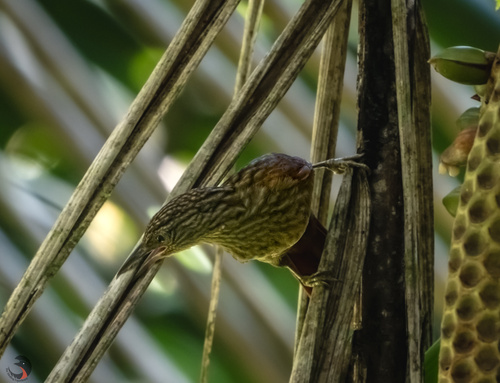
Western Woodhaunter (Automolus virgatus) Western Woodhaunter

メディア

読み込み中…

要点

Fawn-throated Foliage-gleanerとWestern Woodhaunterの最も信頼できるフィールドマークは、喉と胸のパターンと色です:Fawn-throatedは深いバフ色の喉を示し、胸には暗いスケーリングがありますが、Western Woodhaunterは淡いバフ色の喉を持ち、薄い茶色の縁があり、より深いバフ色の胸には暗い羽の縁があります。両者は大きく、重いくちばしを持つフォリッジグリーンナーですが、Fawn-throatedはわずかに大きく、全体的により豊かな茶色とルフス色のトーンを持ち、Western Woodhaunterはよりストライプ状でシナモン色が強く、特に背中と尾において顕著です。顔のパターンも微妙に異なり、Fawn-throatedは大胆なバフ色のアイリングを示し、Western Woodhaunterは顔と冠に金色のバフ色のストライプを持っています。両者はニカラグアからパナマまでの範囲で重なることがあるため、これらの羽毛の詳細に注意を払うことが重要です。

識別のコツ

  1. 喉の色とパターン:Fawn-throated Foliage-gleanerは深いバフ色またはオクラ色の喉を持ち、しばしば薄い暗い斑点がありますが、Western Woodhaunterは淡いバフ色の喉を持ち、薄い茶色の羽の縁があります。これは成鳥にとって最も一貫したフィールドマークです。
  2. 胸のマーキング:Fawn-throatedの胸はバフ色で暗いスケーリングパターンがありますが、Western Woodhaunterの胸はより深いバフ色で暗い羽の縁がありますが、同じスケーリング効果はありません。質感と色の深さの違いを探してください。
  3. 顔のパターン:Fawn-throatedは大胆なバフ色のアイリングと目の後ろにストライプを持ち、主に暗い茶色の顔と耳の覆いに薄い赤いストライプがあります。Western Woodhaunterの顔は金色のバフ色のストライプがあり、淡いアイリングを持ち、ロアは灰色がかった茶色とバフ色です。冠と顔の金色のバフ色のストライプはWestern Woodhaunterの良い手がかりです。
  4. 冠と背中:Fawn-throatedの冠と後頭部は暗い茶色で薄い黒っぽい茶色のスカロッピングがあり、背中は豊かな暗い茶色です。Western Woodhaunterは黒っぽい茶色の冠を持ち、金色のバフ色のストライプが背中に続いており、上面がよりストライプ状でコントラストが強く見えます。
  5. 尾と尾の色:Fawn-throatedはルフス色の上尾覆いとルフス色の尾を持ち、暗い茶色の背中からブレンドしています。Western Woodhaunterは鈍い錆色のオリーブ色の茶色の尻、深い赤みがかったシナモン色の上尾覆い、淡いシナモン色の尾を示します。尾のコントラストはWestern Woodhaunterでより顕著です。
  6. 腹部と尾の下覆い:Fawn-throatedの腹部は暗いバフ色で淡いバフ色の尾の下覆いがありますが、Western Woodhaunterの腹部、側面、尾の下覆いはオリーブ色の茶色です。
  7. くちばしの色:両者は重いくちばしを持っていますが、Fawn-throatedの上顎は暗い灰色で淡い角質の下顎を持ち、Western Woodhaunterのくちばしは茶色がかった黒で下顎に少し黄色があります。これは微妙で、しばしば見えにくいです。
  8. 亜種の変異:両者の亜種は喉と尾の下の色に変異を示すことがありますが、喉/胸のパターンは最も信頼できるマークです。
  9. サイズと構造:Fawn-throatedはわずかに大きく、より大きく見え、尾が長いように見えることがありますが、これはフィールドで常に明らかではありません。
  10. 生息地と範囲:メキシコやベリーズにいる場合、Fawn-throatedのみが存在します。コロンビアやエクアドルにいる場合、Western Woodhaunterのみが存在します。ニカラグアからパナマでは、両方が可能です—場所だけに頼らないでください。
  11. 行動:Western Woodhaunterはより活発に「掘り込む」姿が見られることがありますが、両種は似たような方法で採餌し、これは強い区別要因ではありません。
  12. 性別と年齢:両種は性別が同形であり、幼鳥/未成熟特有の翼や飛行のマークは記載されていないため、すべてのフィールドマークは成鳥と未成熟の両方に適用されます。
  13. 止まっている時と飛んでいる時:診断的な飛行や上翼のパターンの違いは記載されていないため、すべての視点で喉、胸、顔のパターンに頼ってください。
  14. 声:比較のための音声情報は利用できません;現在の情報源に基づいて声を区別に使用しないでください。
  15. 落とし穴:照明や摩耗に注意してください。これにより喉と胸の色が隠れることがあります。顔のストライプや尾の色の微妙な違いは、良い光と近い視点で最もよく見えます。

大きさ

Fawn-throated Foliage-gleanerはわずかに大きく、18〜20 cmで30〜46 gの重さがありますが、Western Woodhaunterは17〜18 cmで約35 gです。両者は大きなAutomolusの中でも大きい方ですが、Fawn-throatedはフィールドでより大きく見える傾向があります。くちばしのサイズは似ています:両者は重く、短めのくちばしを持っていますが、Fawn-throatedの方がわずかに頑丈に見えることがあります。これらの違いは微妙で、一目での区別には常に信頼できるわけではありません。

羽色

どちらの種にも年齢特有の翼や飛行パターンの違いは記載されていません;両性は似ています。成鳥の場合、Fawn-throated Foliage-gleanerは深いバフ色(オクラ色)の喉、大胆なバフ色のアイリング、バフ色の背景に暗いスケーリングのある胸が特徴です。背中と翼の覆いは豊かな暗い茶色で、ルフス色の上尾覆いとルフス色の尾があります。顔は主に暗い茶色で、大胆なバフ色のアイリングと目の後ろにストライプがあります。対照的に、Western Woodhaunterは淡いバフ色の喉を持ち、薄い茶色の羽の縁、より深いバフ色の胸に暗い羽の縁があり、腹部と尾の下はオリーブ色の茶色です。顔は暗い茶色で金色のバフ色のストライプがあり、淡いアイリングとロアに灰色がかった外観があります。冠と背中は黒っぽい茶色で金色のバフ色のストライプがあり、尻と尾はシナモン色から赤みがかったシナモン色で、尾は上尾覆いよりも淡いです。両者の亜種の変異はトーンに影響を与えることがありますが、喉と胸のパターンは最も良いフィールドマークです。

行動

両種は森林の下層と中層で採餌し、しばしば混成種の群れの一部として見られます。Western Woodhaunterは塊に「掘り込む」ことで知られ、獲物に到達するために debris を投げ捨てることがあり、これによりFawn-throatedの方法的な葉の採餌に比べてよりエネルギッシュで探求的な外観を与えることがあります。しかし、彼らの採餌行動は広く似ており、長時間の観察なしでは信頼できる診断にはなりません。

生息環境

範囲はニカラグアからパナマまでの中央アメリカで重なりますが、Fawn-throatedはメキシコとベリーズに北上し、Western Woodhaunterはコロンビアとエクアドルに南下します。両者は湿った森林に生息し、特に低地や山麓に多く見られ、密な成熟した森林で最もよく遭遇します。生息地だけでは、範囲が重なる場所での安全な区別にはなりません。

より良い説明を送る

比較と同じ項目を使ってください。文章はすぐに公開されます。

The most reliable field mark between Fawn-throated Foliage-gleaner and Western Woodhaunter is the pattern and color of the throat and breast: Fawn-throated shows a deep buff throat with dusky scaling on the breast, while Western Woodhaunter has a paler fawn throat with faint brownish edges and a deeper fawn breast with dusky feather edges. Both are large, heavy-billed foliage-gleaners, but Fawn-throated is slightly larger and has a richer brown and rufous tone overall, while Western Woodhaunter is more streaked and cinnamon-toned, especially on the back and tail. Face pattern also differs subtly, with Fawn-throated showing a bold buff eyering and Western Woodhaunter displaying golden-buff streaks on the face and crown. Both can overlap in range from Nicaragua to Panama, so careful attention to these plumage details is essential.

  1. Throat color and pattern: Fawn-throated Foliage-gleaner has a deep buff or ochraceous-buff throat, often with faint dark flecks, while Western Woodhaunter shows a paler fawn throat with faint brownish feather edges. This is the most consistent field mark for adults.
  2. Breast markings: Fawn-throated's breast is buff with a dusky scaling pattern, whereas Western Woodhaunter's breast is a deeper fawn with dusky feather edges but lacks the same scaling effect. Look for the difference in texture and color depth.
  3. Face pattern: Fawn-throated has a bold buff eyering and a stripe behind the eye, with a mostly dark brownish face and faint reddish streaks on the ear coverts. Western Woodhaunter's face is streaked with golden-buff, has a pale eyering, and the lores are grizzled brownish and buff. The golden-buff streaking on the crown and face is a good clue for Western Woodhaunter.
  4. Crown and back: Fawn-throated's crown and nape are dark brown with faint blackish brown scalloping, and its back is rich dark brown. Western Woodhaunter has a blackish brown crown with golden-buff streaks that continue onto the back, making the upperparts appear more streaked and contrasting.
  5. Rump and tail color: Fawn-throated has rufous uppertail coverts and a rufous tail, blending from the dark brown back. Western Woodhaunter shows a dull rusty olivaceous brown rump, deep reddish cinnamon uppertail coverts, and a paler cinnamon tail. The tail contrast is more pronounced in Western Woodhaunter.
  6. Belly and undertail coverts: Fawn-throated's belly is dusky buff with pale buff undertail coverts, while Western Woodhaunter's belly, flanks, and undertail coverts are olivaceous brown.
  7. Bill color: Both have heavy bills, but Fawn-throated's maxilla is dark gray with a pale horn mandible, while Western Woodhaunter's bill is brownish black with some yellow on the mandible. This is subtle and often hard to see.
  8. Subspecies variation: Be aware that subspecies of both can show variation in throat and undertail color, but the throat/breast pattern remains the most reliable mark.
  9. Size and structure: Fawn-throated is slightly larger and can appear bulkier and longer-tailed, but this is not always obvious in the field.
  10. Habitat and range: If in Mexico or Belize, only Fawn-throated occurs. If in Colombia or Ecuador, only Western Woodhaunter is present. In Nicaragua to Panama, both are possible—do not rely on location alone.
  11. Behavior: Western Woodhaunter may be seen more actively 'burrowing' into debris, but both species forage in similar ways and this is not a strong separator.
  12. Sex and age: Both species are sexually monomorphic and no juvenile/immature-specific wing or flight marks are described, so all field marks apply to adults and immatures alike.
  13. Perched vs. in flight: No diagnostic flight or upperwing pattern differences are described; rely on throat, breast, and face pattern in all views.
  14. Voice: No comparative vocal information is available; do not use voice for separation based on current sources.
  15. Pitfalls: Beware of lighting and wear, which can obscure throat and breast color. Subtle differences in face streaking and tail color are best seen in good light and close views.

Fawn-throated Foliage-gleaner is marginally larger, measuring 18–20 cm and weighing 30–46 g, compared to Western Woodhaunter at 17–18 cm and about 35 g. Both are among the larger Automolus, but Fawn-throated tends to look bulkier and longer-tailed in the field. Bill size is similar: both have heavy, shortish bills, but Fawn-throated's may appear slightly more robust. These differences are subtle and not always reliable for separation at a glance.

No age-specific wing or flight pattern differences are described for either species; both sexes are alike. For adults, Fawn-throated Foliage-gleaner is characterized by a deep buff (ochraceous) throat, bold buff eyering, and a breast with dusky scaling on a buff background. Its back and wing coverts are rich dark brown, with rufous uppertail coverts and a rufous tail. The face is mostly dark brownish with a bold buff eyering and a stripe behind the eye. Western Woodhaunter, in contrast, has a paler fawn throat with faint brownish feather edges, a deeper fawn breast with dusky feather edges, and a belly and undertail that are olivaceous brown. The face is dark brownish with golden-buff streaks, a pale eyering, and a grizzled appearance on the lores. The crown and back are blackish brown with golden-buff streaks, and the rump and tail are cinnamon to reddish cinnamon, with the tail paler than the uppertail coverts. Subspecies variation in both can affect tone, but the throat and breast pattern remain the best field marks.

Both species forage in the forest understory and middle levels, often as part of mixed-species flocks. Western Woodhaunter is noted for 'burrowing' into clumps and flinging aside debris to reach prey, which may give it a more energetic, probing appearance compared to the methodical leaf-gleaning of Fawn-throated. However, their foraging behaviors are broadly similar and not reliably diagnostic without prolonged observation.

Ranges overlap in Central America from Nicaragua to Panama, but Fawn-throated extends north to Mexico and Belize, while Western Woodhaunter ranges south to Colombia and Ecuador. Both inhabit humid forests, especially in the lowlands and foothills, and are most often encountered in dense, mature woodland. Habitat alone is not a safe separator where their ranges overlap.

変更を破棄しますか?

保存していない編集があります。今離れると失われます。

Fawn-throated Foliage-gleaner · Western Woodhaunter · 苦手な鳥