

Motmot

Fairy Prion vs Campbell Islands Shag

Pachyptila turtur versus Leucocarbo campbelli

Play a quiz with Fairy Prion and Campbell Islands Shag
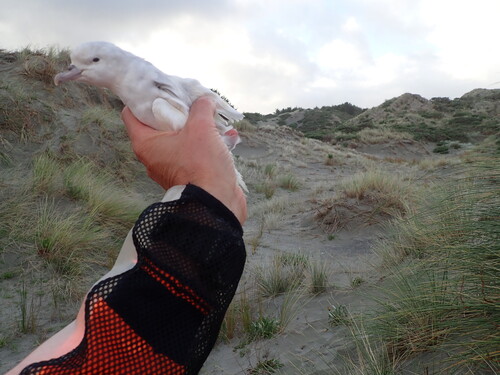
Fairy Prion (Pachyptila turtur) Fairy Prion
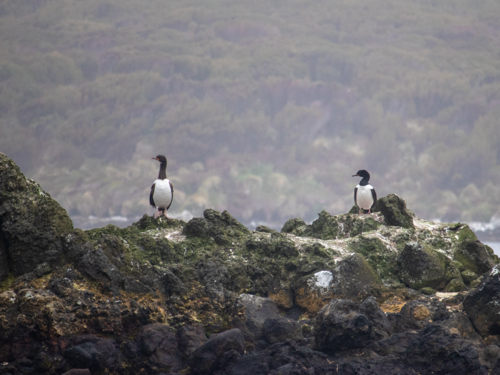
Campbell Islands Shag (Leucocarbo campbelli) Campbell Islands Shag

Media

Loading…

In short

The most reliable way to separate Fairy Prion from Campbell Islands Shag is by structure and overall impression: Fairy Prion is a small, delicate, blue-grey and white seabird with a dark 'M' pattern across the upperwings, while Campbell Islands Shag is a much larger, heavy-bodied black-and-white cormorant with a long neck and thick bill. In flight, prions show quick, fluttery wingbeats and a wedge-shaped tail, whereas shags have strong, direct flight with slow wingbeats and a longer, heavier silhouette. Juvenile and adult Fairy Prions look similar, while juvenile shags are browner and duller than adults. These species are extremely unlikely to be confused at close range, but distant views over water or in poor light can cause confusion, especially with immature birds.

Identification tips

  1. Size is the quickest check: Fairy Prion is tiny and delicate; Campbell Islands Shag is huge, bulky, and heavy-billed. Even distant birds can often be separated by overall bulk and length.
  2. Flight style: Prion has quick, fluttery wingbeats and glides low over the water, often erratic; shag has slow, deep wingbeats, flies in a straight line with neck extended, and appears powerful and heavy.
  3. Upperwing pattern (all ages): Fairy Prion shows a bold dark 'M' across the upperwings and back, visible in flight and from above; Campbell Islands Shag lacks this, instead showing black upperwings with white patches but no 'M'.
  4. Tail shape: Prion has a wedge-shaped tail with a dark tip; shag's tail is longer, broader, and lacks a dark tip.
  5. Bill color and shape: Prion's bill is short, thin, and pale blue; shag's bill is long, thick, and greyish-brown with a yellow base (sometimes pinkish at the tip in adults).
  6. Leg color: Prion has blue legs and feet; shag has pink feet, which may be visible when perched or in flight at close range.
  7. Plumage contrast: Prion is blue-grey above, white below, with subtle transitions; shag is sharply black and white, with a clear division between the dark head/neck and white underparts.
  8. Breeding season features (adults only): Shag adults in breeding season show a crest, yellow line above the bill, and colorful facial skin; prion never shows these features.
  9. Juvenile confusion: Juvenile shags are browner and duller than adults but still much larger and heavier than prions, with a thick bill and long neck. Juvenile prions look like adults.
  10. Perched posture: Shags often perch upright on rocks or cliffs, sometimes with wings spread; prions rarely perch in view except at colonies, where they are much smaller and more compact.
  11. Habitat context: If seen far from Campbell Island, it is not Campbell Islands Shag. Prions are pelagic and can be seen far from land; shags are coastal and rarely far from shore.
  12. Group behavior: Shags often forage in tight, coordinated flocks, diving together; prions are more loosely associated, feeding individually or in loose groups at the surface.
  13. Bare part color (close views): Shag's facial skin and throat pouch may be purple to orange in breeding adults; prion's face is plain with a pale blue bill.
  14. Iridescence: Shag's black feathers have a metallic greenish-blue sheen in good light; prion lacks any iridescence.
  15. Mistaken identity at sea: At great distance, a small, fluttery, pale bird is almost certainly a prion; a large, heavy, black-and-white bird with a long neck is a shag. If the bird is seen diving from the surface, it is a shag; prions do not dive from the surface.

Size

Fairy Prion is much smaller (139 g, 25 cm length, 56 cm wingspan) than Campbell Islands Shag (1.6–2 kg, 63 cm length, 105 cm wingspan). The shag is over ten times heavier and more than twice as long and wide in the wings. Even at a distance, the shag's bulk, long neck, and heavy bill are obvious compared to the prion's petite, compact form.

Plumage

Fairy Prion of all ages shows blue-grey upperparts with a bold dark 'M' marking across the upperwing and back, white underparts, and a wedge-shaped tail with a dark tip. The bill is pale blue, legs and feet are blue, and sexes are alike. Juveniles look like adults. Campbell Islands Shag adults are strikingly black and white: black head, neck, and upperparts with a metallic sheen, white chin, underparts, and wing patches. In breeding season, adults show a crest, yellow line above the bill, and colorful facial skin. Juveniles and non-breeding birds are browner, with duller bare parts and less contrast. The shag's bill is thick, greyish-brown with a yellow base, and feet are pink. No 'M' pattern is present; instead, look for the sharp contrast between black and white areas, especially on the underparts and wings. In flight, the prion's upperwing 'M' is diagnostic, while the shag shows broad, rounded wings with black and white patterning but no 'M'.

Behaviour

Fairy Prion is a typical small petrel, flying with quick, fluttery wingbeats and gliding low over the water, often in loose flocks. It feeds by dipping or picking at the surface. Campbell Islands Shag is a cormorant, often seen perched with wings spread or flying in tight, direct flocks with slow, deep wingbeats and neck outstretched. Shags dive from the surface, foraging underwater in coordinated groups, sometimes with other seabirds. Their flight is heavier and more direct than the prion's buoyant, erratic style.

Habitat

Fairy Prion is widespread in subantarctic and subtropical southern oceans, breeding on remote islands and ranging widely at sea. Campbell Islands Shag is strictly endemic to Campbell Island and nearby waters, never found far from this location. Prions are pelagic, often far from land, while shags are coastal, foraging within 10 km of the island and usually seen near rocky shores or cliffs. If you are not near Campbell Island, you will not encounter the shag.

Voice

Fairy Prion is mostly silent at sea, but at colonies may give soft cooing calls, especially at night. Campbell Islands Shag is generally silent, though courtship and colony interactions may include grunts or croaks, but these are rarely heard by birders. Voice is not a practical field mark for separation.

Submit a better description

Use the same sections as the comparison. Your text is published immediately.

The most reliable way to separate Fairy Prion from Campbell Islands Shag is by structure and overall impression: Fairy Prion is a small, delicate, blue-grey and white seabird with a dark 'M' pattern across the upperwings, while Campbell Islands Shag is a much larger, heavy-bodied black-and-white cormorant with a long neck and thick bill. In flight, prions show quick, fluttery wingbeats and a wedge-shaped tail, whereas shags have strong, direct flight with slow wingbeats and a longer, heavier silhouette. Juvenile and adult Fairy Prions look similar, while juvenile shags are browner and duller than adults. These species are extremely unlikely to be confused at close range, but distant views over water or in poor light can cause confusion, especially with immature birds.

  1. Size is the quickest check: Fairy Prion is tiny and delicate; Campbell Islands Shag is huge, bulky, and heavy-billed. Even distant birds can often be separated by overall bulk and length.
  2. Flight style: Prion has quick, fluttery wingbeats and glides low over the water, often erratic; shag has slow, deep wingbeats, flies in a straight line with neck extended, and appears powerful and heavy.
  3. Upperwing pattern (all ages): Fairy Prion shows a bold dark 'M' across the upperwings and back, visible in flight and from above; Campbell Islands Shag lacks this, instead showing black upperwings with white patches but no 'M'.
  4. Tail shape: Prion has a wedge-shaped tail with a dark tip; shag's tail is longer, broader, and lacks a dark tip.
  5. Bill color and shape: Prion's bill is short, thin, and pale blue; shag's bill is long, thick, and greyish-brown with a yellow base (sometimes pinkish at the tip in adults).
  6. Leg color: Prion has blue legs and feet; shag has pink feet, which may be visible when perched or in flight at close range.
  7. Plumage contrast: Prion is blue-grey above, white below, with subtle transitions; shag is sharply black and white, with a clear division between the dark head/neck and white underparts.
  8. Breeding season features (adults only): Shag adults in breeding season show a crest, yellow line above the bill, and colorful facial skin; prion never shows these features.
  9. Juvenile confusion: Juvenile shags are browner and duller than adults but still much larger and heavier than prions, with a thick bill and long neck. Juvenile prions look like adults.
  10. Perched posture: Shags often perch upright on rocks or cliffs, sometimes with wings spread; prions rarely perch in view except at colonies, where they are much smaller and more compact.
  11. Habitat context: If seen far from Campbell Island, it is not Campbell Islands Shag. Prions are pelagic and can be seen far from land; shags are coastal and rarely far from shore.
  12. Group behavior: Shags often forage in tight, coordinated flocks, diving together; prions are more loosely associated, feeding individually or in loose groups at the surface.
  13. Bare part color (close views): Shag's facial skin and throat pouch may be purple to orange in breeding adults; prion's face is plain with a pale blue bill.
  14. Iridescence: Shag's black feathers have a metallic greenish-blue sheen in good light; prion lacks any iridescence.
  15. Mistaken identity at sea: At great distance, a small, fluttery, pale bird is almost certainly a prion; a large, heavy, black-and-white bird with a long neck is a shag. If the bird is seen diving from the surface, it is a shag; prions do not dive from the surface.

Fairy Prion is much smaller (139 g, 25 cm length, 56 cm wingspan) than Campbell Islands Shag (1.6–2 kg, 63 cm length, 105 cm wingspan). The shag is over ten times heavier and more than twice as long and wide in the wings. Even at a distance, the shag's bulk, long neck, and heavy bill are obvious compared to the prion's petite, compact form.

Fairy Prion of all ages shows blue-grey upperparts with a bold dark 'M' marking across the upperwing and back, white underparts, and a wedge-shaped tail with a dark tip. The bill is pale blue, legs and feet are blue, and sexes are alike. Juveniles look like adults. Campbell Islands Shag adults are strikingly black and white: black head, neck, and upperparts with a metallic sheen, white chin, underparts, and wing patches. In breeding season, adults show a crest, yellow line above the bill, and colorful facial skin. Juveniles and non-breeding birds are browner, with duller bare parts and less contrast. The shag's bill is thick, greyish-brown with a yellow base, and feet are pink. No 'M' pattern is present; instead, look for the sharp contrast between black and white areas, especially on the underparts and wings. In flight, the prion's upperwing 'M' is diagnostic, while the shag shows broad, rounded wings with black and white patterning but no 'M'.

Fairy Prion is a typical small petrel, flying with quick, fluttery wingbeats and gliding low over the water, often in loose flocks. It feeds by dipping or picking at the surface. Campbell Islands Shag is a cormorant, often seen perched with wings spread or flying in tight, direct flocks with slow, deep wingbeats and neck outstretched. Shags dive from the surface, foraging underwater in coordinated groups, sometimes with other seabirds. Their flight is heavier and more direct than the prion's buoyant, erratic style.

Fairy Prion is widespread in subantarctic and subtropical southern oceans, breeding on remote islands and ranging widely at sea. Campbell Islands Shag is strictly endemic to Campbell Island and nearby waters, never found far from this location. Prions are pelagic, often far from land, while shags are coastal, foraging within 10 km of the island and usually seen near rocky shores or cliffs. If you are not near Campbell Island, you will not encounter the shag.

Fairy Prion is mostly silent at sea, but at colonies may give soft cooing calls, especially at night. Campbell Islands Shag is generally silent, though courtship and colony interactions may include grunts or croaks, but these are rarely heard by birders. Voice is not a practical field mark for separation.

Discard your changes?

You have unsaved edits. If you leave now, those changes will be lost.

Fairy Prion · Campbell Islands Shag · My Tricky Birds