

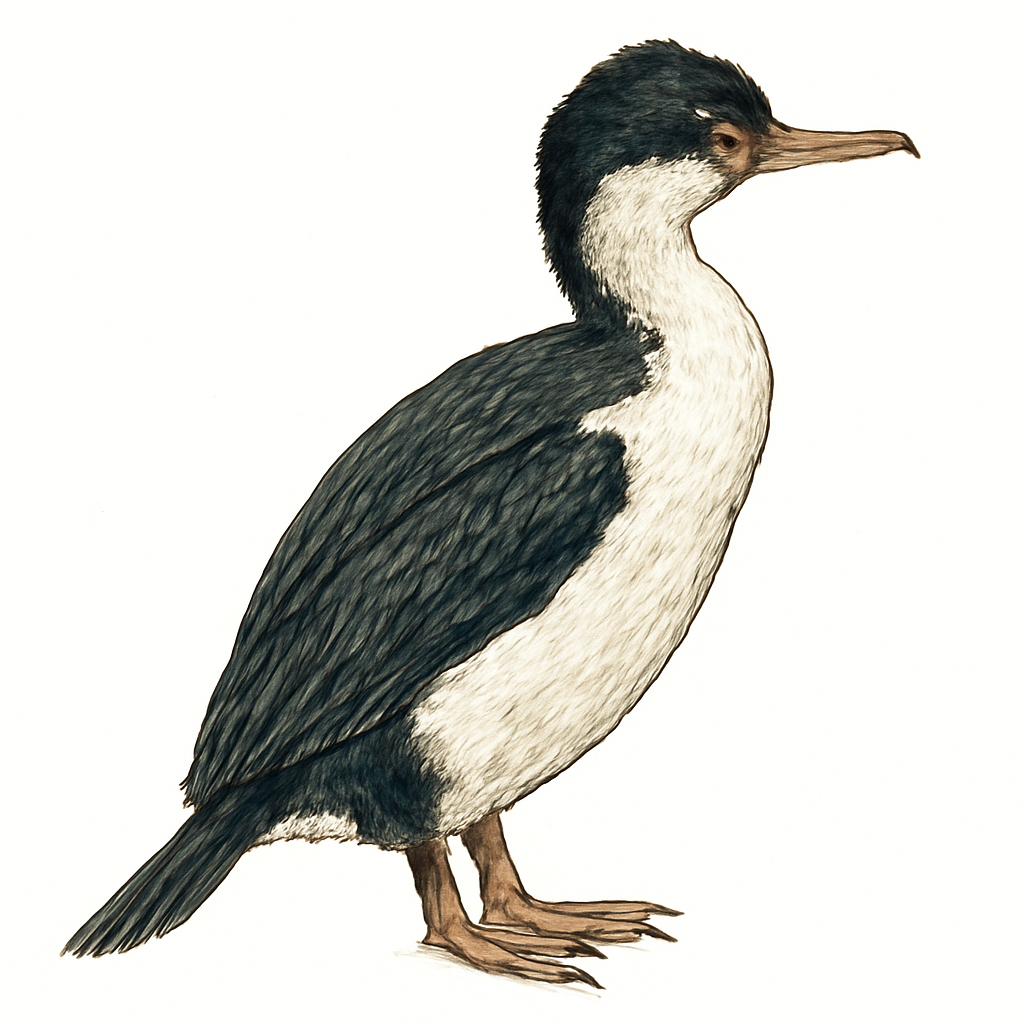
Campbell Islands Shag
Leucocarbo campbelli
Cormorants and Shags (Phalacrocoracidae) · Suliformes · Cormorants and Anhingas
Play a quiz with Campbell Islands Shag and similar species
View all photos, video and sound
Review needed
Motmot is a community-driven project, and many photos still need a human check. If you know this bird, you can help by reviewing its images.
O-o, we ran out of AI credits. I develop Motmot in my spare time, and there is no funding behind it right now. If you would like to help it grow, write to me at info@motmot.club.
How to identify Campbell Islands Shag
Writing identification notes…
This looks up identification notes in open sources, then asks the model to write them. It can take a minute.
Log in to generate identification notes for this bird.
Often mixed up with
In quizzes, players most often confuse Campbell Islands Shag with these birds—either this species was picked by mistake, or the other way around.
| Species | Mix-ups |
|---|---|
| Auckland Islands Shag Leucocarbo colensoi | 5 |
| Fluttering Shearwater Puffinus gavia | 2 |
| Stewart Island Shag Leucocarbo chalconotus | 2 |
| Fairy Prion Pachyptila turtur | 1 |
| Buller's Shearwater Ardenna bulleri | 1 |
Family
Phalacrocoracidae is a family of approximately 40 species of aquatic birds found worldwide and commonly known as cormorants and shags. Several different classifications of the family have been proposed, but in 2021 the International Ornithologists' Union (IOU) adopted a consensus taxonomy of seven genera. The great cormorant (Phalacrocorax carbo) and the common shag (Gulosus aristotelis) are the only two species of the family commonly encountered in Britain and Ireland.
Order
The order Suliformes (, dubbed "Phalacrocoraciformes" by Christidis & Boles 2008) is an order of birds that includes gannets, boobies, frigatebirds, cormorants and darters. The order is recognised by the International Ornithologist's Union. Regarding the recent evidence that the traditional Pelecaniformes is polyphyletic, it has been suggested that the group be divided to reflect the true evolutionary relationships; a 2017 study indicated that they are most closely related to Otidiformes (bustards) and Ciconiiformes (storks).