

Motmot

ヒメクジラドリ 対 ノドオビムナジロウ

Pachyptila turtur 対 Leucocarbo campbelli

ヒメクジラドリとノドオビムナジロウのクイズ
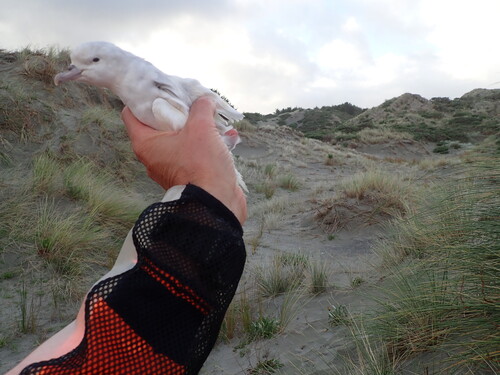
ヒメクジラドリ (Pachyptila turtur) ヒメクジラドリ
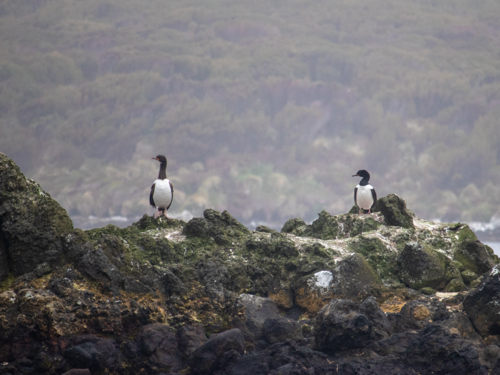
ノドオビムナジロウ (Leucocarbo campbelli) ノドオビムナジロウ

メディア

読み込み中…

要点

ヒメクジラドリとノドオビムナジロウを分ける最も信頼できる方法は、構造と全体的な印象によるものです:ヒメクジラドリは小さく、繊細で、青灰色と白の海鳥で、上翼に暗い「M」パターンがあります。一方、ノドオビムナジロウは、はるかに大きく、重い体を持つ黒と白のコウモリで、長い首と太いくちばしがあります。飛行中、クジラドリは速く、ひらひらとした翼の動きとくさび形の尾を示し、ノドオビムナジロウは強く、直接的な飛行をし、翼の動きは遅く、長く、重いシルエットを持っています。幼鳥と成鳥のヒメクジラドリは似ていますが、幼鳥のノドオビムナジロウは成鳥よりも茶色がかり、鈍い色合いです。これらの種は近距離で混同される可能性は非常に低いですが、水面からの遠くの視界や悪い光の中では混乱を引き起こすことがあります。特に未熟な鳥においては。

識別のコツ

  1. サイズは最も迅速なチェック:ヒメクジラドリは小さくて繊細です;ノドオビムナジロウは巨大で、がっしりとした体と重いくちばしを持っています。遠くの鳥でも、全体的な体重と長さで分けられることがよくあります。
  2. 飛行スタイル:クジラドリは速く、ひらひらとした翼の動きで水面を低く滑空し、しばしば不規則です;ノドオビムナジロウは遅く、深い翼の動きで、首を伸ばして直線的に飛び、力強く重い印象を与えます。
  3. 上翼のパターン(すべての年齢):ヒメクジラドリは上翼と背中に大胆な暗い「M」を示し、飛行中や上からも見えます;ノドオビムナジロウはこれを欠き、代わりに白い斑点のある黒い上翼を示しますが、「M」はありません。
  4. 尾の形:クジラドリは暗い先端を持つくさび形の尾を持っています;ノドオビムナジロウの尾は長く、広く、暗い先端がありません。
  5. くちばしの色と形:クジラドリのくちばしは短く、細く、淡い青色です;ノドオビムナジロウのくちばしは長く、太く、灰色がかった茶色で、基部は黄色です(成鳥では先端が時々ピンクがかることがあります)。
  6. 脚の色:クジラドリは青い脚と足を持っています;ノドオビムナジロウはピンクの足を持ち、止まっている時や近距離で飛んでいる時に見えることがあります。
  7. 羽毛のコントラスト:クジラドリは上が青灰色、下が白で、微妙な移行があります;ノドオビムナジロウは鮮やかな黒と白で、暗い頭/首と白い腹部の間に明確な区分があります。
  8. 繁殖期の特徴(成鳥のみ):繁殖期のノドオビムナジロウの成鳥は、冠、くちばしの上の黄色い線、カラフルな顔の皮膚を示します;クジラドリはこれらの特徴を示しません。
  9. 幼鳥の混乱:幼鳥のノドオビムナジロウは成鳥よりも茶色がかり、鈍い色合いですが、それでもクジラドリよりもはるかに大きく、重いです。幼鳥のクジラドリは成鳥のように見えます。
  10. 止まっている姿勢:ノドオビムナジロウはしばしば岩や崖の上に直立して止まっており、時には翼を広げています;クジラドリはコロニー以外では視界に止まることはほとんどありませんが、コロニーでははるかに小さく、コンパクトです。
  11. 生息地の文脈:キャンベル島から遠くで見られた場合、それはノドオビムナジロウではありません。クジラドリは遠洋性で、陸から遠くで見られることがあります;ノドオビムナジロウは沿岸性で、通常は海岸から遠く離れることはありません。
  12. 群れの行動:ノドオビムナジロウはしばしば密集した調整された群れで採餌し、一緒に潜ります;クジラドリはより緩やかに関連し、個別または緩いグループで水面で餌を取ります。
  13. 裸の部分の色(近距離の視点):繁殖期のノドオビムナジロウの顔の皮膚と喉の袋は紫からオレンジ色になることがあります;クジラドリの顔は淡い青いくちばしを持つ平坦なものです。
  14. 虹色の輝き:ノドオビムナジロウの黒い羽毛は良い光の中で金属的な緑がかった青の光沢を持っています;クジラドリには虹色の輝きはありません。
  15. 海での誤認:遠くから見ると、小さく、ひらひらとした淡い鳥はほぼ確実にクジラドリです;長い首を持つ大きく、重い黒と白の鳥はノドオビムナジロウです。もしその鳥が水面から潜っているのが見えたら、それはノドオビムナジロウです;クジラドリは水面から潜ることはありません。

大きさ

ヒメクジラドリはノドオビムナジロウよりもはるかに小さい(139 g、全長25 cm、翼幅56 cm)です。ノドオビムナジロウは10倍以上重く、全長は2倍以上、翼幅も2倍以上です。遠くからでも、ノドオビムナジロウの体重、長い首、重いくちばしは、クジラドリの小さく、コンパクトな形と比較して明らかです。

羽色

すべての年齢のヒメクジラドリは、上翼と背中に大胆な暗い「M」マークがあり、白い腹部と暗い先端を持つくさび形の尾を示します。くちばしは淡い青色で、脚と足は青色で、性別は同じです。幼鳥は成鳥のように見えます。ノドオビムナジロウの成鳥は、黒い頭、首、上部に金属的な光沢があり、白い顎、腹部、翼の斑点が際立っています。繁殖期には、成鳥は冠、くちばしの上の黄色い線、カラフルな顔の皮膚を示します。幼鳥や非繁殖の鳥は茶色がかり、裸の部分は鈍く、コントラストが少なくなります。ノドオビムナジロウのくちばしは太く、灰色がかった茶色で、基部は黄色で、足はピンクです。「M」パターンは存在せず、代わりに黒と白の領域の間の鋭いコントラストを探してください。特に腹部と翼で。飛行中、クジラドリの上翼の「M」は診断的であり、ノドオビムナジロウは黒と白のパターンを持つ広く丸い翼を示しますが、「M」はありません。

行動

ヒメクジラドリは典型的な小型ペトレルで、速く、ひらひらとした翼の動きで水面を低く滑空し、しばしば緩やかな群れで飛びます。水面で餌を取るために、浸したり、つまんだりします。ノドオビムナジロウはコウモリで、翼を広げて止まっているか、遅く、深い翼の動きで首を伸ばして直線的に飛ぶことがよくあります。ノドオビムナジロウは水面から潜り、調整されたグループで水中で採餌し、時には他の海鳥と一緒に行動します。彼らの飛行は、クジラドリの浮遊的で不規則なスタイルよりも重く、直接的です。

生息環境

ヒメクジラドリは亜南極および亜熱帯の南洋に広く分布し、遠隔の島で繁殖し、海で広く分布します。ノドオビムナジロウはキャンベル島とその近くの水域に厳密に特有で、決してこの場所から遠くには見られません。クジラドリは遠洋性で、陸から遠くで見られることが多いのに対し、ノドオビムナジロウは沿岸性で、島から10 km以内で採餌し、通常は岩の多い海岸や崖の近くで見られます。キャンベル島の近くにいない場合、ノドオビムナジロウには出会えません。

声

ヒメクジラドリは海ではほとんど静かですが、コロニーでは特に夜に柔らかいクーイングコールを出すことがあります。ノドオビムナジロウは一般的に静かですが、求愛やコロニーの相互作用にはうなり声やクロークが含まれることがありますが、これらはバーダーによってはめったに聞かれません。声は分離のための実用的なフィールドマークではありません。

より良い説明を送る

比較と同じ項目を使ってください。文章はすぐに公開されます。

The most reliable way to separate Fairy Prion from Campbell Islands Shag is by structure and overall impression: Fairy Prion is a small, delicate, blue-grey and white seabird with a dark 'M' pattern across the upperwings, while Campbell Islands Shag is a much larger, heavy-bodied black-and-white cormorant with a long neck and thick bill. In flight, prions show quick, fluttery wingbeats and a wedge-shaped tail, whereas shags have strong, direct flight with slow wingbeats and a longer, heavier silhouette. Juvenile and adult Fairy Prions look similar, while juvenile shags are browner and duller than adults. These species are extremely unlikely to be confused at close range, but distant views over water or in poor light can cause confusion, especially with immature birds.

  1. Size is the quickest check: Fairy Prion is tiny and delicate; Campbell Islands Shag is huge, bulky, and heavy-billed. Even distant birds can often be separated by overall bulk and length.
  2. Flight style: Prion has quick, fluttery wingbeats and glides low over the water, often erratic; shag has slow, deep wingbeats, flies in a straight line with neck extended, and appears powerful and heavy.
  3. Upperwing pattern (all ages): Fairy Prion shows a bold dark 'M' across the upperwings and back, visible in flight and from above; Campbell Islands Shag lacks this, instead showing black upperwings with white patches but no 'M'.
  4. Tail shape: Prion has a wedge-shaped tail with a dark tip; shag's tail is longer, broader, and lacks a dark tip.
  5. Bill color and shape: Prion's bill is short, thin, and pale blue; shag's bill is long, thick, and greyish-brown with a yellow base (sometimes pinkish at the tip in adults).
  6. Leg color: Prion has blue legs and feet; shag has pink feet, which may be visible when perched or in flight at close range.
  7. Plumage contrast: Prion is blue-grey above, white below, with subtle transitions; shag is sharply black and white, with a clear division between the dark head/neck and white underparts.
  8. Breeding season features (adults only): Shag adults in breeding season show a crest, yellow line above the bill, and colorful facial skin; prion never shows these features.
  9. Juvenile confusion: Juvenile shags are browner and duller than adults but still much larger and heavier than prions, with a thick bill and long neck. Juvenile prions look like adults.
  10. Perched posture: Shags often perch upright on rocks or cliffs, sometimes with wings spread; prions rarely perch in view except at colonies, where they are much smaller and more compact.
  11. Habitat context: If seen far from Campbell Island, it is not Campbell Islands Shag. Prions are pelagic and can be seen far from land; shags are coastal and rarely far from shore.
  12. Group behavior: Shags often forage in tight, coordinated flocks, diving together; prions are more loosely associated, feeding individually or in loose groups at the surface.
  13. Bare part color (close views): Shag's facial skin and throat pouch may be purple to orange in breeding adults; prion's face is plain with a pale blue bill.
  14. Iridescence: Shag's black feathers have a metallic greenish-blue sheen in good light; prion lacks any iridescence.
  15. Mistaken identity at sea: At great distance, a small, fluttery, pale bird is almost certainly a prion; a large, heavy, black-and-white bird with a long neck is a shag. If the bird is seen diving from the surface, it is a shag; prions do not dive from the surface.

Fairy Prion is much smaller (139 g, 25 cm length, 56 cm wingspan) than Campbell Islands Shag (1.6–2 kg, 63 cm length, 105 cm wingspan). The shag is over ten times heavier and more than twice as long and wide in the wings. Even at a distance, the shag's bulk, long neck, and heavy bill are obvious compared to the prion's petite, compact form.

Fairy Prion of all ages shows blue-grey upperparts with a bold dark 'M' marking across the upperwing and back, white underparts, and a wedge-shaped tail with a dark tip. The bill is pale blue, legs and feet are blue, and sexes are alike. Juveniles look like adults. Campbell Islands Shag adults are strikingly black and white: black head, neck, and upperparts with a metallic sheen, white chin, underparts, and wing patches. In breeding season, adults show a crest, yellow line above the bill, and colorful facial skin. Juveniles and non-breeding birds are browner, with duller bare parts and less contrast. The shag's bill is thick, greyish-brown with a yellow base, and feet are pink. No 'M' pattern is present; instead, look for the sharp contrast between black and white areas, especially on the underparts and wings. In flight, the prion's upperwing 'M' is diagnostic, while the shag shows broad, rounded wings with black and white patterning but no 'M'.

Fairy Prion is a typical small petrel, flying with quick, fluttery wingbeats and gliding low over the water, often in loose flocks. It feeds by dipping or picking at the surface. Campbell Islands Shag is a cormorant, often seen perched with wings spread or flying in tight, direct flocks with slow, deep wingbeats and neck outstretched. Shags dive from the surface, foraging underwater in coordinated groups, sometimes with other seabirds. Their flight is heavier and more direct than the prion's buoyant, erratic style.

Fairy Prion is widespread in subantarctic and subtropical southern oceans, breeding on remote islands and ranging widely at sea. Campbell Islands Shag is strictly endemic to Campbell Island and nearby waters, never found far from this location. Prions are pelagic, often far from land, while shags are coastal, foraging within 10 km of the island and usually seen near rocky shores or cliffs. If you are not near Campbell Island, you will not encounter the shag.

Fairy Prion is mostly silent at sea, but at colonies may give soft cooing calls, especially at night. Campbell Islands Shag is generally silent, though courtship and colony interactions may include grunts or croaks, but these are rarely heard by birders. Voice is not a practical field mark for separation.

変更を破棄しますか?

保存していない編集があります。今離れると失われます。

ヒメクジラドリ · ノドオビムナジロウ · 苦手な鳥