

European Robin vs Red-breasted Flycatcher
Erithacus rubecula versus Ficedula parva
Play a quiz with European Robin and Red-breasted Flycatcher
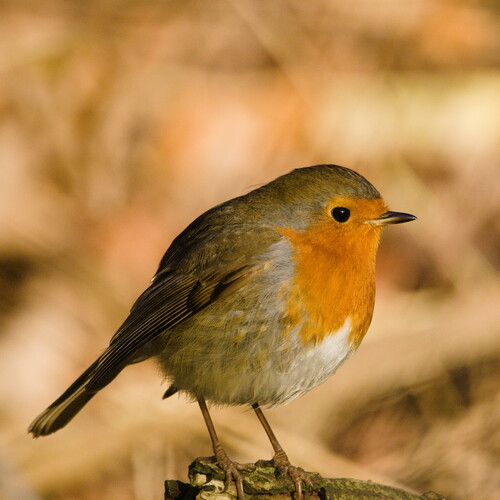 European Robin
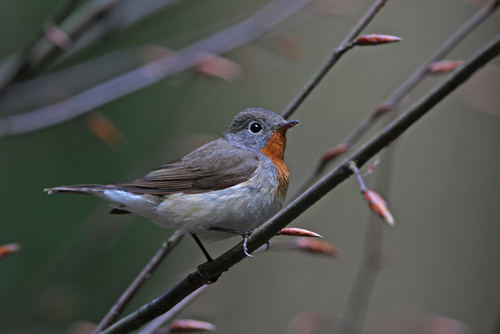 Red-breasted Flycatcher
In short
The most reliable field mark for separating European Robin from Red-breasted Flycatcher is the robin's extensive orange-red breast and face, which is never matched by the flycatcher. Juvenile robins are freckled brown without any orange, while first-winter robins show yellow-brown tips to the wing coverts, a feature not present in any flycatcher plumage. Red-breasted Flycatcher males have a limited orange throat (not full breast), a prominent white eyering, and a distinctive black-and-white tail pattern visible in flight or when flicked. Bill shape and tail behavior also differ: robins have a fine, straight bill and a rounded tail, while flycatchers show a broader-based bill and often flick their black-and-white tail. Both are small, brown-backed birds, but careful attention to breast color, eyering, and tail pattern will resolve nearly all confusion.
Identification tips
- Orange Breast vs. Orange Throat: Robins always show a full orange-red breast and face (adults/first-winters), while Red-breasted Flycatcher males have only an orange throat patch (never the whole breast), and females/immatures lack orange entirely.
- Juvenile Robin Unique: Juvenile robins are freckled brown with no orange—never matched by any flycatcher. If you see a mottled brown bird with no orange, it's a young robin.
- First-winter Robin Wing Coverts: First-winter robins have yellow-brown tips to the wing coverts, a subtle but diagnostic mark absent in flycatchers.
- White Eyering: All Red-breasted Flycatchers (including females and immatures) have a strong white eyering, which robins lack.
- Tail Pattern: Flycatchers have a black tail with white bases to the outer feathers, visible when flicked or in flight. Robin's tail is plain brown with no white.
- Bill Shape: Robins have a fine, straight bill; flycatchers have a broader-based, pointed bill with a pale pinkish base (especially obvious in good light).
- Head Color: Adult male flycatchers have a grey head; robins have brown upperparts and a face that is orange, not grey.
- Underparts: Robins have a whitish belly, but the orange extends well down the breast. Flycatchers are white below with no orange except on the throat (males).
- Sex/Age Pitfalls: Female and immature flycatchers lack any orange on the throat or breast, appearing brown above and white below with a white eyering—never matched by any robin plumage.
- Behavior: Watch for tail-flicking and sallying in flycatchers versus the robin's more ground-based, hopping foraging style.
- Posture: Robins are round and upright; flycatchers are slimmer, often more horizontal, and perch more delicately.
- Habitat/Range: In gardens and urban parks in western Europe, robin is vastly more likely except during peak flycatcher migration. In mature forest or during migration, check for flycatcher features.
- Vocalization: If singing, robin's song is richer and more melodious; flycatcher's is a sweet, repetitive whistle, but this is only heard for a short period in spring.
- Size: Robins are slightly larger and bulkier, but this is rarely diagnostic unless both species are side by side.
- Flight: In flight, flycatchers may show the white tail bases and appear more agile, while robins look rounder and more direct.
Size
European Robin is slightly larger, measuring 12.5–14.0 cm in length with a wingspan of 20–22 cm and weighing 16–22 g [wikipedia]. Red-breasted Flycatcher is smaller at 11–12 cm in length [wikipedia]. In the field, this size difference is subtle and often masked by posture, but robins can appear a bit bulkier and rounder, while flycatchers look more delicate and slim.
Plumage
- Juvenile/First-winter: Juvenile European Robins are mottled brown with no orange at all, making them quite different from any Red-breasted Flycatcher, which never shows this freckled brown look. First-winter robins resemble adults but have yellow-brown tips to the wing coverts—this subtle feature is absent in flycatchers of any age.
- Adult/Typical: Adult robins (both sexes) have a bold orange-red breast and face, bordered by bluish-grey on the neck and chest, brown upperparts, and a whitish belly. Red-breasted Flycatcher adult males have only an orange throat (not breast), a grey head, brown upperparts, and white underparts. Females and immatures lack the orange throat entirely, appearing brown above and white below with a strong white eyering.
- Tail and Eyering: Flycatchers show a black tail with white bases to the outer feathers (often visible when flicked or in flight), and a clear white eyering in all plumages. Robins have a plain brown tail and lack a strong eyering.
- Bill: Robins have a fine, straight bill; flycatchers have a broader-based, pointed bill with a pale pinkish base.
Behaviour
Red-breasted Flycatchers often flick their tails upward and hold their wingtips down while perched, especially when foraging or agitated. They frequently sally for insects from perches, sometimes hovering briefly. Robins are more likely to hop on the ground, cocking their heads to look for prey, and rarely flick their tails in the same way. In flight, robins look round and direct, while flycatchers can appear more agile and slender, especially when sallying after insects.
Habitat
European Robins are versatile and can be found in a wide range of habitats, including parks, gardens, woodlands, and even urban areas across most of Europe. Red-breasted Flycatchers breed in mature, often moist deciduous or mixed forests in eastern Europe and Central Asia, and are seen as passage migrants in western Europe, typically in wooded or shrubby areas. In the British Isles and western Europe, robins are far more common and likely in most habitats except during peak flycatcher migration.
Voice
Robins have a rich, melodious song and a sharp 'tick' call, but these are not described in detail in the notes. Red-breasted Flycatcher males sing a sweet, repetitive whistle with a descending sequence, often preceded by quiet 'zit' notes, but only for a few weeks in spring. In winter and on migration, flycatchers are mostly silent except for a short, rattling 'zrrrt' call. Song is not a reliable separator outside the breeding season, but the flycatcher's song is less melodious and more repetitive than the robin's.