

Motmot

Eurasian Wryneck vs Grey-and-buff Woodpecker

Jynx torquilla versus Hemicircus concretus

Play a quiz with Eurasian Wryneck and Grey-and-buff Woodpecker
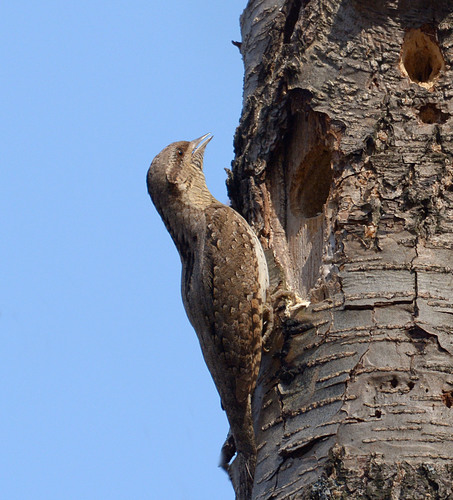
Eurasian Wryneck (Jynx torquilla) Eurasian Wryneck
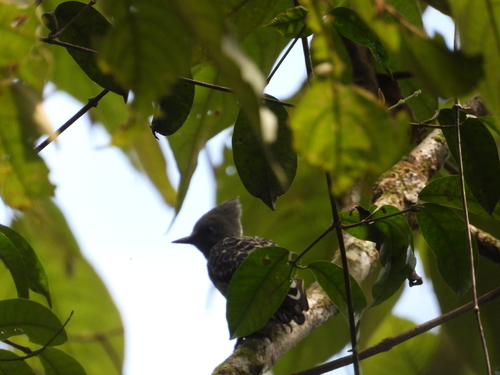
Grey-and-buff Woodpecker (Hemicircus concretus) Grey-and-buff Woodpecker

Media

Loading…

In short

The most reliable field mark to separate Eurasian Wryneck from Grey-and-buff Woodpecker is overall shape and posture: wryneck is slim, elongated, and thrush-like with a long neck and tail, while Grey-and-buff Woodpecker is compact, plump, and short-tailed with a large crested head. In all plumages, wryneck shows intricate, cryptic barring and mottling above, whereas Grey-and-buff Woodpecker has bold scalloping and a contrasting dark-and-buff look. Juvenile wrynecks resemble adults but are duller; there are no age-specific upperwing or flight marks described for either species. Bill shape and head structure are also distinctive at all ages. Habitat and range do not overlap: Eurasian Wryneck is a temperate Eurasian migrant, while Grey-and-buff Woodpecker is a Southeast Asian rainforest resident.

Identification tips

  1. Overall shape and jizz: Wryneck is slim, elongated, and thrush-like with a long neck and tail; Grey-and-buff Woodpecker is compact, short-tailed, and big-headed with a prominent crest. This is often the fastest field clue at any distance.
  2. Head and bill: Wryneck has a small, slender head with a long, thin bill and no crest. Grey-and-buff Woodpecker has a large, crested head (especially obvious in profile), and a long, slender, but stouter bill with a black tip. Male woodpeckers show a red forehead, absent in wryneck.
  3. Upperparts pattern: Wryneck upperparts are intricately barred and mottled in pale brown, rufous, and black, blending into bark; woodpecker upperparts are blackish with bold white or buff scalloping, much higher contrast and less cryptic.
  4. Underparts: Wryneck shows creamy white underparts with brown arrowhead marks, especially on the breast and flanks; woodpecker is plain grey below, lacking strong pattern except for some scalloping on the sides.
  5. Tail: Wryneck has a long, rounded, grey tail with faint, irregular barring; woodpecker's tail is short, dark, and less patterned.
  6. Flight silhouette: Wryneck in flight looks slim and elongated, with a long tail and neck; woodpecker is compact, with a short tail and large head. No strong age-specific wing panel or trailing edge marks are described for either.
  7. Juvenile plumage: Juvenile wryneck is like adult but duller and less contrasting; woodpecker juveniles are not separately described, but likely similar to adults.
  8. Sex differences: Only the male Grey-and-buff Woodpecker has a red forehead; wryneck sexes are alike.
  9. Perching behavior: Wryneck often perches upright or on the ground, sometimes twisting or contorting its neck; woodpecker is more often seen clinging to trunks or branches, sometimes in the canopy.
  10. Habitat: Wryneck is found in open woodlands, orchards, and farmland in temperate Eurasia; woodpecker is in Southeast Asian rainforests and plantations. If the habitat is dense tropical forest, it's almost certainly the woodpecker.
  11. Range: There is no overlap; Eurasian Wryneck is not found in Southeast Asia, and Grey-and-buff Woodpecker does not occur in Europe or temperate Asia.
  12. Vocalization: If you hear a repeated, harsh quee-quee-quee-quee, it's wryneck; woodpecker's call is not described here, so silence is not diagnostic.
  13. Group behavior: Wryneck may be seen in small groups during migration; woodpecker is usually solitary or in pairs, but roosts communally.
  14. Feeding behavior: Wryneck often feeds on the ground for ants; woodpecker forages in the canopy for insects and fruit, rarely on the ground.
  15. Leg color: Wryneck has pale brown legs; woodpecker's legs are grey or brown, but this is rarely visible in the field.

Size

Eurasian Wryneck is noticeably larger and longer (16–18 cm, 37 g) than Grey-and-buff Woodpecker (13.5 cm, 29 g) [wikipedia][wikidata]. Wryneck looks elongated with a proportionally longer tail and neck, while Grey-and-buff Woodpecker is compact, short-tailed, and stockier. In the field, the wryneck's thrush-like proportions stand out against the woodpecker's chunky, big-headed jizz.

Plumage

Juvenile and adult Eurasian Wrynecks are very similar, both showing finely barred and mottled upperparts in pale brown, rufous, and black, with a cryptic, bark-like appearance. The underparts are creamy with arrowhead-shaped brown marks, especially on the breast and flanks. The tail is rounded and grey with faint, irregular barring. In contrast, Grey-and-buff Woodpecker of all ages is boldly patterned: upperparts and wings are blackish with white or buff scalloping, underparts are plain grey, and the tail and underwing are dark. The head is large and crested, mostly grey, with a red forehead in males. There are no described age-specific flight or upperwing panel marks for either species, so overall plumage and structure are key. The wryneck's plumage is more cryptic and intricately patterned, while the woodpecker is more contrasting and blocky.

Behaviour

Eurasian Wryneck often perches upright with its head held high and bill slightly raised, sometimes performing dramatic head-twisting displays or feigning death when disturbed. It forages on the ground or low trunks, typically alone or in pairs, occasionally forming small groups during migration. Grey-and-buff Woodpecker is usually seen singly or in pairs, foraging by gleaning insects and fruit in the canopy, sometimes joining mixed flocks. It roosts communally in shallow holes and rarely drums or excavates deeply. Wryneck's behavior is more terrestrial and secretive, while the woodpecker is more arboreal and social at night.

Habitat

Eurasian Wryneck breeds in temperate Europe and Asia, favoring open woodlands, orchards, and farmland with scattered trees and ant-rich ground. It is migratory, wintering in Africa and southern Asia. Grey-and-buff Woodpecker is strictly a resident of Southeast Asian lowland and montane rainforests, forest edges, plantations, and sometimes wooded urban areas. Their ranges and habitats do not overlap: seeing one in the other's typical habitat is extremely unlikely.

Voice

Eurasian Wryneck gives a repeated, harsh, shrill quee-quee-quee-quee, reminiscent of a small falcon or Lesser Spotted Woodpecker, and a staccato tuck alarm. Grey-and-buff Woodpecker's voice is not described in the available notes, so vocalization is only diagnostic if the wryneck's distinctive call is heard.

Submit a better description

Use the same sections as the comparison. Your text is published immediately.

The most reliable field mark to separate Eurasian Wryneck from Grey-and-buff Woodpecker is overall shape and posture: wryneck is slim, elongated, and thrush-like with a long neck and tail, while Grey-and-buff Woodpecker is compact, plump, and short-tailed with a large crested head. In all plumages, wryneck shows intricate, cryptic barring and mottling above, whereas Grey-and-buff Woodpecker has bold scalloping and a contrasting dark-and-buff look. Juvenile wrynecks resemble adults but are duller; there are no age-specific upperwing or flight marks described for either species. Bill shape and head structure are also distinctive at all ages. Habitat and range do not overlap: Eurasian Wryneck is a temperate Eurasian migrant, while Grey-and-buff Woodpecker is a Southeast Asian rainforest resident.

  1. Overall shape and jizz: Wryneck is slim, elongated, and thrush-like with a long neck and tail; Grey-and-buff Woodpecker is compact, short-tailed, and big-headed with a prominent crest. This is often the fastest field clue at any distance.
  2. Head and bill: Wryneck has a small, slender head with a long, thin bill and no crest. Grey-and-buff Woodpecker has a large, crested head (especially obvious in profile), and a long, slender, but stouter bill with a black tip. Male woodpeckers show a red forehead, absent in wryneck.
  3. Upperparts pattern: Wryneck upperparts are intricately barred and mottled in pale brown, rufous, and black, blending into bark; woodpecker upperparts are blackish with bold white or buff scalloping, much higher contrast and less cryptic.
  4. Underparts: Wryneck shows creamy white underparts with brown arrowhead marks, especially on the breast and flanks; woodpecker is plain grey below, lacking strong pattern except for some scalloping on the sides.
  5. Tail: Wryneck has a long, rounded, grey tail with faint, irregular barring; woodpecker's tail is short, dark, and less patterned.
  6. Flight silhouette: Wryneck in flight looks slim and elongated, with a long tail and neck; woodpecker is compact, with a short tail and large head. No strong age-specific wing panel or trailing edge marks are described for either.
  7. Juvenile plumage: Juvenile wryneck is like adult but duller and less contrasting; woodpecker juveniles are not separately described, but likely similar to adults.
  8. Sex differences: Only the male Grey-and-buff Woodpecker has a red forehead; wryneck sexes are alike.
  9. Perching behavior: Wryneck often perches upright or on the ground, sometimes twisting or contorting its neck; woodpecker is more often seen clinging to trunks or branches, sometimes in the canopy.
  10. Habitat: Wryneck is found in open woodlands, orchards, and farmland in temperate Eurasia; woodpecker is in Southeast Asian rainforests and plantations. If the habitat is dense tropical forest, it's almost certainly the woodpecker.
  11. Range: There is no overlap; Eurasian Wryneck is not found in Southeast Asia, and Grey-and-buff Woodpecker does not occur in Europe or temperate Asia.
  12. Vocalization: If you hear a repeated, harsh quee-quee-quee-quee, it's wryneck; woodpecker's call is not described here, so silence is not diagnostic.
  13. Group behavior: Wryneck may be seen in small groups during migration; woodpecker is usually solitary or in pairs, but roosts communally.
  14. Feeding behavior: Wryneck often feeds on the ground for ants; woodpecker forages in the canopy for insects and fruit, rarely on the ground.
  15. Leg color: Wryneck has pale brown legs; woodpecker's legs are grey or brown, but this is rarely visible in the field.

Eurasian Wryneck is noticeably larger and longer (16–18 cm, 37 g) than Grey-and-buff Woodpecker (13.5 cm, 29 g) [wikipedia][wikidata]. Wryneck looks elongated with a proportionally longer tail and neck, while Grey-and-buff Woodpecker is compact, short-tailed, and stockier. In the field, the wryneck's thrush-like proportions stand out against the woodpecker's chunky, big-headed jizz.

Juvenile and adult Eurasian Wrynecks are very similar, both showing finely barred and mottled upperparts in pale brown, rufous, and black, with a cryptic, bark-like appearance. The underparts are creamy with arrowhead-shaped brown marks, especially on the breast and flanks. The tail is rounded and grey with faint, irregular barring. In contrast, Grey-and-buff Woodpecker of all ages is boldly patterned: upperparts and wings are blackish with white or buff scalloping, underparts are plain grey, and the tail and underwing are dark. The head is large and crested, mostly grey, with a red forehead in males. There are no described age-specific flight or upperwing panel marks for either species, so overall plumage and structure are key. The wryneck's plumage is more cryptic and intricately patterned, while the woodpecker is more contrasting and blocky.

Eurasian Wryneck often perches upright with its head held high and bill slightly raised, sometimes performing dramatic head-twisting displays or feigning death when disturbed. It forages on the ground or low trunks, typically alone or in pairs, occasionally forming small groups during migration. Grey-and-buff Woodpecker is usually seen singly or in pairs, foraging by gleaning insects and fruit in the canopy, sometimes joining mixed flocks. It roosts communally in shallow holes and rarely drums or excavates deeply. Wryneck's behavior is more terrestrial and secretive, while the woodpecker is more arboreal and social at night.

Eurasian Wryneck breeds in temperate Europe and Asia, favoring open woodlands, orchards, and farmland with scattered trees and ant-rich ground. It is migratory, wintering in Africa and southern Asia. Grey-and-buff Woodpecker is strictly a resident of Southeast Asian lowland and montane rainforests, forest edges, plantations, and sometimes wooded urban areas. Their ranges and habitats do not overlap: seeing one in the other's typical habitat is extremely unlikely.

Eurasian Wryneck gives a repeated, harsh, shrill quee-quee-quee-quee, reminiscent of a small falcon or Lesser Spotted Woodpecker, and a staccato tuck alarm. Grey-and-buff Woodpecker's voice is not described in the available notes, so vocalization is only diagnostic if the wryneck's distinctive call is heard.

Discard your changes?

You have unsaved edits. If you leave now, those changes will be lost.

Eurasian Wryneck · Grey-and-buff Woodpecker · My Tricky Birds