

Torcicollo vs Gray-and-buff Woodpecker
Jynx torquilla contro Hemicircus concretus
Fai un quiz con Torcicollo e Gray-and-buff Woodpecker
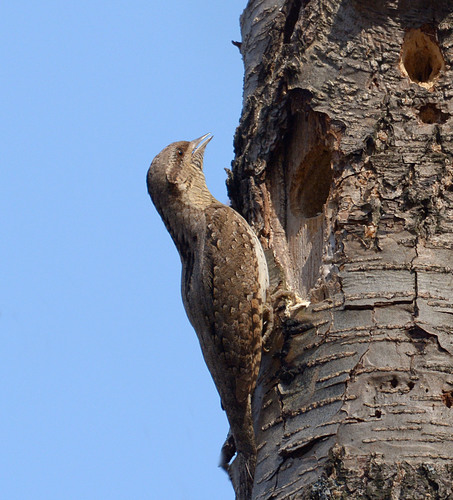 Torcicollo
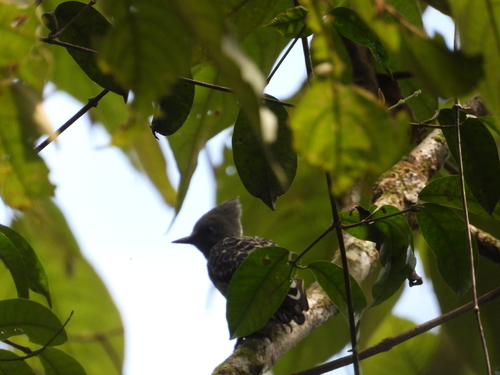 Gray-and-buff Woodpecker
In breve
Il segno distintivo più affidabile per separare il Torcicollo dal Gray-and-buff Woodpecker è la forma e la postura complessive: il torcicollo è snello, allungato e simile a un tordo, con un collo e una coda lunghi, mentre il Gray-and-buff Woodpecker è compatto, grassoccio e con una coda corta e una grande testa crestata. In tutte le livree, il torcicollo mostra barre e macchie intricate e criptiche sopra, mentre il Gray-and-buff Woodpecker ha una scollatura audace e un aspetto contrastante scuro e buffo. I torcicolli giovani assomigliano agli adulti ma sono più opachi; non ci sono segni specifici per l'età sulle ali superiori o di volo descritti per nessuna delle due specie. La forma del becco e la struttura della testa sono anche distintive a tutte le età. L'habitat e l'areale non si sovrappongono: il Torcicollo è un migrante eurasiatico temperato, mentre il Gray-and-buff Woodpecker è un residente delle foreste pluviali del sud-est asiatico.
Consigli di identificazione
- Overall shape and jizz: Il torcicollo è snello, allungato e simile a un tordo, con un collo e una coda lunghi; il Gray-and-buff Woodpecker è compatto, con una coda corta e una grande testa con una cresta prominente. Questo è spesso il segnale più veloce sul campo a qualsiasi distanza.
- Head and bill: Il torcicollo ha una testa piccola e slanciata con un becco lungo e sottile e senza cresta. Il Gray-and-buff Woodpecker ha una grande testa crestata (soprattutto evidente di profilo) e un becco lungo, sottile ma più robusto con una punta nera. I picchi maschi mostrano una fronte rossa, assente nel torcicollo.
- Upperparts pattern: Le parti superiori del torcicollo sono intricate con barre e macchie di colore marrone chiaro, ruggine e nero, che si fondono nella corteccia; le parti superiori del picchio sono nerastre con scollature bianche o buffe audaci, con un contrasto molto più elevato e meno criptico.
- Underparts: Il torcicollo mostra parti inferiori bianche crema con segni a forma di freccia marrone, specialmente sul petto e sui fianchi; il picchio è grigio uniforme sotto, privo di un forte motivo eccetto per alcune scollature sui lati.
- Tail: Il torcicollo ha una coda lunga e arrotondata di colore grigio con barre irregolari e deboli; la coda del picchio è corta, scura e meno decorata.
- Flight silhouette: Il torcicollo in volo appare snello e allungato, con una lunga coda e collo; il picchio è compatto, con una coda corta e una grande testa. Non ci sono segni specifici per l'età sulle ali o sui bordi posteriori descritti per nessuna delle due specie.
- Juvenile plumage: Il torcicollo giovane è simile all'adulto ma più opaco e meno contrastante; i giovani picchi non sono descritti separatamente, ma probabilmente sono simili agli adulti.
- Sex differences: Solo il maschio del Gray-and-buff Woodpecker ha una fronte rossa; i sessi del torcicollo sono simili.
- Perching behavior: Il torcicollo spesso si posa eretto o a terra, a volte torcendo o contorcendo il collo; il picchio è più spesso visto aggrappato a tronchi o rami, a volte nella chioma.
- Habitat: Il torcicollo si trova in boschi aperti, frutteti e terreni agricoli nell'Eurasia temperata; il picchio è nelle foreste pluviali del sud-est asiatico e nelle piantagioni. Se l'habitat è una foresta tropicale densa, è quasi certamente il picchio.
- Range: Non c'è sovrapposizione; il Torcicollo non si trova nel sud-est asiatico, e il Gray-and-buff Woodpecker non si verifica in Europa o nell'Asia temperata.
- Vocalization: Se senti un ripetuto, aspro quee-quee-quee-quee, è il torcicollo; il richiamo del picchio non è descritto qui, quindi il silenzio non è diagnostico.
- Group behavior: Il torcicollo può essere visto in piccoli gruppi durante la migrazione; il picchio è solitamente solitario o in coppie, ma si riposa in modo comunitario.
- Feeding behavior: Il torcicollo spesso si nutre a terra di formiche; il picchio cerca insetti e frutta nella chioma, raramente a terra.
- Leg color: Il torcicollo ha zampe marrone chiaro; le zampe del picchio sono grigie o marroni, ma questo è raramente visibile sul campo.
Taglia
Il Torcicollo è notevolmente più grande e lungo (16–18 cm, 37 g) rispetto al Gray-and-buff Woodpecker (13,5 cm, 29 g) [wikipedia][wikidata]. Il torcicollo appare allungato con una coda e un collo proporzionalmente più lunghi, mentre il Gray-and-buff Woodpecker è compatto, con una coda corta e più robusto. Sul campo, le proporzioni simili a un tordo del torcicollo si distinguono rispetto al corpo massiccio e alla grande testa del picchio.
Piumaggio
I torcicolli giovani e adulti sono molto simili, entrambi mostrano parti superiori finemente barrate e macchiate di colore marrone chiaro, ruggine e nero, con un aspetto criptico simile alla corteccia. Le parti inferiori sono cremose con segni marroni a forma di freccia, specialmente sul petto e sui fianchi. La coda è arrotondata e grigia con barre irregolari e deboli. Al contrario, il Gray-and-buff Woodpecker di tutte le età è audacemente decorato: le parti superiori e le ali sono nerastre con scollature bianche o buffe, le parti inferiori sono grigie uniformi, e la coda e l'ala inferiore sono scure. La testa è grande e crestata, per lo più grigia, con una fronte rossa nei maschi. Non ci sono segni specifici per l'età descritti per il volo o le ali superiori per nessuna delle due specie, quindi la livrea e la struttura complessive sono fondamentali. La livrea del torcicollo è più criptica e intricatamente decorata, mentre il picchio è più contrastante e massiccio.
Comportamento
Il Torcicollo spesso si posa eretto con la testa alta e il becco leggermente sollevato, a volte esibendo drammatiche esibizioni di torsione della testa o fingendo di essere morto quando disturbato. Si nutre a terra o su tronchi bassi, tipicamente da solo o in coppie, occasionalmente formando piccoli gruppi durante la migrazione. Il Gray-and-buff Woodpecker è solitamente visto singolarmente o in coppie, cercando insetti e frutta nella chioma, a volte unendosi a stormi misti. Si riposa in modo comunitario in buchi poco profondi e raramente tamburella o scava in profondità. Il comportamento del torcicollo è più terrestre e segreto, mentre il picchio è più arboricolo e sociale di notte.
Habitat
Il Torcicollo nidifica in Europa e Asia temperate, preferendo boschi aperti, frutteti e terreni agricoli con alberi sparsi e terreno ricco di formiche. È migratorio, svernando in Africa e nel sud dell'Asia. Il Gray-and-buff Woodpecker è strettamente un residente delle foreste pluviali montane e di pianura del sud-est asiatico, dei bordi forestali, delle piantagioni e a volte delle aree urbane boschive. I loro areali e habitat non si sovrappongono: vedere uno nell'habitat tipico dell'altro è estremamente improbabile.
Voce
Il Torcicollo emette un ripetuto, aspro e acuto quee-quee-quee-quee, simile a un piccolo falco o al Picchio rosso minore, e un allerta staccato. La voce del Gray-and-buff Woodpecker non è descritta nelle note disponibili, quindi la vocalizzazione è diagnostica solo se si sente il richiamo distintivo del torcicollo.
Torcicollo · Gray-and-buff Woodpecker · I miei uccelli difficili