

Eurasian Three-toed Woodpecker vs White-backed Woodpecker
Picoides tridactylus versus Dendrocopos leucotos
Play a quiz with Eurasian Three-toed Woodpecker and White-backed Woodpecker
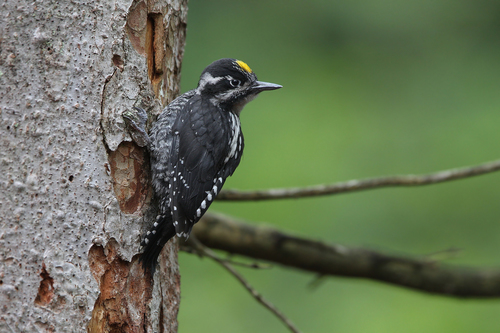 Eurasian Three-toed Woodpecker
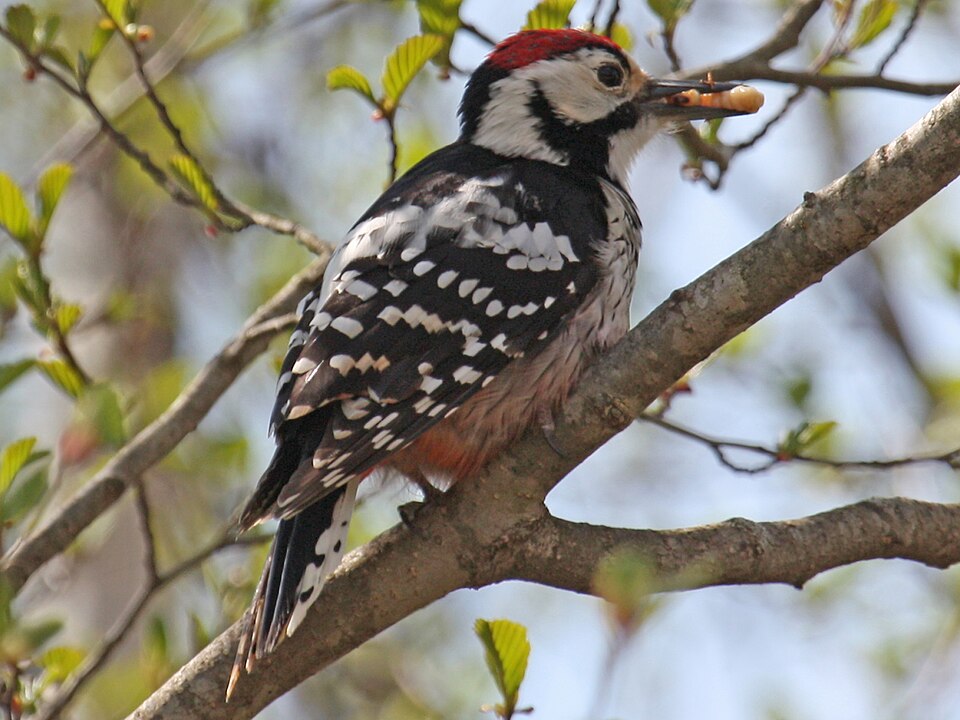 White-backed Woodpecker
In short
The most reliable field mark between Eurasian Three-toed and White-backed Woodpecker is the crown color: male Three-toed has a yellow crown, while male White-backed shows a red crown; females of both differ as well (black in White-backed, yellow in juvenile Three-toed). In flight or perched, Three-toed Woodpecker lacks any red on the head as an adult female, and both sexes show a barred black-and-white back, while White-backed Woodpecker always has a solid white lower back and more extensive white on the wings. Size is also a helpful clue: White-backed is noticeably larger and bulkier. Juvenile Three-toed Woodpecker can show a yellow crown, which may cause confusion, but the overall structure and wing pattern remain distinct. Both species have black-and-white plumage, but the pattern and extent of white are key for separation.
Identification tips
- Crown color is the most immediate separator: Male Three-toed Woodpecker has a yellow crown, never red; male White-backed has a red crown. Female Three-toed lacks any colored crown, while female White-backed has a black crown. Juvenile Three-toed also has a yellow crown, which can confuse the unwary.
- Back pattern: Three-toed Woodpecker shows a white back with black barring; White-backed has a large, solid white lower back with little or no barring. This is especially obvious when the bird is perched or seen from behind.
- Wing pattern in flight and perched: Three-toed has black wings with white barring; White-backed has white bars across the wings, not spots, and a more extensive white panel. In flight, look for the contrast and extent of white on the wings.
- Tail pattern: Three-toed's tail is black with white outer feathers barred with black; White-backed's tail is less distinctly marked but lacks the same degree of barring on the outer feathers.
- Size and structure: White-backed is noticeably larger and bulkier, with a longer wingspan and tail. If you have a reference point or see both species together, this is a strong clue.
- No red on underparts: Neither species has red on the belly or vent, which helps separate them from Great Spotted Woodpecker but not from each other.
- Voice: Three-toed gives a sharp 'kik' or 'chik'; White-backed's calls are softer ('kiuk', 'kweek'). Drumming is much louder and more forceful in White-backed.
- Habitat: Three-toed is almost always in coniferous forests, especially where there is recent tree death; White-backed prefers mature deciduous or mixed forests with large dead trees.
- Behavior: Three-toed often forages on dead conifers, sometimes high up and inconspicuous; White-backed is more likely to be seen on broad-leaved trees and may be more obvious due to its size and loud drumming.
- No red in adult Three-toed: If you see any red on the crown, it's not an adult Three-toed (unless it's a juvenile with a yellow crown).
- Juvenile confusion: Juvenile Three-toed with yellow crown can be mistaken for adult male, but the rest of the plumage and structure (smaller size, barred back) should clarify.
- No white shoulder patch: Unlike Great Spotted Woodpecker, neither species has a large white shoulder patch, but White-backed's white wing bars can look like a patch in flight.
- Seasonal movement: Three-toed is generally resident, but may move to lower elevations in winter; White-backed is less likely to move far.
- Nest site: Both excavate nest holes, but Three-toed is more likely to use dead conifers, White-backed dead broad-leaved trees.
- Pitfall: Do not rely on the absence of red alone—female White-backed has a black crown, and juvenile Three-toed has a yellow crown. Always check back and wing pattern for confirmation.
Size
White-backed Woodpecker is significantly larger, measuring 24–26 cm in length with a wingspan of 38–40 cm, making it the largest spotted woodpecker in the western Palearctic [wikipedia]. Eurasian Three-toed Woodpecker is smaller at 21–22 cm in length. In the field, White-backed appears bulkier and longer-tailed, while Three-toed is more compact and slightly smaller than Great Spotted Woodpecker. If seen together or with other woodpeckers for scale, size is a strong supporting mark.
Plumage
- Juveniles: Juvenile Eurasian Three-toed Woodpeckers of both sexes have a yellow crown, which can be a trap for observers expecting red on the head for all woodpeckers. Juvenile White-backed Woodpecker males have a red crown, females black, matching the adult pattern.
- Adults: Male Three-toed Woodpecker has a yellow crown, never red; adult female has no colored crown at all. White-backed males have a red crown, females a black crown. Three-toed Woodpecker's back is white with black barring, while White-backed has a large, solid white lower back with little or no barring. On the wings, Three-toed shows black wings with white barring and white flanks with black bars; White-backed has white bars across the wings (not spots) and a more extensive white wing panel. The tail of Three-toed is black with white outer feathers barred black, while White-backed's tail pattern is less distinctive but lacks the same degree of barring on the outer feathers. Neither species has any red on the underparts, but White-backed has more contrast between the white lower back and the rest of the body.
Behaviour
Both species forage on tree trunks and branches, often in mature forests. Three-toed Woodpecker is more likely to be seen scaling bark for beetle larvae, especially in areas with recent tree die-off (e.g., after forest fires or flooding). White-backed Woodpecker is less specialized in this regard but is also a bark forager. Drumming is much louder in White-backed, and it may be more conspicuous when present. Both excavate nest holes in dead or dying trees, but Three-toed is more closely tied to coniferous forests and often follows outbreaks of wood-boring insects.
Habitat
Eurasian Three-toed Woodpecker is strongly associated with coniferous forests across northern Eurasia, often in areas with high densities of dead or dying trees. It can also be found at higher elevations in the Alps and Carpathians. White-backed Woodpecker prefers mature deciduous or mixed forests, especially those with abundant dead wood. While their ranges overlap, habitat preference can be a useful clue: Three-toed is much more likely in pure conifer stands, while White-backed favors broad-leaved or mixed woods with large, old trees.
Voice
Three-toed Woodpecker gives a sharp 'kik' or 'chik' call, while White-backed Woodpecker's calls include a softer 'kiuk' and a longer 'kweek.' Drumming is a strong separator: White-backed's drumming is very loud and forceful, while Three-toed's is softer and less resonant. In practice, drumming quality and volume can help, but calls are somewhat similar and not always diagnostic at a distance.
Eurasian Three-toed Woodpecker · White-backed Woodpecker · My Tricky Birds