

Eurasian Bittern vs Yellow Bittern
Botaurus stellaris versus Botaurus sinensis
Play a quiz with Eurasian Bittern and Yellow Bittern
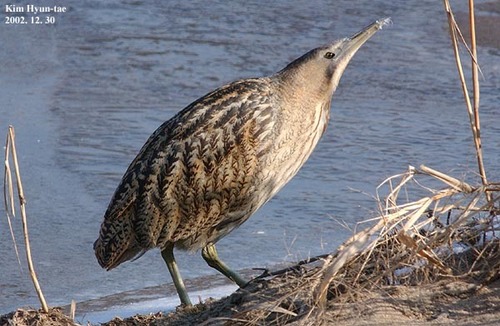 Eurasian Bittern
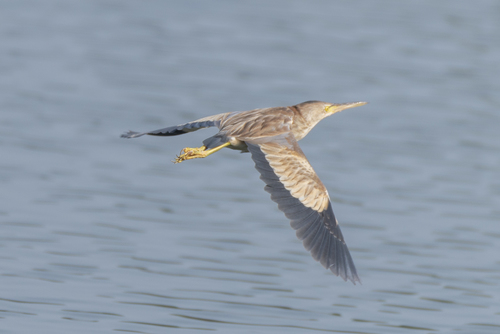 Yellow Bittern
In short
The most reliable way to separate Eurasian Bittern from Yellow Bittern is by size and structure: Eurasian Bittern is an enormous, thickset heron, while Yellow Bittern is much smaller and more delicate. In flight, Eurasian Bittern shows broad, rounded wings and a powerful, heavy jizz; Yellow Bittern is compact with a shorter neck and tail. Plumage differences are also strong: Eurasian Bittern is boldly streaked and barred buff and brown, while Yellow Bittern (especially adult males) shows a dark cap and chestnut neck, with much less barring overall. Juvenile and female Yellow Bitterns are streaked, but still lack the heavy, all-over barring of Eurasian Bittern. If you see a large, cryptically patterned bittern in dense reeds, check for the massive size and bold streaks of Eurasian Bittern before considering Yellow Bittern.
Identification tips
- Size is the single most decisive mark: Eurasian Bittern is huge and thickset; Yellow Bittern is small and slight. If you see both together, the difference is unmistakable, but even lone birds can be judged by comparison to reeds or other herons.
- Flight silhouette: Eurasian Bittern has broad, rounded wings and a heavy, slow flight with trailing legs and a thick body. Yellow Bittern is compact, with a shorter neck and tail, and flies more quickly and lightly.
- Bill and head structure: Eurasian Bittern's bill is longer, thicker, and greenish-yellow with a dark tip; Yellow Bittern's bill is ivory (darker above) and finer.
- Crown and nape: Eurasian Bittern shows a black crown and nape with buff tips, often with a bushy, loose texture. Yellow Bittern adult males have a solid dark cap, while females and juveniles have streaked caps.
- Neck and breast pattern: Eurasian Bittern has a yellowish-buff neck with strong black barring and a brownish-black moustachial stripe. Yellow Bittern males have a chestnut neck, females and juveniles are streaked but not heavily barred.
- Mantle and back: Eurasian Bittern's back and scapulars are heavily barred and streaked; Yellow Bittern is dull yellow above (male) or rufous and streaked (female/juvenile), but never as boldly patterned.
- Underparts: Eurasian Bittern is buff with broad brown stripes at the sides and narrow central stripes; Yellow Bittern is buff below, with streaks only in females/juveniles, never as bold as Eurasian Bittern.
- Leg color: Eurasian Bittern has greenish legs with yellow at the tarsal joint and yellow soles; Yellow Bittern has yellow-green legs.
- Eye color: Both have yellow irises, so this is not useful for separation.
- Tail: Eurasian Bittern's tail is rusty-buff with black streaks and mottling; Yellow Bittern's tail is short and black.
- Behavior when disturbed: Both freeze with bill up, but Eurasian Bittern's bulk and the drooping shield of elongated throat and breast feathers are distinctive.
- Juvenile confusion: Juvenile Yellow Bitterns are streaked and mottled but lack the dense barring and thickset look of juvenile Eurasian Bitterns. Always check for overall pattern and structure.
- Habitat overlap: Both species prefer dense reeds, but Eurasian Bittern is more likely in large temperate reed beds, Yellow Bittern in smaller or more tropical marshes.
- Sex differences: Only Yellow Bittern shows strong sexual dimorphism (male with dark cap and chestnut neck; female streaked); Eurasian Bittern sexes are similar, with males larger.
- When in doubt: If the bird looks massive, thick-necked, and boldly barred, it's Eurasian Bittern. If it's small, compact, and less strongly patterned, it's Yellow Bittern.
Size
Eurasian Bittern is dramatically larger: body mass averages over 2400 g, with a length of 69–81 cm and a wingspan of 100–130 cm. Yellow Bittern is less than half the length (36–38 cm) and much lighter, with a more slender, delicate build. In the field, Eurasian Bittern appears as a hulking, thickset heron, while Yellow Bittern is noticeably small, even compared to other small herons. The difference is so great that direct confusion is unlikely if both species are familiar, but lone birds in dense reeds can cause mistakes, especially with juveniles.
Plumage
- Juvenile/immature birds: Juvenile Eurasian Bitterns are similar to adults but paler and less distinctly marked, still showing strong barring and streaking throughout. Juvenile Yellow Bitterns resemble females, with bold streaks on the head and back and buff mottling above, but they lack the dense, heavy barring of Eurasian Bittern.
- Adults: Eurasian Bittern adults are overall buffy-brown with heavy black barring and streaks on the head, neck, back, and underparts. The crown and nape are black with buff tips, and the supercilium is yellowish-buff. Yellow Bittern adult males have a dark cap and chestnut head and neck, with a dull yellow back and buff underparts, lacking the strong barring of Eurasian Bittern. Females are streaked on the cap, neck, and breast, with a rufous hindneck and upper back, but still do not approach the Eurasian Bittern's bold pattern. Both species have yellow irises, but Yellow Bittern's bill is ivory (darker on top) and legs are yellow-green, while Eurasian Bittern's bill is greenish-yellow with a darker tip and legs are greenish with yellow highlights.
Behaviour
Eurasian Bittern is usually solitary, extremely secretive, and moves slowly or freezes with its bill pointed up ('bitterning'), blending perfectly into reeds. It is most active at dawn and dusk, rarely flying except when feeding young. In flight, it shows broad, rounded wings and a heavy, trailing silhouette with legs extended. Yellow Bittern is also secretive and prefers dense vegetation, but its smaller size and shorter neck make its movements more delicate and less ponderous. Both species can freeze to avoid detection, but Eurasian Bittern's size and bulk are distinctive when seen well.
Habitat
Both species are reed bed specialists, preferring dense, marshy vegetation near water. Eurasian Bittern is found in extensive reed beds across Eurasia, while Yellow Bittern occupies similar habitats in the Indian subcontinent, East Asia, and Southeast Asia. Overlap is possible in some regions, but Eurasian Bittern is much more likely in temperate zones, and Yellow Bittern dominates in tropical and subtropical Asia. Both can be difficult to see, often remaining hidden except when flushed or during flight.