

Motmot

Eastern Crowned Warbler vs Green Warbler

Phylloscopus coronatus versus Phylloscopus nitidus

Play a quiz with Eastern Crowned Warbler and Green Warbler
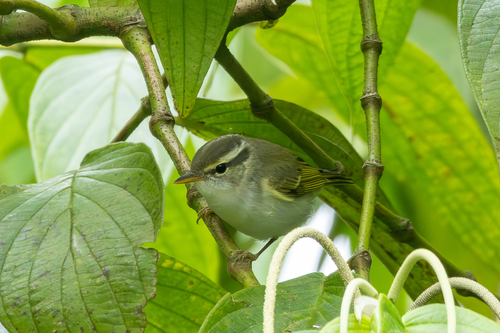
Eastern Crowned Warbler (Phylloscopus coronatus) Eastern Crowned Warbler
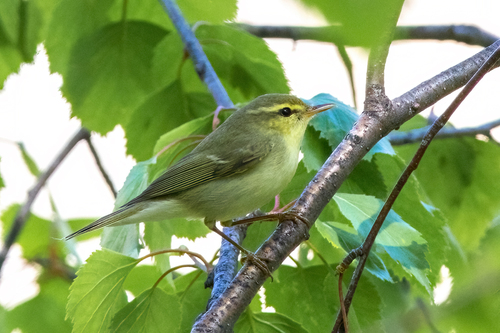
Green Warbler (Phylloscopus nitidus) Green Warbler

Media

Loading…

In short

The most reliable field mark between Eastern Crowned Warbler and Green Warbler is the head and wing pattern: Eastern Crowned Warbler shows a strong head pattern with a yellowish median crown stripe and only a single pale wingbar, while Green Warbler is brighter overall, with a much yellower underside and, especially in young birds, two wingbars (one strong, one faint). In the field, Eastern Crowned Warbler appears more robust and olive above, whereas Green Warbler is more vivid greenish-yellow and lacks the distinctive crown stripe. Both are leaf warblers, but their wing and head patterns are the quickest way to separate them, especially in immature birds. Habitat and range are also helpful, as their breeding grounds do not overlap.

Identification tips

  1. Wingbars in juveniles/immatures: Green Warbler (especially young birds) shows two wingbars—one strong, one faint—while Eastern Crowned Warbler has only a single pale wingbar at all ages. This is the most reliable separation in the field, especially in flight or perched views of the wing.
  2. Head pattern: Eastern Crowned Warbler has a yellowish median crown stripe bordered by dark lateral stripes, a long yellowish-white supercilium, and dusky yellow cheeks. Green Warbler lacks the crown stripe and has a less contrasting head.
  3. Underpart color: Green Warbler is much more yellow below, while Eastern Crowned Warbler is white below with only dusky yellow cheeks.
  4. Upperpart color: Green Warbler is brighter and more vivid green above; Eastern Crowned Warbler is dark olive-green.
  5. Tail shape: Eastern Crowned Warbler has a square tail with a slight fork; tail shape is not diagnostic for Green Warbler but may appear less squared if compared directly.
  6. Bill structure: Eastern Crowned Warbler has a robust, pale bill, but this is subtle and not always reliable in the field.
  7. Supercilium: Eastern Crowned Warbler's supercilium is long and yellowish-white, contrasting with the dark eye-stripe; Green Warbler's supercilium is less pronounced.
  8. Cheek color: Dusky yellow cheeks are a feature of Eastern Crowned Warbler, not Green Warbler.
  9. Leg color: Both have dark legs; not a useful separation.
  10. Overall brightness: Green Warbler is overall brighter and yellower, especially on the underparts and in fresh plumage.
  11. Habitat and range: If in the east Palearctic boreal/temperate forest, Eastern Crowned Warbler is expected; if in the Caucasus, Green Warbler is expected. Out of range, use plumage and wingbar marks.
  12. Flight views: Focus on the number of wingbars—two in Green Warbler (especially young), one in Eastern Crowned Warbler.
  13. Sex and season: No sexual dimorphism or strong seasonal change is described for either species; age and wingbar pattern are more important.
  14. Voice: Not described in the available sources, so not a reliable field mark here.
  15. Pitfalls: Do not rely on size, as both are similar; focus on wingbar count and head pattern for the best separation.

Size

Eastern Crowned Warbler is a medium-sized leaf warbler with a body mass around 10.1 g [wikidata]. No direct mass data is available for Green Warbler, but both are similar in size and structure, so size is not a reliable field mark between them in the field.

Plumage

Juvenile and immature Green Warblers typically show two wingbars: one strong and one faint, making this the best age-specific mark, especially in flight or at rest. Eastern Crowned Warbler of all ages shows only a single pale wingbar. On the head, Eastern Crowned Warbler has a distinctive pattern with a yellowish median crown stripe flanked by dark lateral stripes, a long yellowish-white supercilium, and dusky yellow cheeks. Green Warbler lacks the crown stripe and instead is brighter green above and much more yellow below, with a less contrasting head pattern. Both species are olive-green above, but Green Warbler is noticeably more vivid and yellowish, especially on the underparts. The tail of Eastern Crowned Warbler is square with a slight fork, while tail shape is not highlighted as diagnostic for Green Warbler. Bill and leg color are not strongly contrasting between the two, though Eastern Crowned Warbler's bill is described as robust and pale.

Behaviour

No distinctive behavioral differences are described between these two species in the available sources. Both are typical active leaf warblers, foraging in foliage.

Habitat

Eastern Crowned Warbler inhabits boreal and temperate forests in the east Palearctic, while Green Warbler is found in the Caucasus Mountains of southeastern Europe. Their breeding ranges do not overlap, so location is a strong supporting clue if the bird is in typical habitat. However, both are migratory and could appear as vagrants outside their usual range.

Submit a better description

Use the same sections as the comparison. Your text is published immediately.

The most reliable field mark between Eastern Crowned Warbler and Green Warbler is the head and wing pattern: Eastern Crowned Warbler shows a strong head pattern with a yellowish median crown stripe and only a single pale wingbar, while Green Warbler is brighter overall, with a much yellower underside and, especially in young birds, two wingbars (one strong, one faint). In the field, Eastern Crowned Warbler appears more robust and olive above, whereas Green Warbler is more vivid greenish-yellow and lacks the distinctive crown stripe. Both are leaf warblers, but their wing and head patterns are the quickest way to separate them, especially in immature birds. Habitat and range are also helpful, as their breeding grounds do not overlap.

  1. Wingbars in juveniles/immatures: Green Warbler (especially young birds) shows two wingbars—one strong, one faint—while Eastern Crowned Warbler has only a single pale wingbar at all ages. This is the most reliable separation in the field, especially in flight or perched views of the wing.
  2. Head pattern: Eastern Crowned Warbler has a yellowish median crown stripe bordered by dark lateral stripes, a long yellowish-white supercilium, and dusky yellow cheeks. Green Warbler lacks the crown stripe and has a less contrasting head.
  3. Underpart color: Green Warbler is much more yellow below, while Eastern Crowned Warbler is white below with only dusky yellow cheeks.
  4. Upperpart color: Green Warbler is brighter and more vivid green above; Eastern Crowned Warbler is dark olive-green.
  5. Tail shape: Eastern Crowned Warbler has a square tail with a slight fork; tail shape is not diagnostic for Green Warbler but may appear less squared if compared directly.
  6. Bill structure: Eastern Crowned Warbler has a robust, pale bill, but this is subtle and not always reliable in the field.
  7. Supercilium: Eastern Crowned Warbler's supercilium is long and yellowish-white, contrasting with the dark eye-stripe; Green Warbler's supercilium is less pronounced.
  8. Cheek color: Dusky yellow cheeks are a feature of Eastern Crowned Warbler, not Green Warbler.
  9. Leg color: Both have dark legs; not a useful separation.
  10. Overall brightness: Green Warbler is overall brighter and yellower, especially on the underparts and in fresh plumage.
  11. Habitat and range: If in the east Palearctic boreal/temperate forest, Eastern Crowned Warbler is expected; if in the Caucasus, Green Warbler is expected. Out of range, use plumage and wingbar marks.
  12. Flight views: Focus on the number of wingbars—two in Green Warbler (especially young), one in Eastern Crowned Warbler.
  13. Sex and season: No sexual dimorphism or strong seasonal change is described for either species; age and wingbar pattern are more important.
  14. Voice: Not described in the available sources, so not a reliable field mark here.
  15. Pitfalls: Do not rely on size, as both are similar; focus on wingbar count and head pattern for the best separation.

Eastern Crowned Warbler is a medium-sized leaf warbler with a body mass around 10.1 g [wikidata]. No direct mass data is available for Green Warbler, but both are similar in size and structure, so size is not a reliable field mark between them in the field.

Juvenile and immature Green Warblers typically show two wingbars: one strong and one faint, making this the best age-specific mark, especially in flight or at rest. Eastern Crowned Warbler of all ages shows only a single pale wingbar. On the head, Eastern Crowned Warbler has a distinctive pattern with a yellowish median crown stripe flanked by dark lateral stripes, a long yellowish-white supercilium, and dusky yellow cheeks. Green Warbler lacks the crown stripe and instead is brighter green above and much more yellow below, with a less contrasting head pattern. Both species are olive-green above, but Green Warbler is noticeably more vivid and yellowish, especially on the underparts. The tail of Eastern Crowned Warbler is square with a slight fork, while tail shape is not highlighted as diagnostic for Green Warbler. Bill and leg color are not strongly contrasting between the two, though Eastern Crowned Warbler's bill is described as robust and pale.

No distinctive behavioral differences are described between these two species in the available sources. Both are typical active leaf warblers, foraging in foliage.

Eastern Crowned Warbler inhabits boreal and temperate forests in the east Palearctic, while Green Warbler is found in the Caucasus Mountains of southeastern Europe. Their breeding ranges do not overlap, so location is a strong supporting clue if the bird is in typical habitat. However, both are migratory and could appear as vagrants outside their usual range.

Discard your changes?

You have unsaved edits. If you leave now, those changes will be lost.

Eastern Crowned Warbler · Green Warbler · My Tricky Birds