

Eastern Cattle-Egret vs Red-vented Bulbul
Ardea coromanda versus Pycnonotus cafer
Play a quiz with Eastern Cattle-Egret and Red-vented Bulbul
 Eastern Cattle-Egret
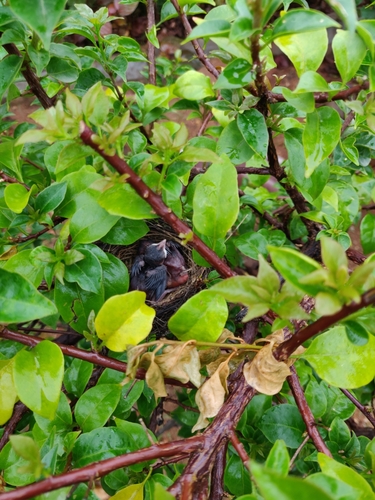 Red-vented Bulbul
In short
The most reliable field mark to separate Eastern Cattle-Egret from Red-vented Bulbul is overall shape and size: the egret is a large, stocky white heron with a thick neck and sturdy yellow bill, while the bulbul is a much smaller, dark brown songbird with a short crest, black head, and a distinctive red vent. In flight or perched, the egret's all-white (or white with orange-buff in breeding adults) plumage and heron-like structure are unmistakable compared to the bulbul's compact, perching bird silhouette and dark, scaly body. Juvenile and adult bulbuls always show the red vent and white-tipped tail, which never appear on a cattle egret. Even at a distance, the egret's foraging behavior near cattle and upright posture contrast sharply with the bulbul's active, bush-hopping habits.
Identification tips
- Size and structure: The egret is more than twice the length of the bulbul, with a heavy body, long neck, and long legs. The bulbul is a small, perching bird with a compact body and a long, white-tipped tail. Size alone is usually enough to separate them.
- Plumage color: Egrets are all-white (non-breeding) or white with orange-buff plumes on the head, throat, and lower back (breeding adults). Bulbuls are dark brown with a black head, white rump, and a red vent. No overlap at any age or season.
- Head and bill: Egret has a thick, sturdy yellow bill and a relatively short, thick neck. Bulbul has a short, slightly curved bill and a small crest, giving the head a squarish look.
- Tail: Egret's tail is short and white, blending with the body. Bulbul's tail is long, black, with a white tip, and is often flicked or fanned.
- Red vent: Only the bulbul shows a bright red patch under the tail (vent area), visible even when perched. Egrets never show any red.
- Flight style: Egret flies with slow, deep wingbeats and neck retracted, showing broad white wings. Bulbul has rapid, bounding flight with short, rounded wings and a long tail.
- Juvenile plumage: Young egrets are white like adults, lacking any dark or red markings. Juvenile bulbuls are duller but still have the red vent and dark plumage.
- Habitat: Egrets are found in open fields, wetlands, and near livestock. Bulbuls prefer gardens, scrub, and urban areas, rarely near cattle or open water.
- Behavior: Egrets walk on the ground, often near cattle, with a hunched posture. Bulbuls hop actively in bushes and trees, rarely walking on open ground.
- Vocalization: Bulbuls are noisy, with varied calls and songs. Egrets are mostly silent except at breeding colonies.
- Breeding plumage: In breeding season, egret adults show orange-buff plumes on head, throat, and lower back. Bulbuls do not change plumage seasonally.
- Crest: Bulbul has a short crest, giving a peaked look to the head. Egret's head is smoothly rounded, even in breeding plumage.
- Leg color: Egret's legs are greyish-yellow (non-breeding) or brighter in breeding. Bulbul's legs are always dark.
- Jizz: The egret's upright, slow-moving, deliberate walk is very different from the bulbul's quick, nervous movements and frequent tail flicks.
- Context: If you see a white bird near cattle or in a wetland, it's almost certainly an egret. If you see a dark bird with a red vent in a bush or garden, it's a bulbul.
Size
Eastern Cattle-Egret is much larger, measuring 46–56 cm in length with an 88–96 cm wingspan and weighing 270–512 g [wikipedia]. In contrast, Red-vented Bulbul is about 20 cm long and much lighter [wikipedia]. The egret stands tall with a long neck and legs, while the bulbul is a small, squat perching bird with a proportionally long tail but short legs. There is no overlap in size; even a juvenile egret dwarfs an adult bulbul.
Plumage
There is no risk of confusion in wing pattern at any age: Eastern Cattle-Egret is always white (non-breeding) or white with orange-buff plumes on the head, throat, and lower back in breeding adults. The bulbul, regardless of age, is dark brown with a black head, white rump, and a bright red vent; the tail is black with white tips. Juvenile bulbuls are duller but still show the red vent and lack any white or buff on the head or back. No age or season of bulbul ever looks white or shows the egret's orange-buff breeding plumes. Conversely, no egret ever shows a red vent, black head, or scaly brown body. In flight, the egret's broad white wings and slow, deep wingbeats are completely different from the bulbul's short, rounded wings and rapid, bounding flight.
Behaviour
Eastern Cattle-Egret is usually seen walking on the ground, often near cattle or other large animals, with a hunched, upright posture. It forages for insects disturbed by grazing mammals. Red-vented Bulbul is an active, arboreal songbird, hopping through bushes and trees, rarely on open ground. The egret nests colonially in trees near water, while the bulbul nests singly or in pairs in shrubs or small trees. The egret is mostly silent away from colonies; the bulbul is vocal and conspicuous.
Habitat
Eastern Cattle-Egret prefers open fields, grasslands, wetlands, and agricultural areas, especially where large mammals are present. It is rarely found in dense vegetation or urban gardens. Red-vented Bulbul thrives in gardens, urban parks, scrub, and forest edges, often far from water or livestock. The two species rarely overlap in preferred habitat, though both can occur in rural landscapes.
Voice
Eastern Cattle-Egret is largely silent, except for a quiet, throaty 'rick-rack' call at breeding colonies [wikipedia]. Red-vented Bulbul is highly vocal, with a variety of calls including a typical 'ginger beer' phrase and sharp 'pick' notes. Bulbul alarm calls are distinctive and often attract attention from other birds. If you hear frequent, varied song or sharp calls, you are likely hearing a bulbul, not an egret.