

Dusky-tailed Canastero vs Patagonian Canastero
Pseudasthenes humicola versus Pseudasthenes patagonica
Play a quiz with Dusky-tailed Canastero and Patagonian Canastero
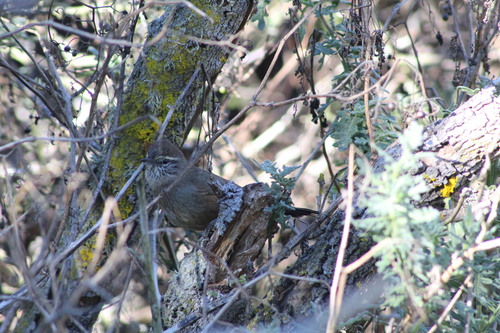 Dusky-tailed Canastero
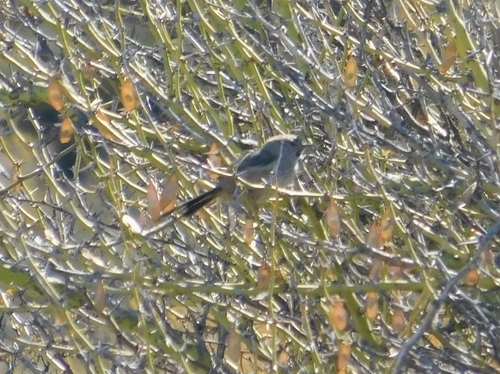 Patagonian Canastero
In short
The most reliable field mark for separating Dusky-tailed and Patagonian Canasteros is the tail and rump coloration, especially in perched or foraging birds. Dusky-tailed Canastero shows a browner tail with dark fuscous tips and a rufescent rump (especially in juveniles), while Patagonian Canastero has a darker gray-brown tail with chestnut outer feathers and a paler, less rufous rump. Both are similar in size and overall structure, but Dusky-tailed is heavier and often appears bulkier. Face pattern and underpart streaking also help: Dusky-tailed has a narrow whitish supercilium and more prominent dark facial features, while Patagonian is paler-faced with a less distinct supercilium. Habitat and range are strong clues: Dusky-tailed is Chilean, Patagonian is Argentine, with little overlap.
Identification tips
- Tail and rump color: Dusky-tailed Canastero (especially juveniles) shows a rufescent rump and browner tail with dark fuscous tips; Patagonian Canastero has a paler rump and a tail that is dark gray-brown with chestnut only on the outer feathers. This is often visible when the bird is perched or flicking its tail.
- Facial pattern: Dusky-tailed has a narrow whitish supercilium on a dark gray-brown face with faint pale streaks, giving a more contrasting and 'masked' look. Patagonian is paler-faced, with a less distinct supercilium and a subtle dark line behind the eye, resulting in a plainer, softer facial expression.
- Crown and back: Dusky-tailed has a dark brown crown and slightly paler brown back, while Patagonian's crown and back are light gray-brown, making it appear grayer overall.
- Wing coloration: Dusky-tailed's wings match the back in color, with dull rufous on the shoulder; Patagonian's wings are browner with rufescent edges, but the contrast is less marked than in Dusky-tailed.
- Underpart streaking: Dusky-tailed shows black flecks on the whitish throat and more obvious black streaks on the upper breast, with faint pale streaks on the lower breast. Patagonian has black flecks and streaks only on the throat, with the rest of the underparts much less streaked and paler.
- Flank and undertail color: Dusky-tailed has rufescent brown flanks and darker rufous-brown undertail coverts; Patagonian's flanks and undertail are tawny to tawny-rufous, but less rich or dark than in Dusky-tailed.
- Juvenile marks: Young Dusky-tailed Canasteros are even more rufous on the rump and tail, and have less underpart streaking than adults. This is a key mark if you see a particularly warm-toned bird.
- Bill and legs: Both species have similar bill and leg coloration (dusky/grayish), not useful for separation.
- Size and shape: Dusky-tailed is heavier and may look bulkier, but both are similar in length and structure; size is only a weak clue unless birds are side by side.
- Geographic location: If you are in Chile, especially north or central, you are almost certainly seeing Dusky-tailed. In Argentina, especially Patagonia, it will be Patagonian. There is no regular overlap.
- Habitat context: Dusky-tailed prefers arid to semi-arid shrublands and forest edges, often at foothill elevations; Patagonian is a bird of Patagonian steppe and bushy habitats. If you are in typical Chilean matorral or desert-edge, it is Dusky-tailed.
- Sex and season: Both species are sexually monomorphic, and plumage does not change seasonally in a way that aids identification.
- Flight views: No distinctive upperwing or flight pattern marks are described for either species; identification in flight relies on overall color impression and tail/rump contrast.
- Vocalizations: No diagnostic differences are provided in the notes; do not rely on voice for separation with current information.
- Common pitfalls: Beware of underestimating the rufous tones in Dusky-tailed, especially in juveniles, and of overemphasizing the chestnut in Patagonian's tail, which is mostly confined to the outer feathers.
Size
Dusky-tailed Canastero is noticeably heavier (mean 22.5g) than Patagonian Canastero (mean 16g), though both are similar in length (14–16 cm for Dusky-tailed, 14–15 cm for Patagonian). In the field, Dusky-tailed may appear more robust or chunky, while Patagonian can seem slimmer. This difference is subtle unless birds are side by side, but may be apparent with experience.
Plumage
- Juvenile/immature birds: Dusky-tailed Canastero juveniles have a more rufous rump and tail than adults, with less underpart streaking and a generally warmer tone. Patagonian Canastero juveniles are not described in detail, but adults lack strong rufous tones on the rump and tail, instead showing chestnut only on the outer tail feathers.
- Adults: Dusky-tailed Canastero shows a narrow whitish supercilium on a dark gray-brown face, a dark brown crown, and a back that is slightly paler brown with a rufescent tinge on the rump. The wings are brown with dull rufous on the shoulder, and the tail is mostly brown with dark fuscous tips, except for the outer feathers which are fuscous blackish. Underparts are streaked on the throat and upper breast, with flanks and undertail coverts rufescent brown.
Patagonian Canastero adults have a paler, light grayish brown face with a faint supercilium and a darker line behind the eye, a light gray-brown crown and upperparts, browner wings with rufescent edges, and a tail that is dark gray-brown with chestnut on the outer feathers. Underparts are less streaked, with the breast pale grayish, belly pale buff-gray, and flanks/undertail coverts tawny to tawny-rufous. - Key contrast: Dusky-tailed is browner and more rufous overall, especially on rump, flanks, and undertail, and with more facial contrast; Patagonian is paler, grayer, and less streaked below.
Behaviour
Both species forage in shrubby or bushy habitats, often low to the ground and in dense cover. There is no strong behavioral separation in the available notes, though Dusky-tailed Canastero is described as shunning populated areas, which may make it less likely to be seen near human habitation compared to some other canasteros.
Habitat
Dusky-tailed Canastero is strictly Chilean, found in arid to semi-arid shrublands, steppe, and edges of dry forests from the Atacama south to Araucanía, mostly avoiding populated areas. Patagonian Canastero is endemic to Argentina, occupying steppe and bushy habitats in Patagonia. If you are in Chile, especially in the north or central regions, you are almost certainly seeing Dusky-tailed; if in Argentine Patagonia, it will be Patagonian. Habitat overlap is extremely unlikely except possibly near the Andes in southern Chile/Argentina, but even there, records do not suggest regular overlap.
Dusky-tailed Canastero · Patagonian Canastero · My Tricky Birds