

Dunlin vs Western Sandpiper
Calidris alpina versus Calidris mauri
Play a quiz with Dunlin and Western Sandpiper
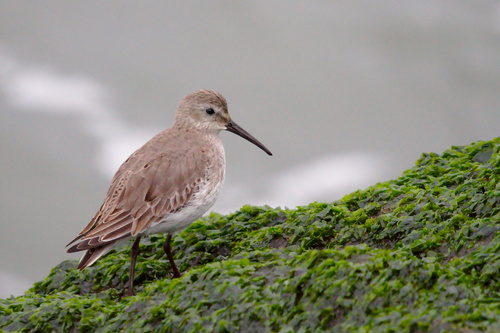 Dunlin
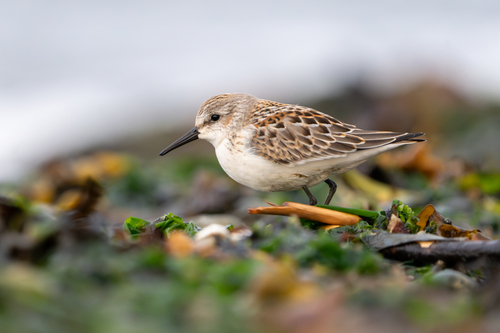 Western Sandpiper
In short
The most reliable way to separate Dunlin from Western Sandpiper is by looking for the Dunlin’s distinctive black belly patch in breeding plumage, a feature Western Sandpiper never shows. Outside breeding season, focus on size and structure: Dunlin is noticeably bulkier and longer-billed, with a slightly decurved, blunt-tipped bill, while Western Sandpiper is smaller and shorter-billed. In flight, both show a narrow white wingbar, but juvenile Dunlin may show faint whitish 'V's on the back, a mark Western Sandpiper lacks. Be cautious in winter, as both species become plainer and greyer, making structural differences and bill shape the main clues.
Identification tips
- Breeding plumage black belly (Dunlin only): Look for a solid black belly patch on adults in spring/summer—Western Sandpiper never shows this. This is the single most diagnostic mark when present.
- Size and bulk: Dunlin is noticeably larger and heavier than Western Sandpiper. In mixed flocks, Dunlin stands out as the stouter, more robust bird.
- Bill shape and length: Dunlin’s bill is longer, thicker, and slightly decurved with a blunt tip (often looks blunt in life, not sharp). Western Sandpiper’s bill is shorter, thinner, and more needle-like, sometimes with a slight droop but never as thick or blunt as Dunlin’s. Bill length can vary with sex in Dunlin (females longer-billed), so use with caution.
- Juvenile back pattern: Juvenile Dunlin may show faint whitish 'V' marks on the back, though these are weak. Western Sandpiper juveniles lack these marks and are plainer above.
- Flight wingbar: Both species show a narrow white wingbar in flight—this is not useful for separation.
- Leg color: Both have dark legs; this is not a separator.
- Crown color in breeding Western Sandpiper: Western Sandpiper in breeding plumage shows reddish-brown on the crown, but this is subtle and not always visible at distance.
- Winter plumage pitfalls: Both species become plain grey above and white below in winter. Dunlin may retain some blackish marks on the flanks or belly, but not a solid patch. Western Sandpiper is generally plainer and acquires winter plumage earlier in autumn.
- Feeding action: Dunlin’s 'sewing machine' feeding motion is distinctive—look for a steady, methodical probing. Western Sandpiper feeds more delicately.
- Flock structure: Dunlin flocks are often denser and more synchronized in flight; Western Sandpiper flocks are looser.
- Habitat context: In Eurasia and the eastern US, Dunlin is usually the default medium Calidris; in western North America, Western Sandpiper is more likely, but check for the larger, bulkier Dunlin among them.
- Voice: Dunlin’s 'chreep' call may help if heard, but Western Sandpiper’s call is not described here.
- Bill tip texture (close views): Dunlin’s bill tip is blunt and sensitive, not truly sharp—visible at close range, but not a field mark at distance.
- Sex and subspecies variation: Female Dunlin can have longer bills, but this does not overlap with Western Sandpiper’s finer bill structure.
- When in doubt: In winter or with distant birds, rely on size, structure, and bill shape. If you see a black belly, it’s a Dunlin; if the bird is small, fine-billed, and plain grey in autumn, Western Sandpiper is more likely.
Size
Dunlin is the larger and heavier of the two: length 16–20 cm, wingspan 38–43 cm, and weight 34–77 g [wikipedia], compared to Western Sandpiper’s length of 14–17 cm, wingspan 35–37 cm, and weight 22–35 g [wikipedia][wikidata]. In the field, Dunlin appears noticeably stouter and more robust, while Western Sandpiper is daintier and lighter overall. This size gap is often visible in mixed flocks, with Dunlin standing out as the bulkier bird.
Plumage
- Juvenile/immature birds: Dunlin juveniles are brown above with two weak whitish 'V' marks on the back, though these are less bold than in some other Calidris. Western Sandpiper juveniles lack these 'V' marks and are generally plainer above.
- Flight (all ages): Both species show a narrow white wingbar in flight, so this is not a useful separator between them.
- Breeding adults: Dunlin is unique among similar-sized waders for its bold black belly patch, which Western Sandpiper never shows. Western Sandpiper in breeding plumage is brown above with some rufous on the crown, but always white-bellied.
- Non-breeding/winter: Both species become plainer, with greyish-brown upperparts and white underparts. Dunlin may show some blackish marks on the flanks or belly, but not the solid black patch. Western Sandpiper is generally plainer grey, and acquires winter plumage earlier in the autumn.
- Bill and legs: Both have dark legs, but Dunlin’s bill is longer, thicker, slightly decurved, and blunt-tipped; Western Sandpiper’s is shorter, thinner, and tapers more to a point.
Behaviour
Dunlin is highly gregarious in winter, often forming large, tightly synchronized flocks that swirl over mudflats and beaches. Their feeding action is methodical and distinctive, described as a 'sewing machine' motion as they probe for food. Western Sandpiper also forms flocks but tends to be less densely packed and more scattered in feeding groups. Dunlin’s bulkier build and heavier feeding style can stand out among more delicate Western Sandpipers.
Habitat
Both species frequent coastal mudflats and sandy beaches, especially on migration and in winter. Dunlin is one of the most common waders in these habitats across its range, often forming the bulk of mixed Calidris flocks. Western Sandpiper prefers similar habitats but may be more abundant in western North America, while Dunlin dominates in Eurasia and the eastern US. In overlapping areas, check for the larger, bulkier Dunlin among smaller Western Sandpipers.
Voice
Dunlin gives a typical sandpiper 'chreep' call and a harsh trilling display song. Western Sandpiper’s calls are not described in the provided notes, so voice is not a reliable separator based on this information.