

Bonte strandloper vs Alaskastrandloper
Calidris alpina versus Calidris mauri
Speel een quiz met Bonte strandloper en Alaskastrandloper
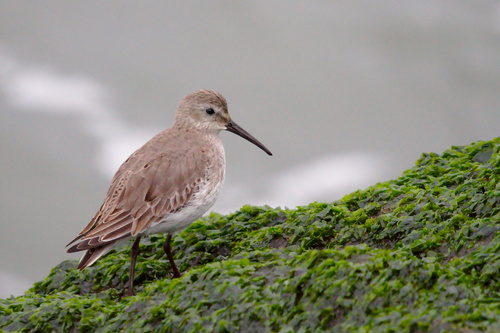 Bonte strandloper
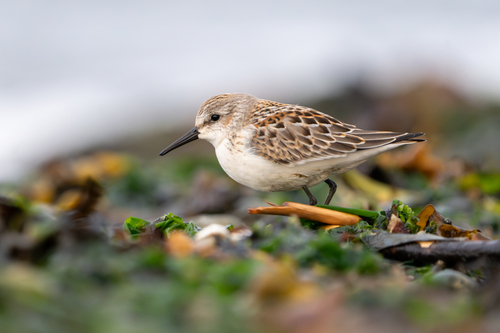 Alaskastrandloper
Kort gezegd
De meest betrouwbare manier om Bonte strandloper van Alaskastrandloper te scheiden, is door te kijken naar de kenmerkende zwarte buikvlek van de Bonte strandloper in broedkleed, een kenmerk dat de Alaskastrandloper nooit vertoont. Buiten het broedseizoen ligt de focus op grootte en structuur: Bonte strandloper is merkbaar robuuster en heeft een langere snavel, met een iets gebogen, stomp uiteinde, terwijl Alaskastrandloper kleiner en kortsnaveliger is. In de vlucht tonen beide een smalle witte vleugelstreep, maar jonge Bonte strandlopers kunnen vage witachtige 'V's op de rug vertonen, een kenmerk dat de Alaskastrandloper mist. Wees voorzichtig in de winter, aangezien beide soorten eenvoudiger en grijzer worden, waardoor structurele verschillen en snavelvorm de belangrijkste aanwijzingen zijn.
Herkenningstips
- Broedkleed zwarte buik (alleen Bonte strandloper): Zoek naar een solide zwarte buikvlek bij volwassen vogels in de lente/zomer—Alaskastrandloper vertoont dit nooit. Dit is het meest diagnostische kenmerk wanneer aanwezig.
- Grootte en bulk: Bonte strandloper is merkbaar groter en zwaarder dan Alaskastrandloper. In gemengde groepen valt de Bonte strandloper op als de robuustere, stevigere vogel.
- Snavelvorm en lengte: De snavel van de Bonte strandloper is langer, dikker en iets gebogen met een stomp uiteinde (lijkt vaak stomp in het leven, niet scherp). De snavel van de Alaskastrandloper is korter, dunner en meer naaldvormig, soms met een lichte buiging maar nooit zo dik of stomp als die van de Bonte strandloper. De snavellengte kan variëren met geslacht bij de Bonte strandloper (vrouwen hebben een langere snavel), dus gebruik dit met voorzichtigheid.
- Jongere rugpatroon: Jonge Bonte strandlopers kunnen vage witachtige 'V' markeringen op de rug vertonen, hoewel deze zwak zijn. Jonge Alaskastrandlopers missen deze markeringen en zijn eenvoudiger boven.
- Vlucht vleugelstreep: Beide soorten tonen een smalle witte vleugelstreep in de vlucht—dit is niet nuttig voor scheiding.
- Pootkleur: Beide hebben donkere poten; dit is geen scheiding.
- Kroonkleur in broed Alaskastrandloper: Alaskastrandloper in broedkleed toont roodbruin op de kroon, maar dit is subtiel en niet altijd zichtbaar van afstand.
- Winterkleed valkuilen: Beide soorten worden in de winter eenvoudig grijs boven en wit onder. Bonte strandloper kan enkele zwartachtige markeringen op de flanken of buik behouden, maar niet een solide vlek. Alaskastrandloper is over het algemeen eenvoudiger en verwerft eerder in de herfst het winterkleed.
- Voedingsactie: De 'naaimachine' voedingsbeweging van de Bonte strandloper is kenmerkend—zoek naar een constante, methodische doorzoeking. Alaskastrandloper voedt zich delicater.
- Groepsstructuur: Bonte strandloper groepen zijn vaak dichter en meer gesynchroniseerd in de vlucht; Alaskastrandloper groepen zijn losser.
- Habitatcontext: In Eurazië en het oosten van de VS is Bonte strandloper meestal de standaard middelgrote Calidris; in het westen van Noord-Amerika is Alaskastrandloper waarschijnlijker, maar let op de grotere, robuustere Bonte strandloper tussen hen.
- Stem: De 'chreep' roep van de Bonte strandloper kan helpen als deze gehoord wordt, maar de roep van de Alaskastrandloper wordt hier niet beschreven.
- Snavelpunt textuur (dichte weergaven): De snavelpunt van de Bonte strandloper is stomp en gevoelig, niet echt scherp—zichtbaar van dichtbij, maar geen veldkenmerk op afstand.
- Geslacht en ondersoorten variatie: Vrouwelijke Bonte strandlopers kunnen langere snavels hebben, maar dit overlapt niet met de fijnere snavelstructuur van de Alaskastrandloper.
- Bij twijfel: In de winter of met verre vogels, vertrouw op grootte, structuur en snavelvorm. Als je een zwarte buik ziet, is het een Bonte strandloper; als de vogel klein, fijnsnavelig, en eenvoudig grijs in de herfst is, is de Alaskastrandloper waarschijnlijker.
Grootte
Bonte strandloper is de grotere en zwaardere van de twee: lengte 16–20 cm, vleugelspanwijdte 38–43 cm, en gewicht 34–77 g [wikipedia], vergeleken met de lengte van de Alaskastrandloper van 14–17 cm, vleugelspanwijdte 35–37 cm, en gewicht 22–35 g [wikipedia][wikidata]. In het veld lijkt de Bonte strandloper merkbaar robuuster en steviger, terwijl de Alaskastrandloper over het algemeen delicater en lichter is. Dit grootteverschil is vaak zichtbaar in gemengde groepen, waarbij de Bonte strandloper opvalt als de robuustere vogel.
Verenkleed
- Jongere/onvolwassen vogels: Jonge Bonte strandlopers zijn bruin boven met twee zwakke witachtige 'V' markeringen op de rug, hoewel deze minder opvallend zijn dan bij sommige andere Calidris. Jonge Alaskastrandlopers missen deze 'V' markeringen en zijn over het algemeen eenvoudiger boven.
- Vlucht (alle leeftijden): Beide soorten tonen een smalle witte vleugelstreep in de vlucht, dus dit is geen nuttige scheiding tussen hen.
- Broedvolwassenen: Bonte strandloper is uniek onder vergelijkbare grootte waders vanwege zijn gedurfde zwarte buikvlek, die de Alaskastrandloper nooit vertoont. Alaskastrandloper in broedkleed is bruin boven met wat roestkleur op de kroon, maar altijd witbuikig.
- Niet-broed/winter: Beide soorten worden eenvoudiger, met grijsbruin boven en wit onder. Bonte strandloper kan enkele zwartachtige markeringen op de flanken of buik vertonen, maar niet de solide zwarte vlek. Alaskastrandloper is over het algemeen eenvoudiger grijs en verwerft eerder in de herfst het winterkleed.
- Snavel en poten: Beide hebben donkere poten, maar de snavel van de Bonte strandloper is langer, dikker, iets gebogen en stomp; die van de Alaskastrandloper is korter, dunner en loopt meer naar een punt toe.
Gedrag
Bonte strandloper is in de winter zeer sociaal, vaak vormend grote, strak gesynchroniseerde groepen die boven moddervlaktes en stranden draaien. Hun voedingsactie is methodisch en kenmerkend, beschreven als een 'naaimachine' beweging terwijl ze naar voedsel zoeken. Alaskastrandloper vormt ook groepen, maar is meestal minder dicht gepakt en meer verspreid in voedingsgroepen. De robuustere bouw en zwaardere voedingsstijl van de Bonte strandloper kunnen opvallen tussen de meer delicate Alaskastrandlopers.
Habitat
Beide soorten komen voor op kustmoddervlaktes en zandstranden, vooral tijdens migratie en in de winter. Bonte strandloper is een van de meest voorkomende waders in deze habitats in zijn verspreidingsgebied, vaak de bulk van gemengde Calidris groepen vormend. Alaskastrandloper geeft de voorkeur aan vergelijkbare habitats, maar kan overvloediger zijn in het westen van Noord-Amerika, terwijl Bonte strandloper domineert in Eurazië en het oosten van de VS. In overlappende gebieden, let op de grotere, robuustere Bonte strandloper tussen kleinere Alaskastrandlopers.
Geluid
Bonte strandloper geeft een typische strandloper 'chreep' roep en een harde triller vertoningslied. De roepen van de Alaskastrandloper worden niet beschreven in de verstrekte notities, dus de stem is geen betrouwbare scheiding op basis van deze informatie.