

Desert Lark vs Turkestan Short-toed Lark
Ammomanes deserti versus Alaudala heinei
Play a quiz with Desert Lark and Turkestan Short-toed Lark
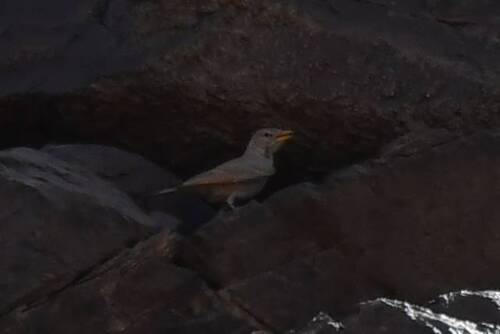 Desert Lark
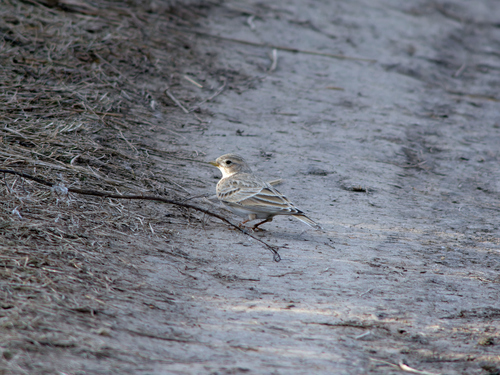 Turkestan Short-toed Lark
In short
The most reliable field mark to separate Desert Lark from Turkestan Short-toed Lark is overall structure: Desert Lark is bulkier, with a noticeably larger, broader bill and a longer tail, while Turkestan Short-toed Lark is smaller and more delicate. In plumage, Desert Lark is duller and more variably colored, often with more streaking below and lacking the sharply defined tail pattern of similar larks. Turkestan Short-toed Lark is generally paler and more uniform, with less streaking and a shorter, finer bill. Both species can be variable, but careful attention to size, bill shape, and underpart streaking is key. Flight and perched jizz are often decisive when plumage is ambiguous.
Identification tips
- Bill shape and size: Desert Lark has a noticeably larger, broader, and longer bill than Turkestan Short-toed Lark. This is often the first thing to check, especially at rest or in profile.
- Overall bulk and jizz: Desert Lark is bulkier, with a big head, stouter legs, and a longer tail. Turkestan Short-toed Lark is smaller, more delicate, and compact.
- Underpart streaking: Desert Lark shows much more streaking on the pale pinkish-grey underparts, while Turkestan Short-toed Lark is less streaked and more uniform below. This is a key mark in all ages and seasons.
- Plumage variability: Desert Lark is highly variable in upperpart color, matching local substrate (sandy, grey, or dark), while Turkestan Short-toed Lark is generally paler and less variable. Beware of overlap in pale or sandy forms.
- Tail pattern: Desert Lark lacks a sharply defined terminal black band on the tail, showing at most a diffuse dark patch. Turkestan Short-toed Lark does not show a strong tail pattern either, but confusion with other larks (e.g., Bar-tailed) is more likely than between these two.
- Rufous in wings and tail: Some Desert Larks show rufous tones, but this is not a reliable separator from Turkestan Short-toed Lark, which can also be warm-toned in some lights.
- Perching behavior: Desert Lark often perches on rocks or boulders in open desert, while Turkestan Short-toed Lark is more likely to stay low or in open steppe.
- Habitat: If you are in true desert or rocky semi-desert, Desert Lark is more probable. In steppe, open fields, or less arid country, Turkestan Short-toed Lark is more likely.
- Song: A mellow, mournful song from the ground or a rock is characteristic of Desert Lark. Turkestan Short-toed Lark's song is not described here, but is unlikely to be as rich or mellow.
- Flight style: Desert Lark may show undulating flight during song, which can help if seen well.
- Sex and age: Both species are similar across sexes and ages in the field; focus on structure and streaking rather than subtle age marks.
- Direct comparison: If you see both together, Desert Lark's larger size and heavier bill stand out immediately.
- Geographical range: Double-check your location; Desert Lark is not expected outside true desert regions, while Turkestan Short-toed Lark is absent from the most arid deserts.
- Pitfalls: Beware of variable Desert Larks in sandy areas appearing very pale, approaching the look of Turkestan Short-toed Lark. Use structure and underpart streaking to confirm.
- When in doubt: If the bird is small, fine-billed, and uniform below in steppe or open country, lean toward Turkestan Short-toed Lark; if larger, streaked below, and in rocky desert, favor Desert Lark.
Size
Desert Lark is distinctly larger, measuring 16–17 cm in length, with a big head and long, broad bill [wikipedia]. Turkestan Short-toed Lark is smaller and more compact, with a noticeably shorter and finer bill. The Desert Lark's stouter legs and longer tail further emphasize its bulkier appearance. These size and structure differences are usually apparent in direct comparison or with experience [wikipedia].
Plumage
- Juvenile/immature/first-winter flight marks: No age-specific upperwing or flight pattern marks are described for either species in the sources, so focus is on overall coloration and streaking.
- Desert Lark: Plumage is highly variable, ranging from pale greyish brown to deep rufous or dark tones depending on habitat and subspecies. Underparts are pale pinkish grey with much more streaking than Turkestan Short-toed Lark. Some individuals show rufous in wings and tail, but the tail lacks a sharply defined terminal black band, showing instead a diffuse dark patch at best. The color variation is extensive and matches local substrate, so beware of sandy or dark morphs [wikipedia].
- Turkestan Short-toed Lark: Generally paler and more uniform, with less streaking below. The upperparts are less variable and lack the deep rufous or dark tones seen in some Desert Larks. Tail pattern is not highlighted as a strong mark in the sources, but the overall impression is of a more evenly colored, less streaked bird.
- Sexes: Both species are sexually monomorphic in plumage [wikipedia].
Behaviour
Desert Lark often sings from the ground or a boulder, and may perform an undulating flight song display. When flushed, it gives a short, sharp call. Turkestan Short-toed Lark's behavior is not described in detail in the sources, but as a typical short-toed lark, it is likely to be more furtive and less likely to perch prominently. Desert Lark's bulkier build and tendency to perch on rocks can be a behavioral clue in open terrain.
Habitat
Desert Lark is strictly a bird of deserts and semi-deserts from Morocco to western India, often matching its plumage to the local substrate (sandy, rocky, or basaltic). Turkestan Short-toed Lark occupies a broader range across steppe, semi-desert, and open country from Ukraine through Central Asia to Mongolia and Afghanistan. While both can occur in arid regions, Desert Lark is more closely tied to true desert and rocky habitats, while Turkestan Short-toed Lark is more typical of open steppe and less extreme environments [wikipedia].
Voice
Desert Lark's song is described as a mournful, mellow 'choo-wee-chacha wooee,' less squeaky than the song of bar-tailed lark, and is given from the ground, a boulder, or in undulating flight. Its call when flushed is a short 'churree' or 'chee-lu.' No specific vocal description is provided for Turkestan Short-toed Lark in the sources, but short-toed larks generally have more twittering, less mellow songs. If you hear a rich, mellow song in true desert habitat, Desert Lark is more likely.