

Motmot

Dark-sided Flycatcher vs Asian Brown Flycatcher

Muscicapa sibirica versus Muscicapa dauurica

Play a quiz with Dark-sided Flycatcher and Asian Brown Flycatcher
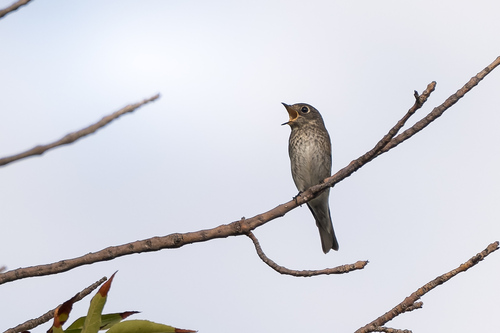
Dark-sided Flycatcher (Muscicapa sibirica) Dark-sided Flycatcher
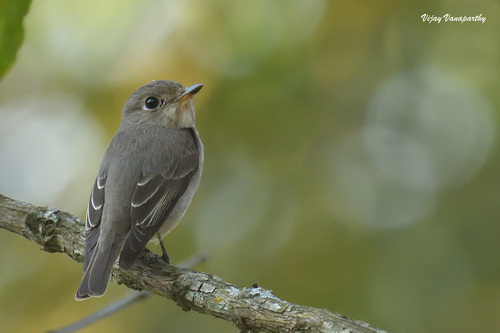
Asian Brown Flycatcher (Muscicapa dauurica) Asian Brown Flycatcher

Media

Loading…

In short

The most reliable field mark between Dark-sided Flycatcher and Asian Brown Flycatcher is the underpart pattern: Dark-sided shows obvious dark streaking on the breast and flanks, while Asian Brown is much plainer below with only a faint brownish wash on the flanks. Juveniles of both species are scaly above, but the Dark-sided's streaked underparts and more prominent pale wingbar help separate them. In flight or perched, Dark-sided has a longer primary projection and a slightly darker, more sooty overall tone. Bill structure and subtle facial contrasts can help, but underpart streaking is the key field mark in all ages.

Identification tips

  1. Underpart streaking (all ages): Dark-sided Flycatcher always shows obvious dark streaking on the breast and flanks, while Asian Brown Flycatcher is plain or only faintly washed brown on the flanks. This is the single most reliable field mark.
  2. Juvenile/first-winter upperparts: Juvenile Dark-sided shows pale spots on the upperparts and a mottled breast; Asian Brown juvenile is scaly brown above and on the breast, but less sharply marked below.
  3. Pale wingbar and tertial edges: Dark-sided has a distinct pale wingbar and pale edges to the tertials, visible in all plumages; Asian Brown is less contrasting, with plainer wings.
  4. Primary projection: Dark-sided has a longer primary projection than Asian Brown, giving a slightly longer-winged look when perched or in flight. This is subtle but can be useful with experience.
  5. Facial pattern: Dark-sided shows a pale submoustachial stripe and dark malar stripe outlining a white throat and forming a half-collar; Asian Brown's face is less contrasting, with less distinct 'spectacles' and throat.
  6. Undertail-coverts: Dark-sided has white undertail-coverts with dark centers; Asian Brown's undertail-coverts are plain.
  7. Overall tone: Dark-sided is darker and more sooty grey-brown above; Asian Brown is paler, especially in the poonensis subspecies, and becomes greyer as plumage ages.
  8. Bill structure: Both have short, dark bills, but Asian Brown's is relatively larger and broader-based, sometimes with a paler lower mandible (especially in poonensis), though this is subtle and variable.
  9. Size: Both species are essentially the same size and cannot be reliably separated by length or mass in the field.
  10. Sex differences: Both species are sexually monomorphic; males and females look alike.
  11. Flight views: In flight, look for the longer primary projection and slightly darker upperparts of Dark-sided, but underpart streaking is still the best mark if visible.
  12. Seasonal variation: Asian Brown can look paler and greyer as plumage ages; fresh birds (especially poonensis) may show a more mottled throat and breast, but never the bold streaking of Dark-sided.
  13. Vocalizations: If heard well, Dark-sided's high-pitched, tinkling calls may help, but Asian Brown's voice is not described here.
  14. Habitat/context: Both use similar habitats; do not rely on context for separation.
  15. Pitfalls: Beware of worn or poorly marked Asian Brown Flycatchers appearing slightly streaked, but the streaks are never as bold or extensive as in Dark-sided. Always check multiple features if possible.

Size

Both species are very similar in size, with Dark-sided Flycatcher measuring 13–14 cm and Asian Brown Flycatcher about 13 cm in length [wikipedia]. Any difference is negligible in the field and not a reliable separation point.

Plumage

Juvenile and first-winter birds of both species have scaly or spotted upperparts, but Dark-sided Flycatcher juveniles show pale spots on the upperparts, a mottled breast, and buff tips to the wing-coverts, while Asian Brown juveniles have scaly brown upperparts, head, and breast. For all ages, Dark-sided Flycatcher has dark grey-brown upperparts with a clear pale wingbar and pale tertial edges, and the underparts are distinctly streaked on the breast and flanks. Asian Brown Flycatcher is plainer: grey-brown above (becoming greyer with age), whitish below with only a brownish tinge on the flanks, and lacks strong streaking. Dark-sided also shows a pale submoustachial stripe and dark malar line framing a white throat, forming a half-collar, while Asian Brown's face is less contrasting. Undertail-coverts on Dark-sided are white with dark centers, a subtle but sometimes visible mark. In fresh plumage, Asian Brown (especially the poonensis subspecies) can show a more mottled throat and breast, but never the strong streaking of Dark-sided.

Behaviour

Both species perch upright and sally for insects in typical Muscicapa fashion. There is no strong behavioral difference noted in the sources that would reliably separate them in the field.

Habitat

Both species occupy similar woodland and forest edge habitats during migration and breeding. Habitat is not a reliable separator between these two, especially where their ranges overlap.

Voice

Dark-sided Flycatcher gives a series of thin, high-pitched notes with trills and whistles, and a metallic tinkling call. Asian Brown Flycatcher's voice is not described in the provided notes, so vocalization is not a reliable separator with the information at hand.

Submit a better description

Use the same sections as the comparison. Your text is published immediately.

The most reliable field mark between Dark-sided Flycatcher and Asian Brown Flycatcher is the underpart pattern: Dark-sided shows obvious dark streaking on the breast and flanks, while Asian Brown is much plainer below with only a faint brownish wash on the flanks. Juveniles of both species are scaly above, but the Dark-sided's streaked underparts and more prominent pale wingbar help separate them. In flight or perched, Dark-sided has a longer primary projection and a slightly darker, more sooty overall tone. Bill structure and subtle facial contrasts can help, but underpart streaking is the key field mark in all ages.

  1. Underpart streaking (all ages): Dark-sided Flycatcher always shows obvious dark streaking on the breast and flanks, while Asian Brown Flycatcher is plain or only faintly washed brown on the flanks. This is the single most reliable field mark.
  2. Juvenile/first-winter upperparts: Juvenile Dark-sided shows pale spots on the upperparts and a mottled breast; Asian Brown juvenile is scaly brown above and on the breast, but less sharply marked below.
  3. Pale wingbar and tertial edges: Dark-sided has a distinct pale wingbar and pale edges to the tertials, visible in all plumages; Asian Brown is less contrasting, with plainer wings.
  4. Primary projection: Dark-sided has a longer primary projection than Asian Brown, giving a slightly longer-winged look when perched or in flight. This is subtle but can be useful with experience.
  5. Facial pattern: Dark-sided shows a pale submoustachial stripe and dark malar stripe outlining a white throat and forming a half-collar; Asian Brown's face is less contrasting, with less distinct 'spectacles' and throat.
  6. Undertail-coverts: Dark-sided has white undertail-coverts with dark centers; Asian Brown's undertail-coverts are plain.
  7. Overall tone: Dark-sided is darker and more sooty grey-brown above; Asian Brown is paler, especially in the poonensis subspecies, and becomes greyer as plumage ages.
  8. Bill structure: Both have short, dark bills, but Asian Brown's is relatively larger and broader-based, sometimes with a paler lower mandible (especially in poonensis), though this is subtle and variable.
  9. Size: Both species are essentially the same size and cannot be reliably separated by length or mass in the field.
  10. Sex differences: Both species are sexually monomorphic; males and females look alike.
  11. Flight views: In flight, look for the longer primary projection and slightly darker upperparts of Dark-sided, but underpart streaking is still the best mark if visible.
  12. Seasonal variation: Asian Brown can look paler and greyer as plumage ages; fresh birds (especially poonensis) may show a more mottled throat and breast, but never the bold streaking of Dark-sided.
  13. Vocalizations: If heard well, Dark-sided's high-pitched, tinkling calls may help, but Asian Brown's voice is not described here.
  14. Habitat/context: Both use similar habitats; do not rely on context for separation.
  15. Pitfalls: Beware of worn or poorly marked Asian Brown Flycatchers appearing slightly streaked, but the streaks are never as bold or extensive as in Dark-sided. Always check multiple features if possible.

Both species are very similar in size, with Dark-sided Flycatcher measuring 13–14 cm and Asian Brown Flycatcher about 13 cm in length [wikipedia]. Any difference is negligible in the field and not a reliable separation point.

Juvenile and first-winter birds of both species have scaly or spotted upperparts, but Dark-sided Flycatcher juveniles show pale spots on the upperparts, a mottled breast, and buff tips to the wing-coverts, while Asian Brown juveniles have scaly brown upperparts, head, and breast. For all ages, Dark-sided Flycatcher has dark grey-brown upperparts with a clear pale wingbar and pale tertial edges, and the underparts are distinctly streaked on the breast and flanks. Asian Brown Flycatcher is plainer: grey-brown above (becoming greyer with age), whitish below with only a brownish tinge on the flanks, and lacks strong streaking. Dark-sided also shows a pale submoustachial stripe and dark malar line framing a white throat, forming a half-collar, while Asian Brown's face is less contrasting. Undertail-coverts on Dark-sided are white with dark centers, a subtle but sometimes visible mark. In fresh plumage, Asian Brown (especially the poonensis subspecies) can show a more mottled throat and breast, but never the strong streaking of Dark-sided.

Both species perch upright and sally for insects in typical Muscicapa fashion. There is no strong behavioral difference noted in the sources that would reliably separate them in the field.

Both species occupy similar woodland and forest edge habitats during migration and breeding. Habitat is not a reliable separator between these two, especially where their ranges overlap.

Dark-sided Flycatcher gives a series of thin, high-pitched notes with trills and whistles, and a metallic tinkling call. Asian Brown Flycatcher's voice is not described in the provided notes, so vocalization is not a reliable separator with the information at hand.

Discard your changes?

You have unsaved edits. If you leave now, those changes will be lost.

Dark-sided Flycatcher · Asian Brown Flycatcher · My Tricky Birds