

Motmot

Curlew Sandpiper vs Temminck's Stint

Calidris ferruginea versus Calidris temminckii

Play a quiz with Curlew Sandpiper and Temminck's Stint
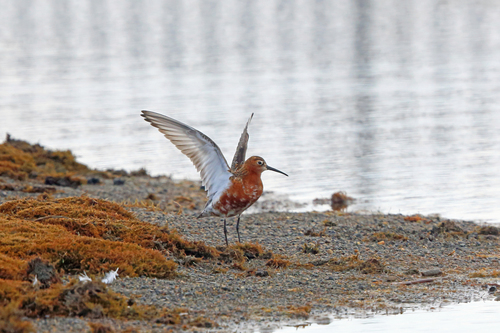
Curlew Sandpiper (Calidris ferruginea) Curlew Sandpiper
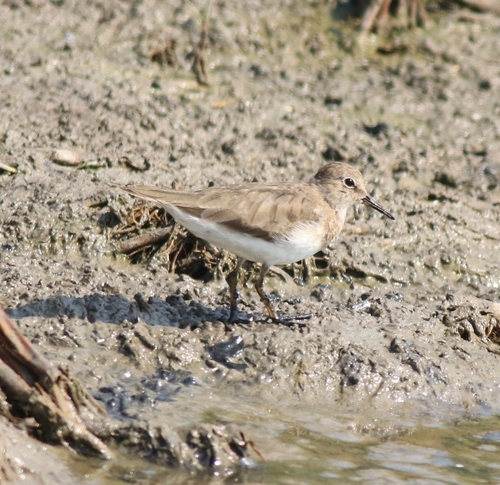
Temminck's Stint (Calidris temminckii) Temminck's Stint

Media

Loading…

In short

The most reliable field mark to separate Curlew Sandpiper from Temminck's Stint is the prominent white rump and broad white wing stripe shown in flight by Curlew Sandpiper of all ages, which Temminck's Stint lacks. Curlew Sandpiper is noticeably larger, with a longer, downcurved black bill and blackish legs, while Temminck's Stint is much smaller, with a short straight bill and dull yellowish or brown legs. On the ground, Curlew Sandpiper often appears more elegant and long-legged, whereas Temminck's Stint is compact and drab, with plain brown upperparts and a white outer tail. Juvenile and non-breeding birds of both species can look similar, but careful attention to structure, leg color, and flight pattern will separate them.

Identification tips

  1. White rump and wing stripe in flight: Curlew Sandpiper of all ages shows a large white rump and broad white stripe across the wing in flight; Temminck's Stint lacks both, showing only white outer tail feathers. This is the single most reliable mark in flight, especially for juveniles and non-breeding birds.
  2. Size and structure: Curlew Sandpiper is much larger and longer-legged than Temminck's Stint. If seen together or with other waders, Curlew Sandpiper stands out for its size and elegant proportions.
  3. Bill shape and length: Curlew Sandpiper has a long, downcurved black bill, while Temminck's Stint has a short, straight bill. This is evident at close range or with good optics.
  4. Leg color: Curlew Sandpiper has dark grey to black legs; Temminck's Stint has dull yellowish or brown legs. This is a subtle but useful mark when visible.
  5. Plumage in breeding season: Adult Curlew Sandpiper is extensively reddish below (especially males), with a reddish head and breast. Temminck's Stint remains mostly drab brown with only limited rufous or blackish on the mantle.
  6. Non-breeding and juvenile plumage: Both species become duller, but Curlew Sandpiper keeps a white supercilium and a more mottled or scaly upperpart pattern (especially in juveniles), while Temminck's Stint is plainer brown above, with a less distinct supercilium and a darker breast.
  7. Tail pattern: In flight, Temminck's Stint shows white outer tail feathers, but the rump is not white. Curlew Sandpiper's white rump extends up the back and is much more obvious.
  8. Feeding behavior: Curlew Sandpiper often probes deeper with its longer bill and may feed in slightly deeper water; Temminck's Stint is more active and feeds at the water's edge.
  9. Habitat context: Curlew Sandpiper is more likely on open coastal mudflats or saltpans, while Temminck's Stint prefers small freshwater pools or marshy edges.
  10. Head pattern: Curlew Sandpiper shows a distinct white eyebrow (supercilium), especially in non-breeding and juvenile plumage; Temminck's Stint's head is plainer brown with less contrast.
  11. Underpart color: Curlew Sandpiper in breeding plumage is reddish below, while Temminck's Stint is always white below with a darker breast band.
  12. Wing projection: Curlew Sandpiper has longer wings and a more attenuated rear end in profile; Temminck's Stint is short-winged and compact.
  13. Pitfalls with lone birds: Single non-breeding Curlew Sandpipers can look surprisingly plain and small, and lone Temminck's Stints may seem larger than they are; always check multiple features.
  14. Juvenile confusion: Juvenile Curlew Sandpiper is scaly and buff-tinged above, with a white supercilium; juvenile Temminck's Stint is plainer and browner, lacking strong patterning.
  15. Mixed flocks: In mixed Calidris flocks, Curlew Sandpiper's size, bill, and white rump/wing stripe will separate it from Temminck's Stint and other small stints.

Size

Curlew Sandpiper is significantly larger (18–23 cm length, 44–117 g mass, 38–46 cm wingspan) compared to Temminck's Stint (13.5–15 cm length, ~26 g mass) [wikipedia][wikidata]. This size difference is usually obvious in direct comparison or mixed flocks. Curlew Sandpiper also has a proportionally longer bill and legs, giving it a more elongated appearance, while Temminck's Stint is compact and short-legged.

Plumage

In all ages and seasons, Curlew Sandpiper in flight shows a large white rump and a broad white wing stripe, which are absent in Temminck's Stint. Juvenile Curlew Sandpipers are scaly above with buff fringes and a white supercilium, while Temminck's Stint juveniles are plainer brown above, lacking strong patterning. In non-breeding plumage, Curlew Sandpiper is greyish above and white below, with a distinct white eyebrow and a mottled appearance on the upperparts; Temminck's Stint is dull grey or brownish-grey above, with a plain brown head and a darker breast, but lacks a strong supercilium. Breeding Curlew Sandpiper is reddish below (especially males), while Temminck's Stint only shows limited rufous or blackish on the mantle and remains mostly drab. The outer tail feathers of Temminck's Stint are white, but the rump is not, whereas Curlew Sandpiper has a white rump extending up the back.

Behaviour

Curlew Sandpiper often feeds in slightly deeper water or muddier areas, using its longer bill to probe, and may appear more graceful and deliberate in movement. Temminck's Stint is typically more active, feeding with quick, short movements and often found at the water's edge or on drier mud. In mixed flocks, Curlew Sandpiper stands out for its size and longer-legged, longer-billed profile.

Habitat

Both species use muddy or sandy margins of wetlands, but Curlew Sandpiper is more likely to be found on open tidal mudflats and saltpans, especially during migration and winter. Temminck's Stint is often seen on the edges of small freshwater pools, marshes, or damp ground, sometimes away from large open mudflats. Overlap occurs, but context can help: Curlew Sandpiper is more coastal, Temminck's Stint more likely inland or at smaller water bodies.

Submit a better description

Use the same sections as the comparison. Your text is published immediately.

The most reliable field mark to separate Curlew Sandpiper from Temminck's Stint is the prominent white rump and broad white wing stripe shown in flight by Curlew Sandpiper of all ages, which Temminck's Stint lacks. Curlew Sandpiper is noticeably larger, with a longer, downcurved black bill and blackish legs, while Temminck's Stint is much smaller, with a short straight bill and dull yellowish or brown legs. On the ground, Curlew Sandpiper often appears more elegant and long-legged, whereas Temminck's Stint is compact and drab, with plain brown upperparts and a white outer tail. Juvenile and non-breeding birds of both species can look similar, but careful attention to structure, leg color, and flight pattern will separate them.

  1. White rump and wing stripe in flight: Curlew Sandpiper of all ages shows a large white rump and broad white stripe across the wing in flight; Temminck's Stint lacks both, showing only white outer tail feathers. This is the single most reliable mark in flight, especially for juveniles and non-breeding birds.
  2. Size and structure: Curlew Sandpiper is much larger and longer-legged than Temminck's Stint. If seen together or with other waders, Curlew Sandpiper stands out for its size and elegant proportions.
  3. Bill shape and length: Curlew Sandpiper has a long, downcurved black bill, while Temminck's Stint has a short, straight bill. This is evident at close range or with good optics.
  4. Leg color: Curlew Sandpiper has dark grey to black legs; Temminck's Stint has dull yellowish or brown legs. This is a subtle but useful mark when visible.
  5. Plumage in breeding season: Adult Curlew Sandpiper is extensively reddish below (especially males), with a reddish head and breast. Temminck's Stint remains mostly drab brown with only limited rufous or blackish on the mantle.
  6. Non-breeding and juvenile plumage: Both species become duller, but Curlew Sandpiper keeps a white supercilium and a more mottled or scaly upperpart pattern (especially in juveniles), while Temminck's Stint is plainer brown above, with a less distinct supercilium and a darker breast.
  7. Tail pattern: In flight, Temminck's Stint shows white outer tail feathers, but the rump is not white. Curlew Sandpiper's white rump extends up the back and is much more obvious.
  8. Feeding behavior: Curlew Sandpiper often probes deeper with its longer bill and may feed in slightly deeper water; Temminck's Stint is more active and feeds at the water's edge.
  9. Habitat context: Curlew Sandpiper is more likely on open coastal mudflats or saltpans, while Temminck's Stint prefers small freshwater pools or marshy edges.
  10. Head pattern: Curlew Sandpiper shows a distinct white eyebrow (supercilium), especially in non-breeding and juvenile plumage; Temminck's Stint's head is plainer brown with less contrast.
  11. Underpart color: Curlew Sandpiper in breeding plumage is reddish below, while Temminck's Stint is always white below with a darker breast band.
  12. Wing projection: Curlew Sandpiper has longer wings and a more attenuated rear end in profile; Temminck's Stint is short-winged and compact.
  13. Pitfalls with lone birds: Single non-breeding Curlew Sandpipers can look surprisingly plain and small, and lone Temminck's Stints may seem larger than they are; always check multiple features.
  14. Juvenile confusion: Juvenile Curlew Sandpiper is scaly and buff-tinged above, with a white supercilium; juvenile Temminck's Stint is plainer and browner, lacking strong patterning.
  15. Mixed flocks: In mixed Calidris flocks, Curlew Sandpiper's size, bill, and white rump/wing stripe will separate it from Temminck's Stint and other small stints.

Curlew Sandpiper is significantly larger (18–23 cm length, 44–117 g mass, 38–46 cm wingspan) compared to Temminck's Stint (13.5–15 cm length, ~26 g mass) [wikipedia][wikidata]. This size difference is usually obvious in direct comparison or mixed flocks. Curlew Sandpiper also has a proportionally longer bill and legs, giving it a more elongated appearance, while Temminck's Stint is compact and short-legged.

In all ages and seasons, Curlew Sandpiper in flight shows a large white rump and a broad white wing stripe, which are absent in Temminck's Stint. Juvenile Curlew Sandpipers are scaly above with buff fringes and a white supercilium, while Temminck's Stint juveniles are plainer brown above, lacking strong patterning. In non-breeding plumage, Curlew Sandpiper is greyish above and white below, with a distinct white eyebrow and a mottled appearance on the upperparts; Temminck's Stint is dull grey or brownish-grey above, with a plain brown head and a darker breast, but lacks a strong supercilium. Breeding Curlew Sandpiper is reddish below (especially males), while Temminck's Stint only shows limited rufous or blackish on the mantle and remains mostly drab. The outer tail feathers of Temminck's Stint are white, but the rump is not, whereas Curlew Sandpiper has a white rump extending up the back.

Curlew Sandpiper often feeds in slightly deeper water or muddier areas, using its longer bill to probe, and may appear more graceful and deliberate in movement. Temminck's Stint is typically more active, feeding with quick, short movements and often found at the water's edge or on drier mud. In mixed flocks, Curlew Sandpiper stands out for its size and longer-legged, longer-billed profile.

Both species use muddy or sandy margins of wetlands, but Curlew Sandpiper is more likely to be found on open tidal mudflats and saltpans, especially during migration and winter. Temminck's Stint is often seen on the edges of small freshwater pools, marshes, or damp ground, sometimes away from large open mudflats. Overlap occurs, but context can help: Curlew Sandpiper is more coastal, Temminck's Stint more likely inland or at smaller water bodies.

Discard your changes?

You have unsaved edits. If you leave now, those changes will be lost.

Curlew Sandpiper · Temminck's Stint · My Tricky Birds