

Motmot

サルハマシギ 対 オジロトウネン

Calidris ferruginea 対 Calidris temminckii

サルハマシギとオジロトウネンのクイズ
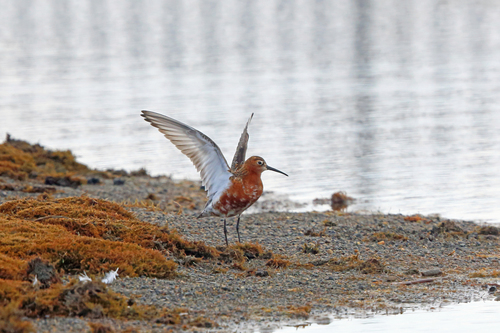
サルハマシギ (Calidris ferruginea) サルハマシギ
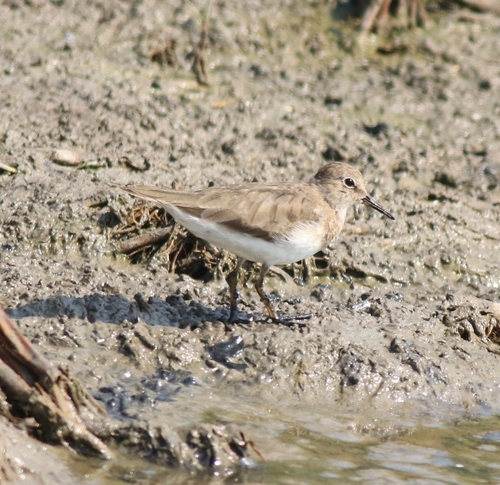
オジロトウネン (Calidris temminckii) オジロトウネン

メディア

読み込み中…

要点

サルハマシギとオジロトウネンを区別する最も信頼できるフィールドマークは、すべての年齢のサルハマシギが飛行中に示す目立つ白い尻と広い白い翼のストライプであり、オジロトウネンにはこれが欠けています。サルハマシギは明らかに大きく、長く下向きの黒いくちばしと黒っぽい脚を持っていますが、オジロトウネンははるかに小さく、短い直線的なくちばしと鈍い黄色または茶色の脚を持っています。地上では、サルハマシギはしばしばより優雅で長い脚を持っているように見えますが、オジロトウネンはコンパクトで地味で、単調な茶色の上面と白い外尾を持っています。両種の幼鳥と非繁殖鳥は似て見えることがありますが、構造、脚の色、飛行パターンに注意を払うことで区別できます。

識別のコツ

  1. 白い尻と翼のストライプの飛行中: すべての年齢のサルハマシギは、飛行中に大きな白い尻と広い白いストライプを翼に示します。オジロトウネンは両方とも欠けており、白い外尾羽のみを示します。これは、特に幼鳥や非繁殖鳥にとって、飛行中の最も信頼できるマークです。
  2. サイズと構造: サルハマシギはオジロトウネンよりもはるかに大きく、長い脚を持っています。一緒に見たり、他のシギと一緒に見たりすると、サルハマシギはそのサイズと優雅なプロポーションで際立ちます。
  3. くちばしの形と長さ: サルハマシギは長く下向きの黒いくちばしを持っていますが、オジロトウネンは短く直線的なくちばしを持っています。これは近距離または良好な光学機器で明らかです。
  4. 脚の色: サルハマシギは暗い灰色から黒の脚を持っていますが、オジロトウネンは鈍い黄色または茶色の脚を持っています。これは目に見えるときに微妙ですが有用なマークです。
  5. 繁殖期の羽毛: 成熟したサルハマシギは、下側が広範囲に赤みを帯びており(特にオス)、赤い頭と胸を持っています。オジロトウネンは主に地味な茶色で、肩に限られた赤褐色または黒っぽい部分しかありません。
  6. 非繁殖期と幼鳥の羽毛: 両種は鈍くなりますが、サルハマシギは白いスーパシリウムとより斑点のあるまたは鱗状の上面パターン(特に幼鳥で)を保持し、オジロトウネンは上面がより単調な茶色で、スーパシリウムがあまり目立たず、胸が暗くなります。
  7. 尾のパターン: 飛行中、オジロトウネンは白い外尾羽を示しますが、尻は白ではありません。サルハマシギの白い尻は背中にまで伸びており、はるかに目立ちます。
  8. 採餌行動: サルハマシギは長いくちばしを使ってより深く探り、やや深い水で餌を取ることが多いですが、オジロトウネンはより活発で、水辺で餌を取ります。
  9. 生息地の文脈: サルハマシギは開放的な沿岸の干潟や塩田にいる可能性が高いですが、オジロトウネンは小さな淡水の池や湿った縁を好みます。
  10. 頭のパターン: サルハマシギは、特に非繁殖期と幼鳥の羽毛で、明確な白い眉(スーパシリウム)を示しますが、オジロトウネンの頭はより単調な茶色でコントラストが少ないです。
  11. 下側の色: 繁殖羽毛のサルハマシギは下側が赤みを帯びていますが、オジロトウネンは常に下側が白く、暗い胸帯があります。
  12. 翼の突出: サルハマシギは翼が長く、横から見ると後部がより細長いですが、オジロトウネンは翼が短く、コンパクトです。
  13. 孤立した鳥の落とし穴: 単独の非繁殖Curlew Sandpipersは驚くほど地味で小さく見えることがあり、孤立したTemminck's Stintsは実際よりも大きく見えることがあります。常に複数の特徴を確認してください。
  14. 幼鳥の混乱: 幼鳥のサルハマシギは上面が鱗状でバフ色の縁取りがあり、白いスーパシリウムを持っています。幼鳥のオジロトウネンはより単調で茶色く、強いパターンがありません。
  15. 混合群れ: 混合Calidris群れでは、サルハマシギのサイズ、くちばし、白い尻/翼のストライプがオジロトウネンや他の小さなトウネンと区別します。

大きさ

サルハマシギはオジロトウネン(13.5–15 cmの長さ、約26 gの質量)と比較して、かなり大きい(18–23 cmの長さ、44–117 gの質量、38–46 cmの翼幅)です[wikipedia][wikidata]。このサイズの違いは、直接比較や混合群れで通常明らかです。サルハマシギはまた、比例的に長いくちばしと脚を持ち、より細長い外観を与えていますが、オジロトウネンはコンパクトで短い脚を持っています。

羽色

すべての年齢と季節において、飛行中のサルハマシギは大きな白い尻と広い白い翼のストライプを示し、これはオジロトウネンにはありません。幼鳥のサルハマシギは上面が鱗状でバフ色の縁取りがあり、白いスーパシリウムを持っていますが、オジロトウネンの幼鳥は上面がより単調な茶色で、強いパターンがありません。非繁殖羽毛では、サルハマシギは上面が灰色がかり、下面が白く、明確な白い眉と上面に斑点のある外観を持っていますが、オジロトウネンは上面が鈍い灰色または茶色がかった灰色で、単調な茶色の頭と暗い胸を持ち、強いスーパシリウムがありません。繁殖中のサルハマシギは下側が赤みを帯びています(特にオス)、一方でオジロトウネンは肩に限られた赤褐色または黒っぽい部分しか示さず、主に地味です。オジロトウネンの外尾羽は白いですが、尻は白ではなく、サルハマシギは背中にまで伸びる白い尻を持っています。

行動

サルハマシギは、やや深い水や泥の多い場所で餌を取ることが多く、長いくちばしを使って探り、動きがより優雅で意図的に見えることがあります。オジロトウネンは通常より活発で、素早く短い動きで餌を取り、水辺や乾いた泥の上で見られることが多いです。混合群れでは、サルハマシギはそのサイズと長い脚、長いくちばしのプロファイルで際立ちます。

生息環境

両種は湿地の泥や砂の縁を利用しますが、サルハマシギは開放的な潮汐の干潟や塩田で見られる可能性が高く、特に渡りや冬の間にそうです。オジロトウネンは、小さな淡水の池、湿地、または湿った地面の縁でよく見られ、大きな開放的な干潟から離れていることもあります。重複はありますが、文脈が助けになります: サルハマシギはより沿岸性で、オジロトウネンはより内陸または小さな水域で見られる可能性が高いです。

より良い説明を送る

比較と同じ項目を使ってください。文章はすぐに公開されます。

The most reliable field mark to separate Curlew Sandpiper from Temminck's Stint is the prominent white rump and broad white wing stripe shown in flight by Curlew Sandpiper of all ages, which Temminck's Stint lacks. Curlew Sandpiper is noticeably larger, with a longer, downcurved black bill and blackish legs, while Temminck's Stint is much smaller, with a short straight bill and dull yellowish or brown legs. On the ground, Curlew Sandpiper often appears more elegant and long-legged, whereas Temminck's Stint is compact and drab, with plain brown upperparts and a white outer tail. Juvenile and non-breeding birds of both species can look similar, but careful attention to structure, leg color, and flight pattern will separate them.

  1. White rump and wing stripe in flight: Curlew Sandpiper of all ages shows a large white rump and broad white stripe across the wing in flight; Temminck's Stint lacks both, showing only white outer tail feathers. This is the single most reliable mark in flight, especially for juveniles and non-breeding birds.
  2. Size and structure: Curlew Sandpiper is much larger and longer-legged than Temminck's Stint. If seen together or with other waders, Curlew Sandpiper stands out for its size and elegant proportions.
  3. Bill shape and length: Curlew Sandpiper has a long, downcurved black bill, while Temminck's Stint has a short, straight bill. This is evident at close range or with good optics.
  4. Leg color: Curlew Sandpiper has dark grey to black legs; Temminck's Stint has dull yellowish or brown legs. This is a subtle but useful mark when visible.
  5. Plumage in breeding season: Adult Curlew Sandpiper is extensively reddish below (especially males), with a reddish head and breast. Temminck's Stint remains mostly drab brown with only limited rufous or blackish on the mantle.
  6. Non-breeding and juvenile plumage: Both species become duller, but Curlew Sandpiper keeps a white supercilium and a more mottled or scaly upperpart pattern (especially in juveniles), while Temminck's Stint is plainer brown above, with a less distinct supercilium and a darker breast.
  7. Tail pattern: In flight, Temminck's Stint shows white outer tail feathers, but the rump is not white. Curlew Sandpiper's white rump extends up the back and is much more obvious.
  8. Feeding behavior: Curlew Sandpiper often probes deeper with its longer bill and may feed in slightly deeper water; Temminck's Stint is more active and feeds at the water's edge.
  9. Habitat context: Curlew Sandpiper is more likely on open coastal mudflats or saltpans, while Temminck's Stint prefers small freshwater pools or marshy edges.
  10. Head pattern: Curlew Sandpiper shows a distinct white eyebrow (supercilium), especially in non-breeding and juvenile plumage; Temminck's Stint's head is plainer brown with less contrast.
  11. Underpart color: Curlew Sandpiper in breeding plumage is reddish below, while Temminck's Stint is always white below with a darker breast band.
  12. Wing projection: Curlew Sandpiper has longer wings and a more attenuated rear end in profile; Temminck's Stint is short-winged and compact.
  13. Pitfalls with lone birds: Single non-breeding Curlew Sandpipers can look surprisingly plain and small, and lone Temminck's Stints may seem larger than they are; always check multiple features.
  14. Juvenile confusion: Juvenile Curlew Sandpiper is scaly and buff-tinged above, with a white supercilium; juvenile Temminck's Stint is plainer and browner, lacking strong patterning.
  15. Mixed flocks: In mixed Calidris flocks, Curlew Sandpiper's size, bill, and white rump/wing stripe will separate it from Temminck's Stint and other small stints.

Curlew Sandpiper is significantly larger (18–23 cm length, 44–117 g mass, 38–46 cm wingspan) compared to Temminck's Stint (13.5–15 cm length, ~26 g mass) [wikipedia][wikidata]. This size difference is usually obvious in direct comparison or mixed flocks. Curlew Sandpiper also has a proportionally longer bill and legs, giving it a more elongated appearance, while Temminck's Stint is compact and short-legged.

In all ages and seasons, Curlew Sandpiper in flight shows a large white rump and a broad white wing stripe, which are absent in Temminck's Stint. Juvenile Curlew Sandpipers are scaly above with buff fringes and a white supercilium, while Temminck's Stint juveniles are plainer brown above, lacking strong patterning. In non-breeding plumage, Curlew Sandpiper is greyish above and white below, with a distinct white eyebrow and a mottled appearance on the upperparts; Temminck's Stint is dull grey or brownish-grey above, with a plain brown head and a darker breast, but lacks a strong supercilium. Breeding Curlew Sandpiper is reddish below (especially males), while Temminck's Stint only shows limited rufous or blackish on the mantle and remains mostly drab. The outer tail feathers of Temminck's Stint are white, but the rump is not, whereas Curlew Sandpiper has a white rump extending up the back.

Curlew Sandpiper often feeds in slightly deeper water or muddier areas, using its longer bill to probe, and may appear more graceful and deliberate in movement. Temminck's Stint is typically more active, feeding with quick, short movements and often found at the water's edge or on drier mud. In mixed flocks, Curlew Sandpiper stands out for its size and longer-legged, longer-billed profile.

Both species use muddy or sandy margins of wetlands, but Curlew Sandpiper is more likely to be found on open tidal mudflats and saltpans, especially during migration and winter. Temminck's Stint is often seen on the edges of small freshwater pools, marshes, or damp ground, sometimes away from large open mudflats. Overlap occurs, but context can help: Curlew Sandpiper is more coastal, Temminck's Stint more likely inland or at smaller water bodies.

変更を破棄しますか?

保存していない編集があります。今離れると失われます。

サルハマシギ · オジロトウネン · 苦手な鳥