

Crested Goshawk vs Besra
Lophospiza trivirgata versus Tachyspiza virgata
Play a quiz with Crested Goshawk and Besra
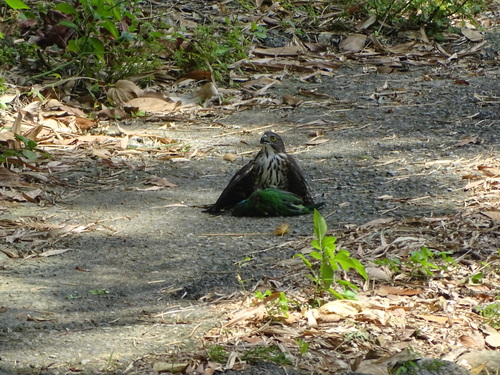 Crested Goshawk
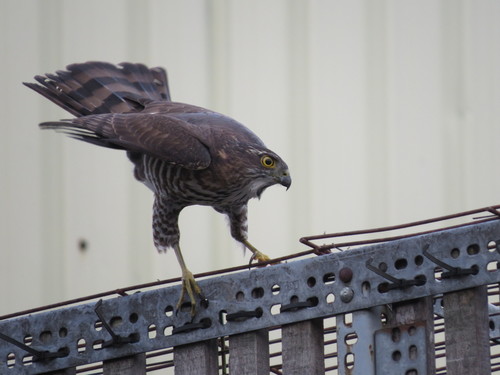 Besra
In short
The most reliable field mark to separate Crested Goshawk from Besra is the presence of a short, distinct crest on the Crested Goshawk, which is visible in profile when perched or alert. Size is also a strong clue: Crested Goshawk is noticeably larger, especially in females. For immatures, check the color of the underparts—Crested Goshawk juveniles have a buff background, while Besra juveniles are white below. Both species share short, broad wings and long tails, making structure alone less useful, but subtle differences in head pattern and underpart barring can help. Flight style is similar, but Crested Goshawk tends to show slightly slower, heavier wingbeats.
Identification tips
- Crested Goshawk's crest is the single most reliable field mark: look for a short, pointed crest on the head, especially when the bird is alert or agitated. Besra lacks any crest.
- Size difference is significant, especially in females: Crested Goshawk is bulkier and longer, but beware overlap between small female Crested Goshawk and large female Besra.
- Juvenile underparts: Crested Goshawk juveniles have a buff background to the underparts, while Besra juveniles are white below. This is a key mark for immatures.
- Head pattern in adults: Crested Goshawk males have a dark brown crown and grey sides to the head, with a distinct black moustachial and throat stripe. Besra males are blue-grey above without the strong contrast of crown and sides.
- Underpart barring: Crested Goshawk shows rufous streaks on the breast and bars on the belly (males), or brown streaks and bars (females). Besra is more cleanly barred reddish brown below, especially in males, with less streaking.
- Gular stripe: Besra has a broader gular stripe than Crested Goshawk, but this mark can be subtle and variable.
- Uppertail pattern: Besra of all ages shows 3–4 equally sized dark bands on the uppertail, visible in flight or when perched with the tail spread. Crested Goshawk's tail pattern is not described as such, so a clearly banded tail favors Besra.
- Flight style: Crested Goshawk's flight is heavier and slower ('slow flap, slow flap, glide'), while Besra is quicker and more sparrowhawk-like ('flap–flap–glide'). This is subtle and best used with experience.
- Crested Goshawk's head shape appears more angular and prominent due to the crest, while Besra's head is smoothly rounded.
- Upperpart color: Besra is darker blue-grey (male) or brown (female) above; Crested Goshawk is generally browner, especially in females.
- Legs and toes: Besra is noted for thin, long legs and toes, but this is a minor mark and hard to judge unless seen well.
- Habitat context: While both can be found in dense forest, Besra is more likely in open woodland and even cultivated areas in winter, so a bird in such habitat is more likely to be Besra, but not exclusively so.
- Sexual dimorphism: Both species show larger females, but the difference is more pronounced in Crested Goshawk.
- Perched jizz: Crested Goshawk often appears bulkier and more upright, with the crest giving a distinctive profile. Besra is slimmer and more compact.
- Plumage pitfalls: Both can show similar barring and streaking below, so always combine multiple marks—crest, size, underpart color (in juveniles), and tail pattern are most reliable.
Size
Crested Goshawk is the larger of the two, measuring 30–46 cm in length, with females much bigger than males. Besra is smaller, at 29–36 cm. This size difference is most obvious when females are compared, as female Crested Goshawks can appear noticeably bulkier and longer-tailed than even the largest Besra. However, overlap in the lower end of Crested Goshawk and upper end of Besra size means that size alone should be used with caution unless both sexes are known.
Plumage
- Juveniles/immatures: Crested Goshawk juveniles have a buff background to the underparts with pale fringes to head feathers, while Besra juveniles are white below with brown barring and are dark brown above. Both have barred underparts, but the ground color is diagnostic at this age.
- Adults: Crested Goshawk males show a dark brown crown, grey sides to the head, and black moustachial and throat stripes, with pale underparts marked by rufous streaks on the breast and bars on the belly. Females are browner on the head and underparts, with brown streaks and bars. Besra adult males are dark blue-grey above, white below with reddish-brown barring; females are browner above and similarly barred below. Both sexes of Besra have 3–4 equally sized dark bands on the uppertail, a feature not specifically described for Crested Goshawk. The Besra is overall darker above and has a broader gular stripe than Crested Goshawk.
Behaviour
Both species are agile forest raptors with similar hunting techniques, relying on surprise attacks from cover. In flight, Crested Goshawk uses a 'slow flap, slow flap, straight glide' pattern, which is slightly slower and heavier than the Besra's 'flap–flap–glide'. Both are adapted for maneuvering through dense woodland, but Crested Goshawk may appear more powerful and deliberate in its movements due to its larger size.
Habitat
Both species inhabit dense forests across tropical and subtropical Asia. Besra is more likely to be found in a wider range of wooded habitats, including open woodland, savannah, and even cultivated areas in winter. Crested Goshawk is typically associated with mature forest and forest edge, but habitat overlap is extensive, so context is only weakly diagnostic.