

Motmot

Cook's Petrel vs Pycroft's Petrel

Pterodroma cookii versus Pterodroma pycrofti

Play a quiz with Cook's Petrel and Pycroft's Petrel
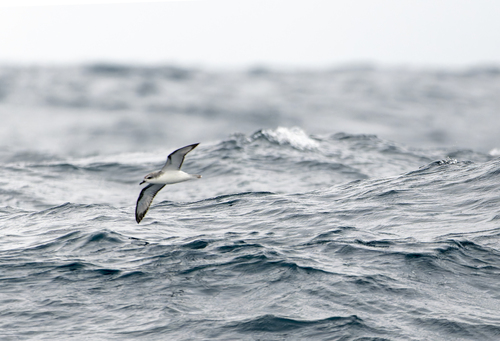
Cook's Petrel (Pterodroma cookii) Cook's Petrel
Pycroft's Petrel (Pterodroma pycrofti) Pycroft's Petrel

Media

Loading…

In short

Cook's Petrel and Pycroft's Petrel are extremely similar small gadfly petrels, both with grey upperparts marked by a dark 'M' across the wings and white underparts. The most reliable field mark is Pycroft's Petrel's faint grey breast band and dark eye patch, which are lacking or much less distinct in Cook's. Structural differences are subtle, but Cook's Petrel is generally slightly heavier and longer-winged. Both species are endemic to New Zealand and overlap in range and season, so careful attention to subtle plumage details and overall jizz is essential.

Identification tips

  1. Breast band: Pycroft's Petrel often shows a faint grey band across the upper breast, visible in good light and close views. Cook's Petrel lacks this band or shows it only very faintly; this is the single most useful field mark when present.
  2. Eye patch: Pycroft's Petrel has a distinct dark grey patch around the eye, giving a masked appearance, especially against the white forehead. Cook's Petrel's face is cleaner and less contrasting, with the dark around the eye much less marked.
  3. Upperwing pattern: Both species have a dark 'M' pattern across the upperwings, typical of gadfly petrels. This mark is not diagnostic between them, but its presence confirms the group.
  4. Underparts: Both species have white underparts, but Pycroft's may show a slight shadow from the breast band.
  5. Bill structure: Both have long, black bills with tubular nostrils. Bill size and shape are not reliably different in the field.
  6. Size and structure: Cook's Petrel is slightly larger and heavier, but this is rarely useful unless birds are seen together. Both are small, slender-winged petrels.
  7. Flight jizz: Both species have buoyant, gliding flight with rapid shearing. No documented difference in flight style.
  8. Forehead: Both species have a white forehead, but the contrast with the eye patch is sharper in Pycroft's.
  9. Voice: Pycroft's Petrel gives a ti-ti-ti-ti call at colonies, but this is not helpful at sea. No distinctive at-sea calls noted for either species.
  10. Breeding season/context: Both breed on offshore islands of northern New Zealand, and their ranges overlap. Context is not a separator.
  11. Sex and age: No sex- or age-specific field marks are documented for these species; the breast band and eye patch in Pycroft's apply to all ages.
  12. Common pitfalls: The faintness of Pycroft's breast band and variability in light can make this mark hard to see. Overexposed or distant views may make both species appear plainer than they are.
  13. Plumage wear: No documented differences in worn or fresh plumage between the two.
  14. Overlap with other petrels: Both can be confused with other Cookilaria petrels (e.g., Stejneger's), but within this pair, focus on the breast band and eye patch.
  15. Summary: In most field situations, prioritize the presence of a faint breast band and a dark eye patch for Pycroft's; absence or weakness of these marks points to Cook's.

Size

Cook's Petrel is slightly larger and heavier, typically weighing around 200 g, while Pycroft's Petrel averages about 159 g (range 112–198 g) [wikidata]. Both are among the smallest Pterodroma petrels, with Cook's Petrel measuring 25–30 cm in length and Pycroft's Petrel about 26 cm. Wingspans are nearly identical, with Cook's at 65–66 cm. In the field, this size difference is subtle and rarely diagnostic unless birds are side by side.

Plumage

Both species share the classic gadfly petrel look: pale grey upperparts with a dark 'M' across the wings and white underparts. However, Pycroft's Petrel shows a faint grey breast band and a dark patch around the eye, which are absent or much less marked in Cook's Petrel. The forehead is white in both, but the contrast with the eye patch is stronger in Pycroft's. Both species have a long, black bill with tubular nostrils. No age-specific upperwing or juvenile pattern differences are documented in the sources, so these marks apply to all ages seen in flight or perched.

Behaviour

Both species are pelagic and rarely seen from land except at breeding colonies. Their flight is typically buoyant and gliding, characteristic of gadfly petrels. There are no documented behavioral differences in the sources that aid field separation.

Habitat

Both Cook's and Pycroft's Petrels breed on offshore islands of northern New Zealand and are strictly pelagic outside the breeding season. Habitat is not a reliable separator, as both can be found in similar marine environments and their breeding ranges overlap.

Voice

Pycroft's Petrel gives a ti-ti-ti-ti call at breeding colonies, but this is not a reliable field mark at sea. The name 'tītī' is used for both species, and no distinctive flight or at-sea calls are described for Cook's Petrel in the sources.

Submit a better description

Use the same sections as the comparison. Your text is published immediately.

Cook's Petrel and Pycroft's Petrel are extremely similar small gadfly petrels, both with grey upperparts marked by a dark 'M' across the wings and white underparts. The most reliable field mark is Pycroft's Petrel's faint grey breast band and dark eye patch, which are lacking or much less distinct in Cook's. Structural differences are subtle, but Cook's Petrel is generally slightly heavier and longer-winged. Both species are endemic to New Zealand and overlap in range and season, so careful attention to subtle plumage details and overall jizz is essential.

  1. Breast band: Pycroft's Petrel often shows a faint grey band across the upper breast, visible in good light and close views. Cook's Petrel lacks this band or shows it only very faintly; this is the single most useful field mark when present.
  2. Eye patch: Pycroft's Petrel has a distinct dark grey patch around the eye, giving a masked appearance, especially against the white forehead. Cook's Petrel's face is cleaner and less contrasting, with the dark around the eye much less marked.
  3. Upperwing pattern: Both species have a dark 'M' pattern across the upperwings, typical of gadfly petrels. This mark is not diagnostic between them, but its presence confirms the group.
  4. Underparts: Both species have white underparts, but Pycroft's may show a slight shadow from the breast band.
  5. Bill structure: Both have long, black bills with tubular nostrils. Bill size and shape are not reliably different in the field.
  6. Size and structure: Cook's Petrel is slightly larger and heavier, but this is rarely useful unless birds are seen together. Both are small, slender-winged petrels.
  7. Flight jizz: Both species have buoyant, gliding flight with rapid shearing. No documented difference in flight style.
  8. Forehead: Both species have a white forehead, but the contrast with the eye patch is sharper in Pycroft's.
  9. Voice: Pycroft's Petrel gives a ti-ti-ti-ti call at colonies, but this is not helpful at sea. No distinctive at-sea calls noted for either species.
  10. Breeding season/context: Both breed on offshore islands of northern New Zealand, and their ranges overlap. Context is not a separator.
  11. Sex and age: No sex- or age-specific field marks are documented for these species; the breast band and eye patch in Pycroft's apply to all ages.
  12. Common pitfalls: The faintness of Pycroft's breast band and variability in light can make this mark hard to see. Overexposed or distant views may make both species appear plainer than they are.
  13. Plumage wear: No documented differences in worn or fresh plumage between the two.
  14. Overlap with other petrels: Both can be confused with other Cookilaria petrels (e.g., Stejneger's), but within this pair, focus on the breast band and eye patch.
  15. Summary: In most field situations, prioritize the presence of a faint breast band and a dark eye patch for Pycroft's; absence or weakness of these marks points to Cook's.

Cook's Petrel is slightly larger and heavier, typically weighing around 200 g, while Pycroft's Petrel averages about 159 g (range 112–198 g) [wikidata]. Both are among the smallest Pterodroma petrels, with Cook's Petrel measuring 25–30 cm in length and Pycroft's Petrel about 26 cm. Wingspans are nearly identical, with Cook's at 65–66 cm. In the field, this size difference is subtle and rarely diagnostic unless birds are side by side.

Both species share the classic gadfly petrel look: pale grey upperparts with a dark 'M' across the wings and white underparts. However, Pycroft's Petrel shows a faint grey breast band and a dark patch around the eye, which are absent or much less marked in Cook's Petrel. The forehead is white in both, but the contrast with the eye patch is stronger in Pycroft's. Both species have a long, black bill with tubular nostrils. No age-specific upperwing or juvenile pattern differences are documented in the sources, so these marks apply to all ages seen in flight or perched.

Both species are pelagic and rarely seen from land except at breeding colonies. Their flight is typically buoyant and gliding, characteristic of gadfly petrels. There are no documented behavioral differences in the sources that aid field separation.

Both Cook's and Pycroft's Petrels breed on offshore islands of northern New Zealand and are strictly pelagic outside the breeding season. Habitat is not a reliable separator, as both can be found in similar marine environments and their breeding ranges overlap.

Pycroft's Petrel gives a ti-ti-ti-ti call at breeding colonies, but this is not a reliable field mark at sea. The name 'tītī' is used for both species, and no distinctive flight or at-sea calls are described for Cook's Petrel in the sources.

Discard your changes?

You have unsaved edits. If you leave now, those changes will be lost.

Cook's Petrel · Pycroft's Petrel · My Tricky Birds