

Common Whitethroat vs Northern Wheatear
Curruca communis versus Oenanthe oenanthe
Play a quiz with Common Whitethroat and Northern Wheatear
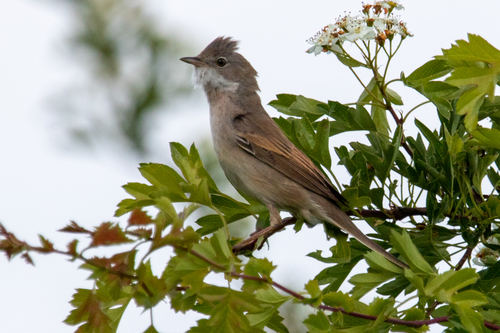 Common Whitethroat
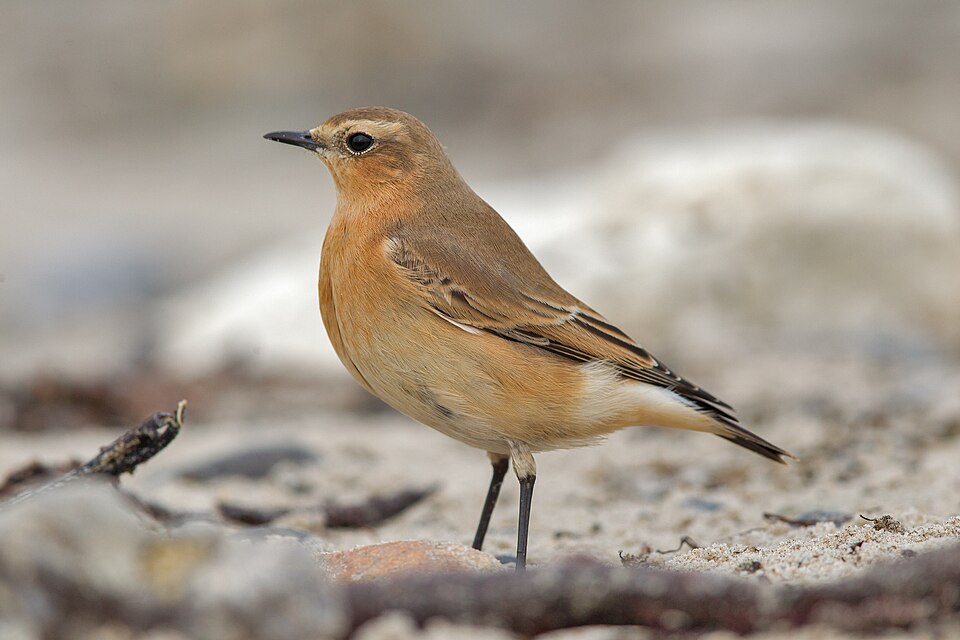 Northern Wheatear
In short
The most reliable field mark to separate Common Whitethroat from Northern Wheatear is the wheatear’s distinctive white rump and black T-shaped tail pattern, visible in all ages and especially obvious in flight. Whitethroats never show this tail pattern, instead having plain brown tails. In perched views, note the Whitethroat’s smaller, slimmer build and the male’s grey head and white throat, while Wheatears are bulkier with upright posture and a bold face mask (in males). Juvenile and female plumages can cause confusion, but the tail and rump pattern, along with structure and habitat, remain strong clues. Voice and behavior offer additional support, especially if plumage is obscured.
Identification tips
- White rump and black T-tail (all ages, all seasons): Only Northern Wheatear shows a bright white rump and tail with a black inverted T-pattern, especially obvious in flight or when tail-flicking. Whitethroat never shows this; its tail is plain brown.
- Perched posture and jizz: Wheatear perches upright, often on rocks or open ground, and looks bulkier and longer-legged. Whitethroat is more slender, perches lower in bushes, and appears more delicate.
- Male head pattern (breeding season): Male Whitethroat has a clear grey head and white throat, contrasting with brown upperparts. Male Wheatear has a grey back, buff throat, black wings, and a bold black face mask.
- Female/immature confusion: Female and young Wheatear are pale brown above and buff below, similar to female Whitethroat, but always check for the white rump and tail pattern. Whitethroat females are browner above, with a duller throat and lack any white in the tail.
- Wing pattern: Wheatear of all ages has blackish wings (especially males), contrasting with the pale body. Whitethroat has brown wings with chestnut fringes, never as dark or contrasting as Wheatear.
- Tail movement: Wheatear frequently flicks its tail, flashing the white rump and tail pattern. Whitethroat does not display this behavior.
- Habitat context: Birds in open, stony, or grassy ground are likely Wheatear; those in dense bushes or hedgerows are likely Whitethroat.
- Flight style: Wheatear makes longer, bounding flights over open ground, often showing the rump; Whitethroat makes short, low flights between shrubs.
- Vocalizations: Whitethroat gives a scratchy, scolding song and nasal calls from cover. Wheatear’s call is a sharp "chack" and its song is whistling and crackly, often delivered from a perch or in flight.
- Bill shape: Wheatear’s bill is slightly stouter and more flycatcher-like, suited for catching insects on the ground. Whitethroat’s bill is finer and more warbler-like.
- Size: Wheatear is larger and heavier than Whitethroat, but this is subtle unless seen side by side.
- Face pattern (males): Wheatear males have a bold black face mask, absent in Whitethroat.
- Seasonal context: Both are migrants, but Wheatear is more likely in open habitats during passage; Whitethroat sticks to cover.
- Leg color: Not diagnostic between these two, but Wheatear’s longer legs are noticeable in upright posture.
- When in doubt: If you see a white rump and black T-tail, it is always Wheatear; if the bird is in dense bushes with a grey head and white throat (male), it is Whitethroat.
Size
Northern Wheatear is noticeably larger and heavier than Common Whitethroat. Whitethroat averages about 14.5 g in body mass, while Wheatear ranges from 17–30 g and is longer (14.5–16 cm vs. Whitethroat’s smaller size). Wheatear also has a longer wingspan (26–32 cm) and a more robust, upright stance. In the field, Wheatear often appears bulkier and longer-legged, while Whitethroat is more delicate and slender.
Plumage
- Juveniles/First-years: Wheatear of all ages shows a striking white rump and tail with a black inverted T-pattern, especially visible in flight or when flicking the tail. Whitethroat, regardless of age, never shows any white in the tail or rump; its tail is plain brown with no pattern.
- Adult males: Whitethroat males have a grey head and bright white throat, contrasting with brown upperparts and chestnut-edged wings. Wheatear males in summer have grey upperparts, a buff throat, black wings, and a bold black face mask.
- Females and autumn birds: Whitethroat females are brown above and buff below, lacking the grey head and with a duller throat. Wheatear females are pale brown above, buff below, and have darker brown wings, but still retain the white rump and black T-tail. In autumn, male Wheatears resemble females but keep the black wings.
- Key contrast: The Wheatear’s tail and rump pattern is unique and diagnostic at all ages and seasons; Whitethroat never shows this feature.
Behaviour
Wheatears often perch upright on rocks or open ground, frequently flicking their tails and making short, bounding flights that show off their white rump and tail pattern. They may also run or hop on the ground, reflecting their open-country habits. Whitethroats are more likely to be seen flitting through bushes, making short, low flights between shrubs, and rarely perch in the open for long. Their movements are more furtive and less upright, and they seldom show the same tail-flicking behavior as Wheatear.
Habitat
Whitethroats are typically found in dense, shrubby vegetation, hedgerows, or bramble patches, often in farmland or woodland edges. They avoid open, stony ground. In contrast, Northern Wheatears prefer open, often rocky or grassy habitats such as moorland, coastal cliffs, upland pastures, and stony fields. Finding a bird in an open field or on a rock strongly favors Wheatear, while dense bushes and hedges suggest Whitethroat.
Voice
Whitethroat’s song is fast, scratchy, and scolding, with a hoarse, nasal call ("wed-wed" or "woid-woid") and a rough warning cry. Wheatear’s song is whistling and crackly, and its call is a sharp "chack" or chat-like note, with a similar flight call. If you hear a scratchy, scolding song from a bush, it’s likely Whitethroat; a whistling, chat-like call from open ground points to Wheatear.