

Common Reed Bunting vs Yellow-browed Bunting
Emberiza schoeniclus versus Emberiza chrysophrys
Play a quiz with Common Reed Bunting and Yellow-browed Bunting
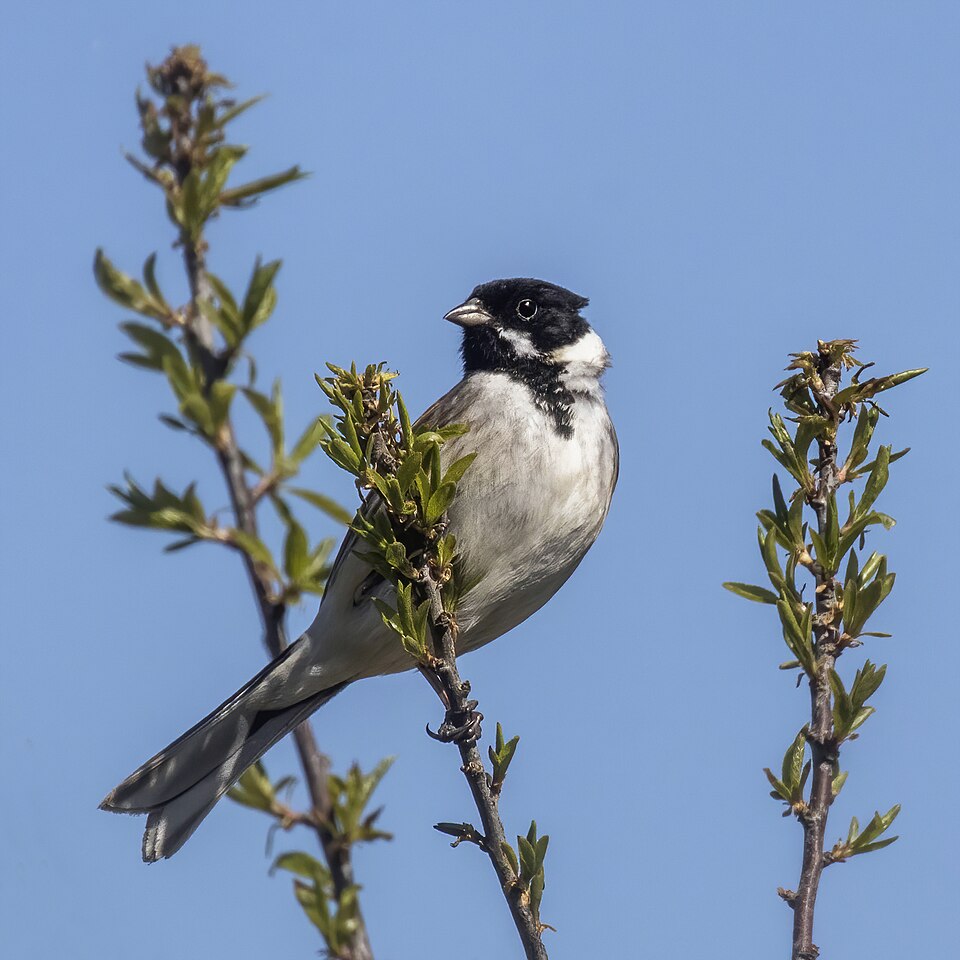 Common Reed Bunting
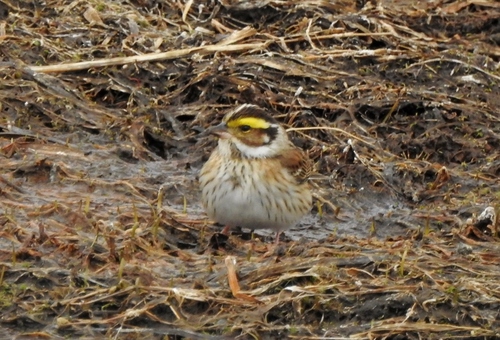 Yellow-browed Bunting
In short
The most reliable field mark between Common Reed Bunting and Yellow-browed Bunting is the presence of a bright yellow eyebrow (supercilium) in Yellow-browed Bunting of all ages, which is never shown by Common Reed Bunting. Adult male Common Reed Buntings have a black head and throat with a white collar, while Yellow-browed Bunting males have a black head but add a white crown stripe and a striking yellow brow. Females and immatures of both species are duller and streakier, but Yellow-browed Bunting always shows at least some yellow in the eyebrow and a hint of a white crown stripe, while female/immature Reed Buntings lack yellow entirely. Both are medium-sized buntings with similar structure, but Reed Bunting is slightly larger and heavier. In flight or at distance, focus on the eyebrow color and head pattern for the best separation.
Identification tips
- Eyebrow color is key: Yellow-browed Bunting always shows at least some yellow in the eyebrow (supercilium), even in dull females and immatures. Reed Bunting never shows yellow here; its eyebrow is pale or buff at best.
- Crown stripe: Yellow-browed Bunting (all ages) shows a pale (often white) crown stripe, especially obvious in males but visible in females/immatures as well. Reed Bunting lacks this feature, having a more uniformly streaked or plain crown.
- Adult male head pattern: Reed Bunting males have a black head and throat with a sharp white collar and underparts. Yellow-browed Bunting males have a black head, but with a white crown stripe, white moustachial stripe, black throat, and yellow eyebrow—look for the combination of yellow and white on the head.
- Female/immature head pattern: Female and young Reed Buntings are streaked brown on the head, with no yellow or white crown stripe. Female/immature Yellow-browed Buntings are also streaky, but always show at least a faint yellow eyebrow and a hint of a pale crown stripe.
- Back and underparts: Reed Bunting of all ages is heavily streaked on the back and often on the underparts, especially females/immatures. Yellow-browed Bunting is also streaked but the head pattern is more distinctive for separation.
- Bill shape: Both have a small, seed-eating bunting bill; not a reliable separator.
- Size and structure: Reed Bunting is slightly larger and heavier, but the difference is subtle and not diagnostic in the field.
- Flight views: No distinctive wing or tail pattern differences are described for these species in the provided notes. Focus on head pattern, even in flight if possible.
- Habitat context: Reed Bunting is much more likely in reedbeds, marshes, or wetland edges. Yellow-browed Bunting is more typical of woodland or scrubby habitats. Use habitat as a supporting clue, not a primary separator.
- Song and calls: Only Reed Bunting's song is described ('srip'); lack of vocal description for Yellow-browed Bunting means calls are not a reliable separator here.
- Season and range: Both species are migratory in parts of their range, but Reed Bunting is widespread across Europe and the Palearctic, while Yellow-browed Bunting is more eastern and less likely in western Europe. If far west, Reed Bunting is much more probable.
- Sexing pitfalls: Female and immature Reed Buntings can appear very dull and streaky, sometimes resembling other buntings, but never show yellow in the eyebrow or a white crown stripe. If you see even a hint of yellow above the eye, rule out Reed Bunting.
- Lighting and wear: Faded or worn Yellow-browed Buntings may show reduced yellow, but usually some remains. Always check for a pale crown stripe as a backup mark.
- Perched vs. in flight: Both species often perch upright and visibly, making head pattern observable. In flight, try to spot the eyebrow and crown stripe, as no strong wing or tail pattern differences are described.
- Juvenile confusion: Even fresh juveniles of Yellow-browed Bunting retain some yellow in the eyebrow and a pale crown stripe, while Reed Bunting juveniles are plain brown and streaky with no yellow or crown stripe.
Size
Common Reed Bunting is a medium-sized bunting, 13.5–15.5 cm in length and weighing 10–28 g [wikipedia]. Yellow-browed Bunting is not given a precise size in the notes, but as a typical Emberiza bunting, it is likely similar or slightly smaller. In the field, Reed Bunting may appear a bit bulkier, but size overlap is considerable and not a reliable separator on its own.
Plumage
For all ages, the key difference is the eyebrow: Yellow-browed Bunting always shows at least some yellow in the supercilium, even in females and immatures, and a pale (often white) crown stripe. Common Reed Bunting never shows yellow in the eyebrow; females and immatures have a streaked brown head with no yellow or white crown stripe. Adult male Reed Bunting has a black head and throat with a white collar and underparts, and a heavily barred brown back. Adult male Yellow-browed Bunting also has a black head but with a white crown stripe, white moustachial stripe, black throat, and a bright yellow eyebrow. Female and immature Yellow-browed Buntings have a weaker head pattern (brown replaces black), but the yellow eyebrow and pale crown stripe are always present, while Reed Bunting females/immatures are overall duller and more uniformly streaked brown. No distinctive age-specific upperwing or flight marks are described for either species in these notes.
Behaviour
Both species are typical buntings in behavior, often seen perched upright on reeds, shrubs, or low branches. Reed Buntings are often associated with wetland habitats and may be seen feeding on the ground or making short flights between perches. Yellow-browed Buntings are less tied to wetlands and may be seen in more varied woodland or scrubby habitats. Flight style is not described as distinctive between the two in the notes.
Habitat
Common Reed Bunting is strongly associated with reedbeds, marshes, and wetland edges across Europe and the Palearctic, although it can also be found in farmland and rough grassland, especially outside the breeding season [wikipedia]. Yellow-browed Bunting is not described in detail here, but is less tied to wetlands and more likely in woodland, scrub, or forest edge habitats. If seen in extensive reedbeds, Reed Bunting is much more likely; in mixed woodland or edge, both are possible but Reed Bunting is less expected.
Voice
The only vocalization described is the Common Reed Bunting male's song, a repetitive 'srip.' No vocal details are given for Yellow-browed Bunting in these notes, so voice is not a reliable separator here.
Common Reed Bunting · Yellow-browed Bunting · My Tricky Birds