

Common Reed Bunting vs Little Bunting
Emberiza schoeniclus versus Emberiza pusilla
Play a quiz with Common Reed Bunting and Little Bunting
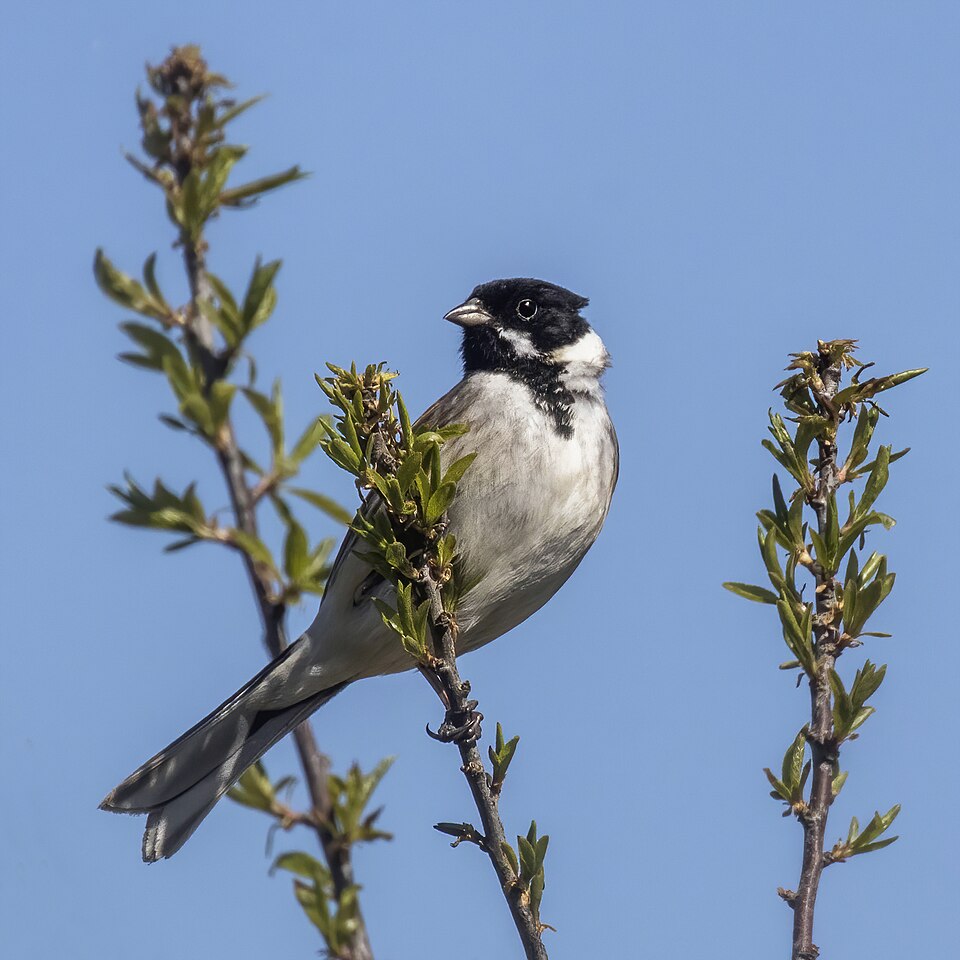 Common Reed Bunting
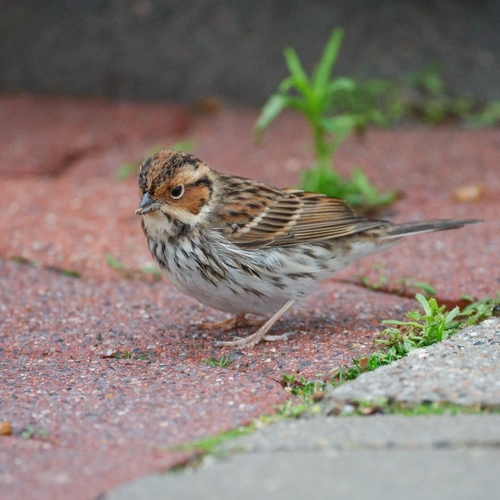 Little Bunting
In short
The most reliable field mark between Common Reed Bunting and Little Bunting is the head pattern: Little Bunting shows a crisp chestnut face with black crown stripes, a white malar stripe, and a clear white eye-ring, while female and immature Common Reed Buntings are duller and lack the sharply defined head stripes. In the field, Little Bunting is noticeably smaller and more delicate, with finer structure and a more compact jizz. Males of Common Reed Bunting are distinctive with their black heads and white collars, but females and immatures are the main confusion risk, especially in autumn and winter. Careful attention to face pattern, size, and structure is essential, as both can show streaked underparts and brown upperparts.
Identification tips
- Head pattern is key: Little Bunting always shows a crisp chestnut face, black crown stripes, a white malar stripe, and a clear white eye-ring—these are present in all ages and sexes. Female and immature Common Reed Buntings have a much duller, streaked brown head with no sharp crown stripes or eye-ring.
- Adult male Common Reed Bunting is unique: The black head and throat with a white neck collar and underparts is never matched by Little Bunting. If you see this, it's a male Common Reed Bunting.
- Size and structure: Little Bunting is smaller, more compact, with a finer bill and shorter tail. Common Reed Bunting is bulkier, with a heavier bill and longer tail. This is especially useful when birds are seen side by side or with familiar species.
- Underpart streaking: Little Bunting has white underparts with fine, well-defined streaks on the breast and flanks. Common Reed Bunting (especially females and immatures) shows heavier, more diffuse streaking, and the overall effect is less clean.
- Upperpart coloration: Both are streaked brown above, but Little Bunting's streaks are finer and the overall tone is colder and more contrasting. Common Reed Bunting is warmer and less crisply marked.
- Face pattern in females/immatures: If the bird shows a chestnut cheek with a clear white border and black crown stripes, it's a Little Bunting. If the face is just streaked brown with no sharp markings, it's a female or immature Common Reed Bunting.
- White eye-ring: Only Little Bunting shows a neat white eye-ring, visible at close range or in good light.
- Bill shape: Little Bunting's bill is finer and more delicate, while Common Reed Bunting has a stouter, more powerful seed-eating bill.
- Flight style: Little Bunting is more fluttery and less direct in flight, matching its smaller size. Common Reed Bunting is steadier and more robust.
- Habitat: In reedbeds or extensive marshes, Common Reed Bunting is far more likely. Little Bunting prefers bushy, wooded edges or drier scrub, rarely venturing into large reedbeds.
- Vocalizations: Listen for Little Bunting's sharp 'zik' call and rolling song, versus the simple 'srip' of Common Reed Bunting.
- Sexes similar in Little Bunting: Both male and female Little Buntings look alike, so don't expect a dramatic difference as in Common Reed Bunting.
- Seasonal confusion: Female and immature Common Reed Buntings are most often confused with Little Bunting, especially in autumn and winter. Always check for the sharply marked face and eye-ring of Little Bunting.
- Context: Little Bunting is much rarer in most of Europe and is usually found singly or in small numbers, often with other buntings. Common Reed Bunting is widespread and often seen in suitable wetland habitat.
- When in doubt: If the bird lacks a sharply defined face pattern and is bulkier with a heavier bill, it's likely a Common Reed Bunting. If it is small, crisp-faced, and has a white eye-ring, it's a Little Bunting.
Size
Little Bunting is distinctly smaller and lighter than Common Reed Bunting. Little Bunting measures 12–14 cm in length and averages around 15.4 g in mass [wikidata], while Common Reed Bunting is larger at 13.5–15.5 cm and can weigh up to 28 g [wikipedia]. In the field, Little Bunting appears more petite and compact, with a finer bill and shorter tail, while Common Reed Bunting is bulkier, especially in the body and bill. This difference is often apparent when both are seen side by side or with familiar species for scale.
Plumage
Juvenile and female Common Reed Buntings are streaked brown above and below, with a generally dull and diffuse head pattern—streaked brown rather than crisply marked. In contrast, Little Bunting of all ages and sexes shows a sharply defined chestnut face, prominent white malar stripe, black crown stripes, and a neat white eye-ring. The underparts of Little Bunting are white with fine dark streaks on the breast and flanks, while Common Reed Bunting (especially females and immatures) has heavier and more diffuse streaking. Adult male Common Reed Bunting is unmistakable with a black head and throat, white collar, and bold brown back, a pattern never shown by Little Bunting. Both species have streaked upperparts, but Little Bunting's streaks are finer and its overall coloration is colder and more contrasting. No age-specific upperwing pattern is described for either species in the sources.
Behaviour
Both species are typically unobtrusive and often forage low in vegetation or on the ground. Little Bunting tends to be more secretive and is often solitary or in very small flocks, sometimes associating with other buntings. Common Reed Bunting is more likely to be seen in pairs or small groups, especially in reedbeds or open scrub. In flight, Little Bunting appears more fluttery and less direct, reflecting its smaller size and shorter tail, while Common Reed Bunting has a steadier, more robust flight.
Habitat
Common Reed Bunting is strongly associated with reedbeds, marshes, and wetland edges, though it can also be found in damp scrub and rough grassland. Little Bunting prefers more wooded or shrubby habitats, often near water but typically in drier, bushier areas than Common Reed Bunting. While both can occur in overlapping regions during migration, Little Bunting is much less likely to be found in extensive reedbeds, and its presence in dense, low vegetation or woodland edges is a useful clue.
Voice
Common Reed Bunting's song is a simple, repetitive 'srip', usually delivered from a perch. Little Bunting's call is a distinctive, sharp 'zik', and its song is a more complex, rolling 'siroo-sir-sir-siroo'. The difference in calls is often the quickest way to separate the two in the field, especially when the birds are not visible. Little Bunting's call is higher-pitched and more metallic than any call given by Common Reed Bunting.